Grinding or Slapping Noise
What you notice first is usually noise: a grinding or slapping sound as the chain rides loose on a drive gear that's worn past its rated cycles.
St Louis Park, Minneapolis
Opener repair for St. Louis Park's 1960s-era garage doors - chain-drive units, worn gears, and dead sensors on houses built mostly around 1965. We travel from Minneapolis.
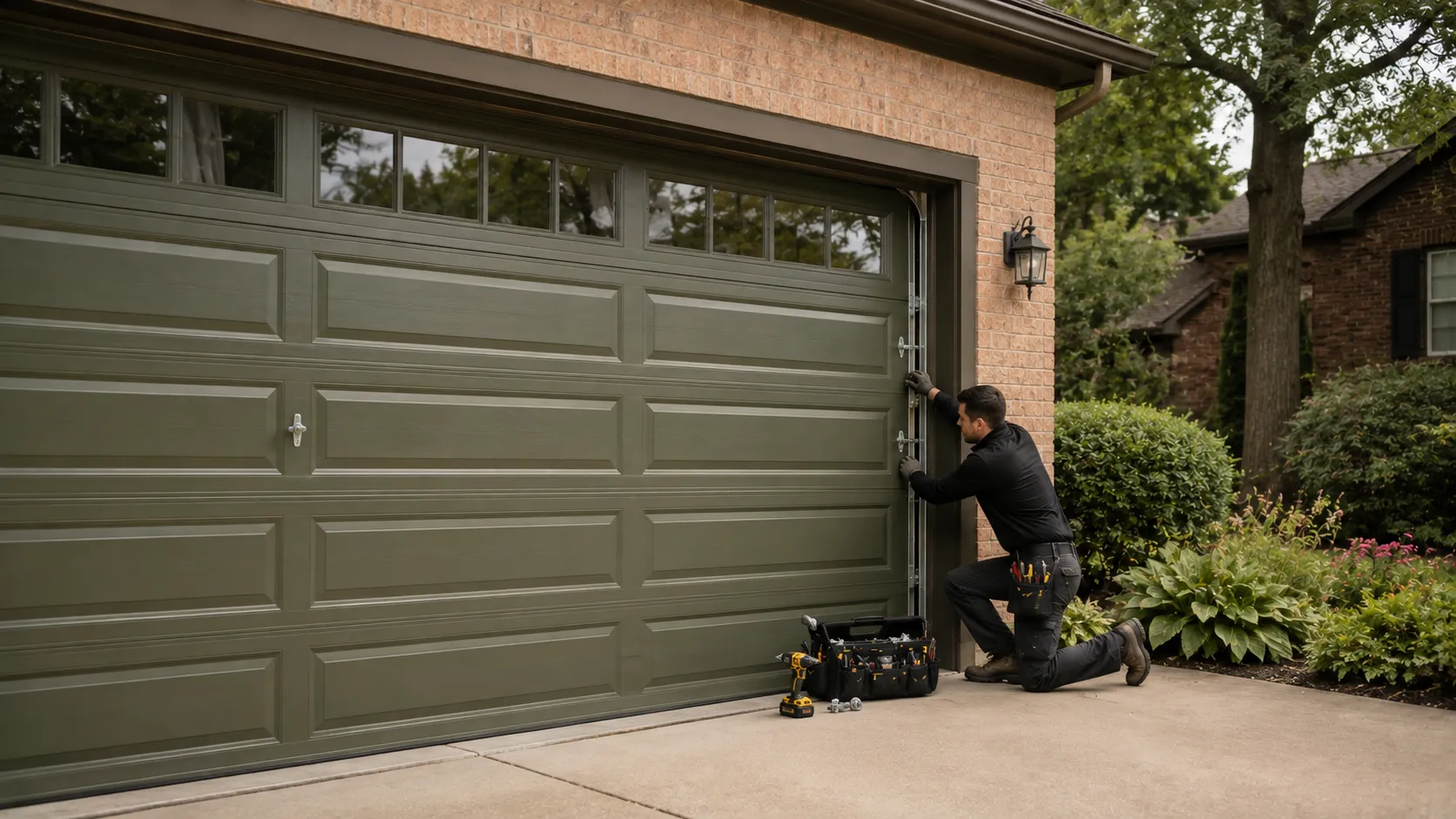
Symptoms
Most garages in St. Louis Park went up around 1965, and the openers bolted above the doors have often been swapped once already - but those second-generation units are themselves 15 to 25 years old now, chain-drive boxes with a plastic drive gear that was never designed to run this many cycles.
What you notice first is usually noise: a grinding or slapping sound as the chain rides loose on a drive gear that's worn past its rated cycles.
A door that reverses itself halfway up for no obvious reason is another common symptom, often pointing to a sensor or logic board issue rather than the motor itself.
Sometimes it's simpler than that - you hit the button and nothing happens at all, no light, no hum, no click of the relay, which points toward the power side rather than the drive mechanism.
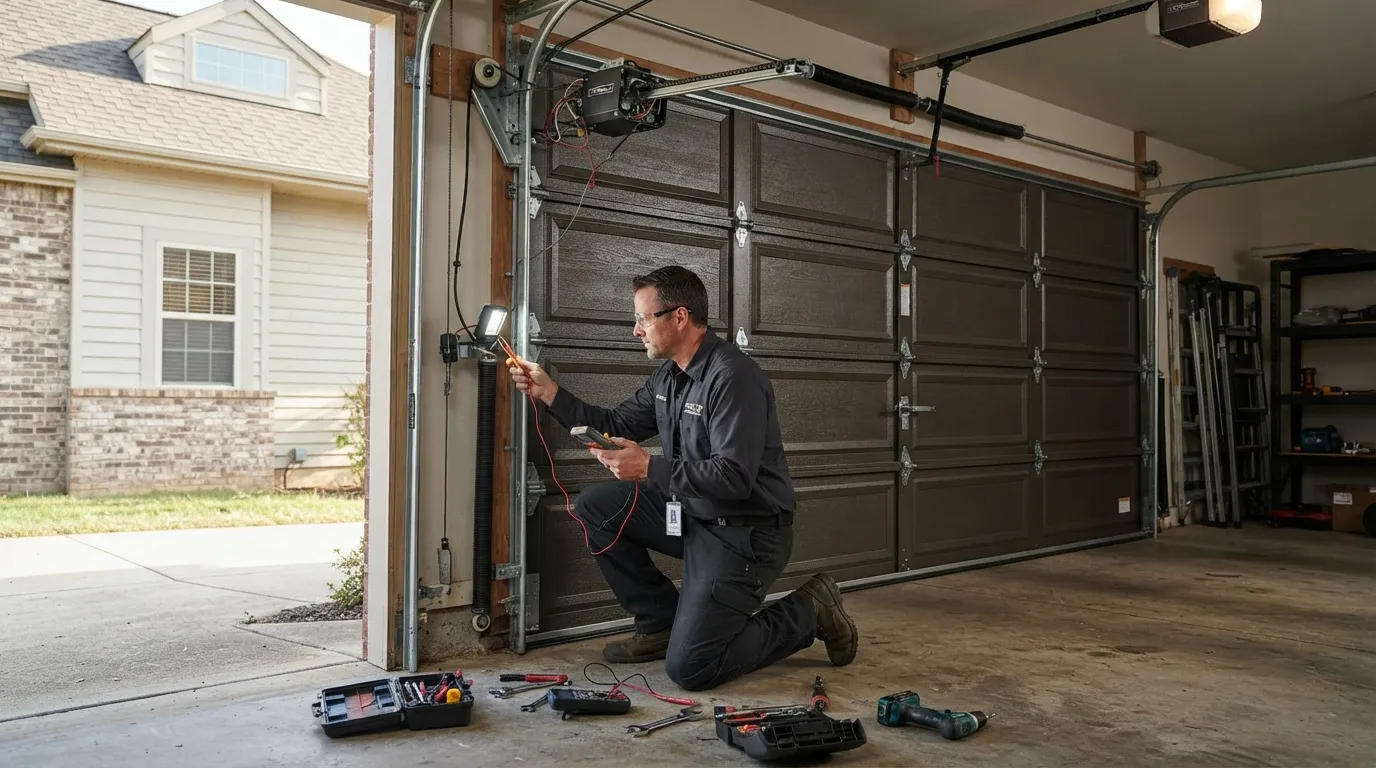
On a house from this era the wiring to the wall switch is original in a fair number of cases, and that's worth checking before anything on the head unit gets replaced. We don't guess at which one it is over the phone - we open the housing and look.
The repair
The drive gear is the part that fails most on chain and belt units from the 1980s and 90s still hanging in St. Louis Park garages - a small nylon piece behind the sprocket that strips after enough cycles, leaving the motor spinning while the carriage stays put.
We check whether the drive gear has stripped - a small nylon piece behind the sprocket that lets the motor spin without moving the carriage - or whether the logic board has gone instead, which shows up as random reversing or a dead unit with power still reaching it.
If it's the gear, swapping it means dropping the cover, pulling the old gear off the shaft, and greasing the new one before it goes back together.
If the logic board is the failure, that's a board swap rather than a gear job, and it costs more because the part itself does.
Safety sensors are the other common call: photo-eye brackets on doors this age were often added after the fact, on cheap wire that's had 30-plus Minnesota winters to crack. We test the eyes, the wall switch, and the travel limits as a set before calling the job done, because a fix on one part that ignores a fault in another just brings us back out here.
Local causes
St. Louis Park sits about 5 miles from Minneapolis, close enough that we're on-site the same day without a long haul factored into the visit. The climate is the bigger factor in the actual failure. This area sits in a severe cold band, and an opener working against a door that's stiff from cold-thickened grease or a frozen bottom seal draws harder on the gears and the capacitor than the same door would in a mild climate. That's why gear and board failures cluster in winter here more than they would somewhere warmer - the opener isn't failing from age alone, it's failing from age plus load. Houses built through the 1965 era in this suburb also tend to have single-car or narrow double openings, meaning the doors themselves are lighter than newer builds, so a straining opener is more often a sign of dry track or bad rollers on the door side than a genuinely underpowered motor.
Pricing
I don't have a set price list to hand you here - what a repair runs depends on whether it's a $30 sensor or a control board, and I'm not going to invent a number to fill space. What I can tell you is which way the decision usually goes: if the motor housing itself is original to a unit installed decades back, and the part that's failed is the logic board, replacing the whole opener is often close in cost to the board alone and gets you a warranty on the entire unit instead of one part. Household income in this area runs higher than the wider service area average, and most owners we talk to would rather pay once for a new opener with a rolling code and battery backup than patch a unit from the 1990s a second time. That's a judgment call we make with you on-site, not a quote we give sight-unseen.
Watch-outs
Two things commonly go wrong on opener calls here: replacing the motor without checking the door side first, and running into proprietary parts that simply aren't stocked anywhere locally.
The most common mistake on a house this age is replacing the opener without checking the door side first. If the springs are original or close to it, a brand-new motor will still strain, wear out its gear early, and bring you right back to square one within a year or two. We check spring tension and roller condition as part of any opener call, not as an upsell.
Parts availability is the other issue - some older chain-drive units still running in St. Louis Park garages use proprietary logic boards that aren't stocked anywhere locally. If yours is one of them, we'll tell you straight that a new opener is the faster and often cheaper path rather than waiting on a special-order board.
Questions
Cold-thickened grease on the track and a stiffer door seal both add resistance the motor has to push through. In St. Louis Park's severe cold climate that extra load is what pushes a worn drive gear or capacitor from marginal to failed. It's rarely the cold alone - usually the opener was already close to the end of its life.
Often yes. If the failed part is the logic board rather than the gear, the board can cost close to what a new unit runs, and a new opener gets you a full warranty plus a rolling code instead of an old fixed-code remote. We'll check the door and springs first so you're not paying for a new motor that then strains against old hardware.
No - we're based in Minneapolis and travel the roughly 5 miles into St. Louis Park for opener calls. We don't keep a branch or dedicated crew in town, so we schedule the visit rather than promising an on-the-spot response.
Most often it's a misaligned or dirty photo-eye sensor, especially on older installs where the wiring and brackets were added after the original build. Less often it's a logic board fault. We test the sensors first since that's the cheaper and more common cause.
Explore more
Ready when you are
Minneapolis Garage Door Pros repairs and installs garage doors, springs and openers in Minneapolis, MN and the surrounding area.