
Broken Garage Door Springs
Older springs can eventually reach the end of their useful cycle life after years of repeated opening and closing, and a snapped spring is one of the most common calls on doors from the earlier build years.
Local garage door service · Minneapolis, MN
Garage door repair and service for Minneapolis homes built mostly between 1952 and 2003, covering installation, maintenance, off-track doors, opener repair, panel replacement, roller replacement, and the residential garage door systems common across the area's 1960s- and 70s-heavy housing stock.
Garage door services
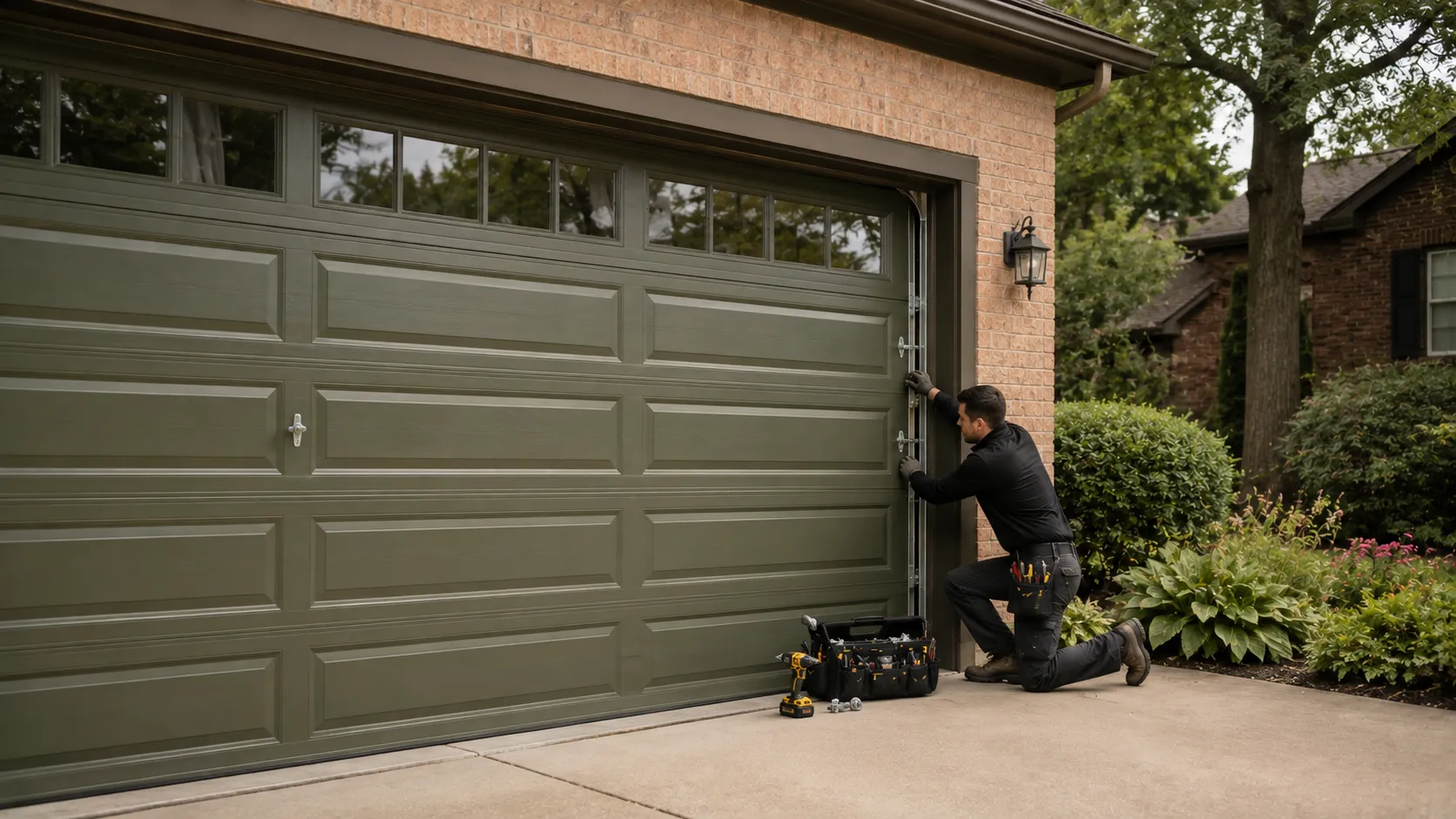
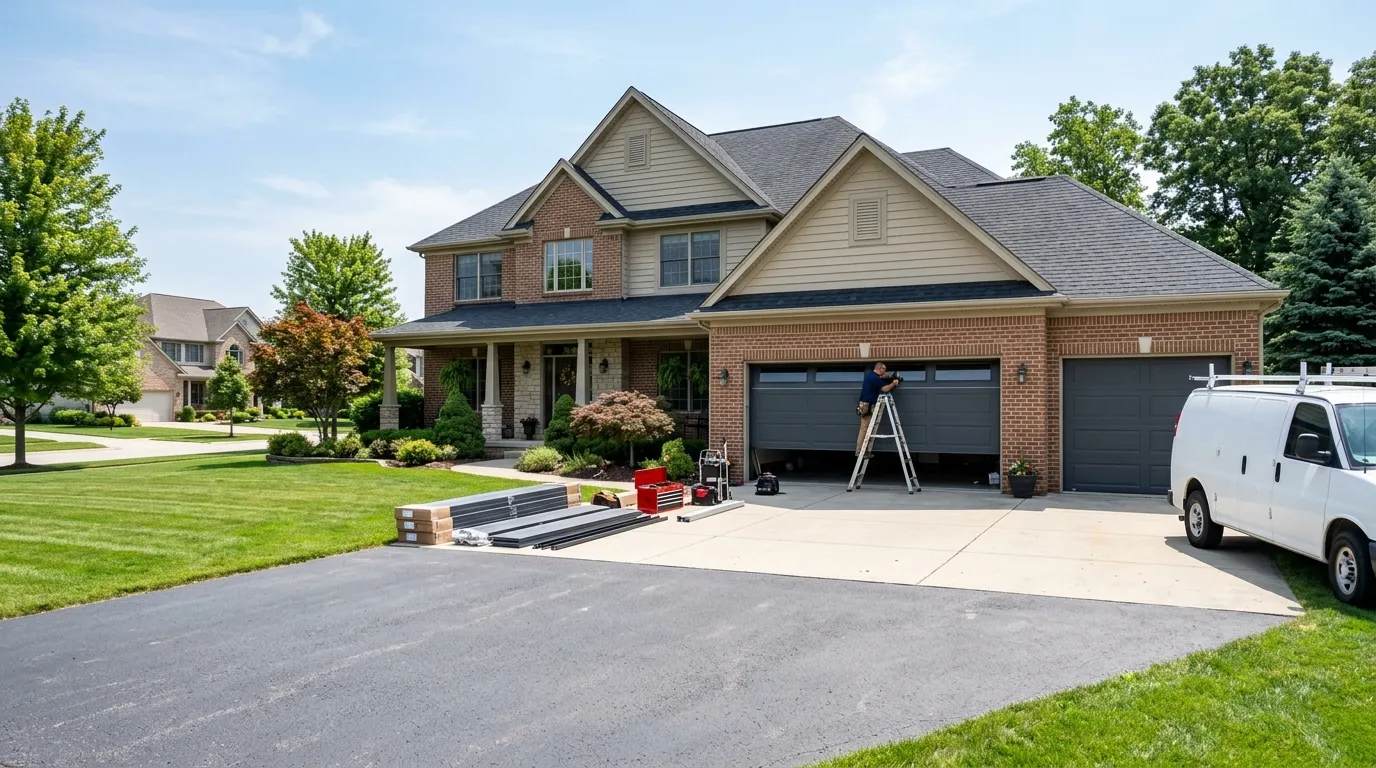
From complete installation and general repair to maintenance, off-track doors, opener problems, damaged panels, and worn rollers, the service lineup is built around the garage door systems common across Minneapolis and its older inner-ring housing stock.
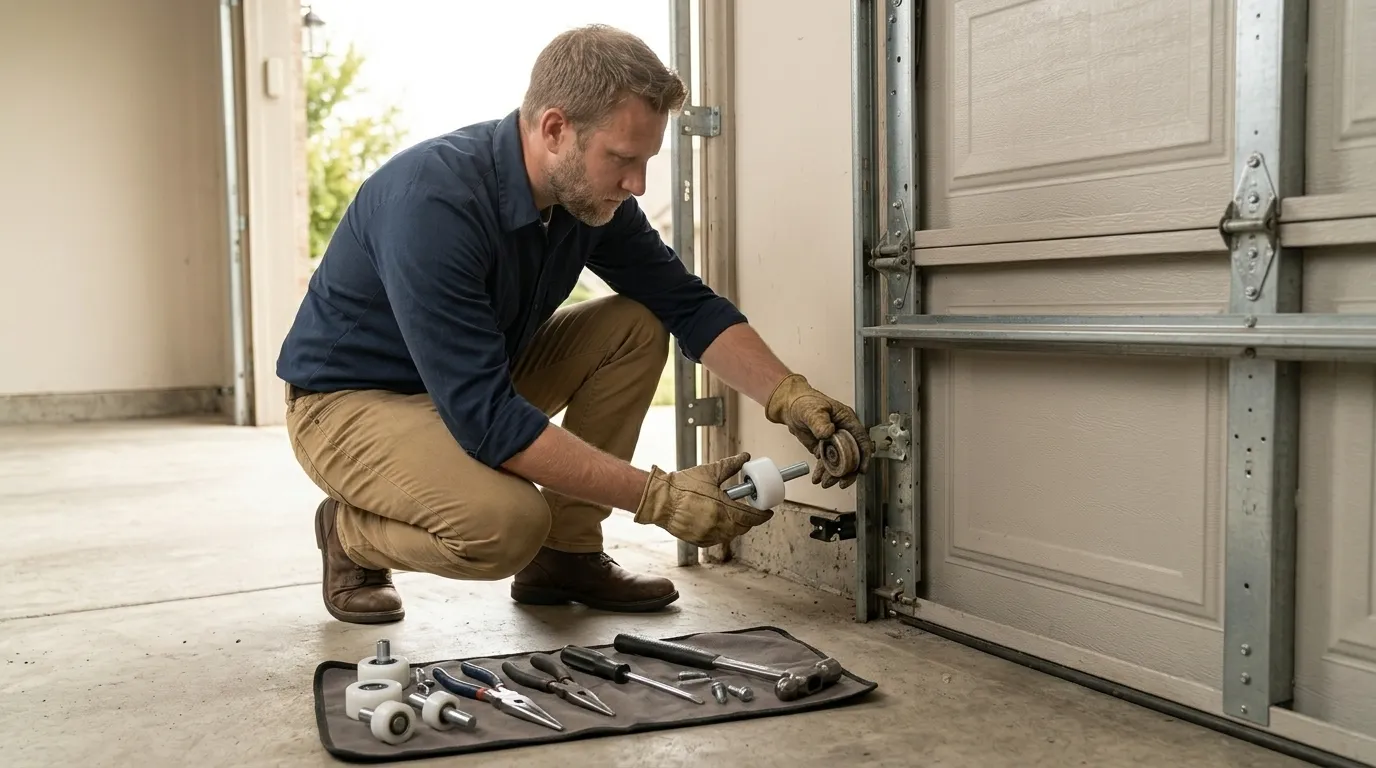
Common Minneapolis garage door problems
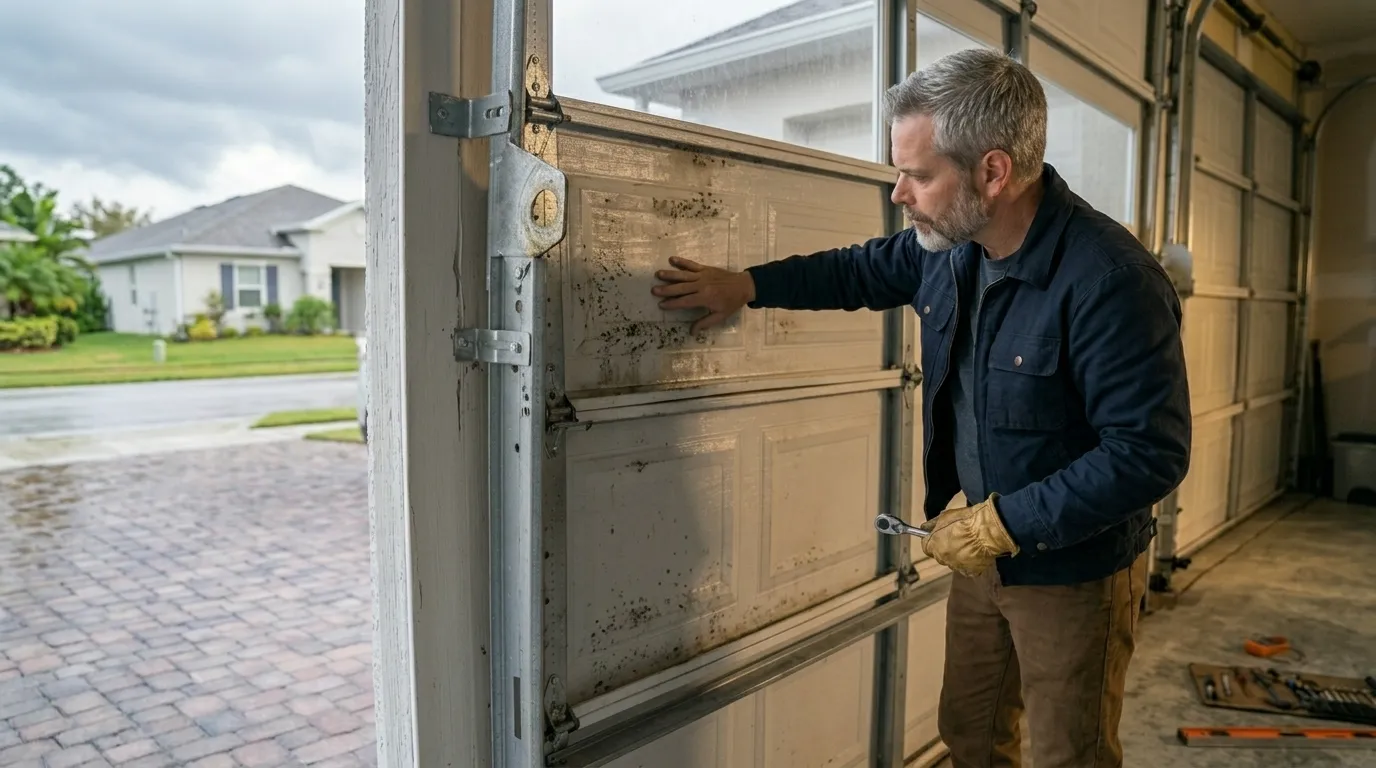
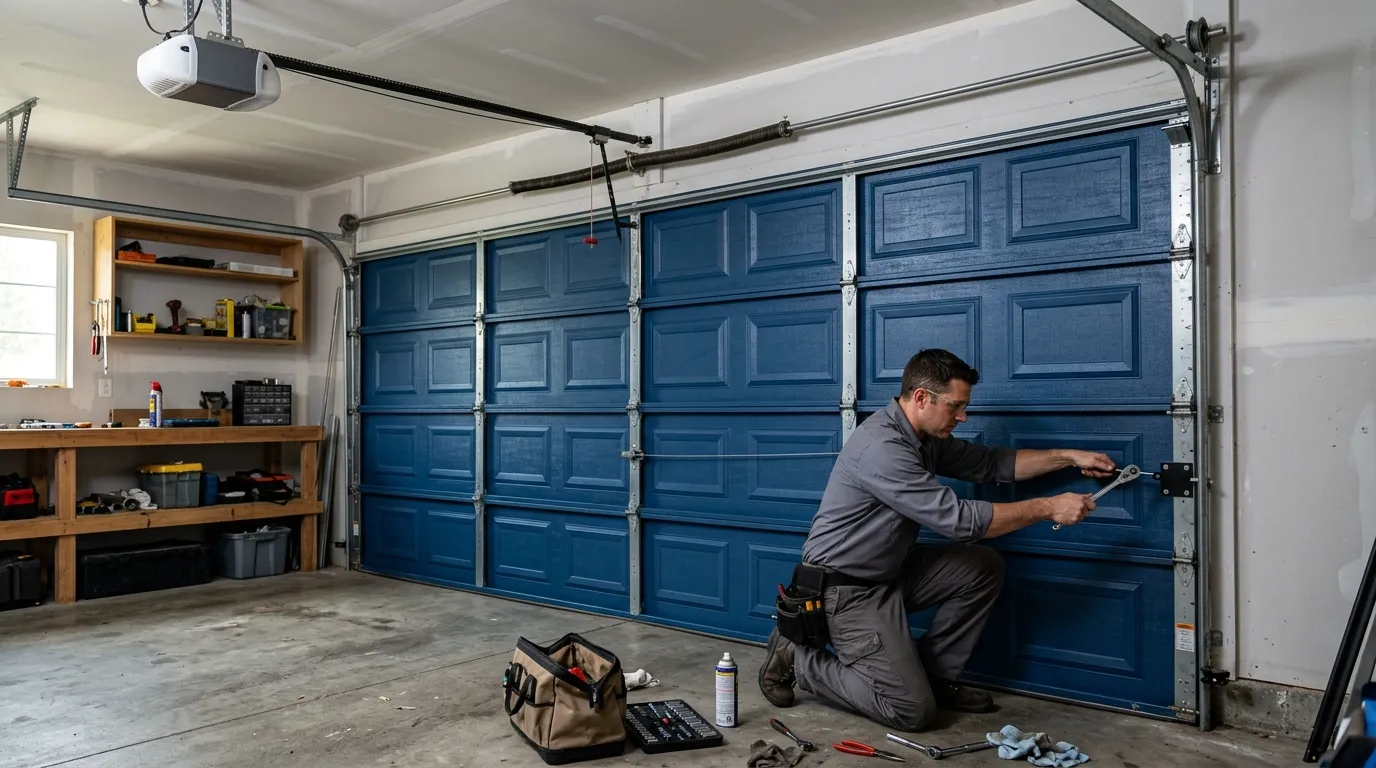
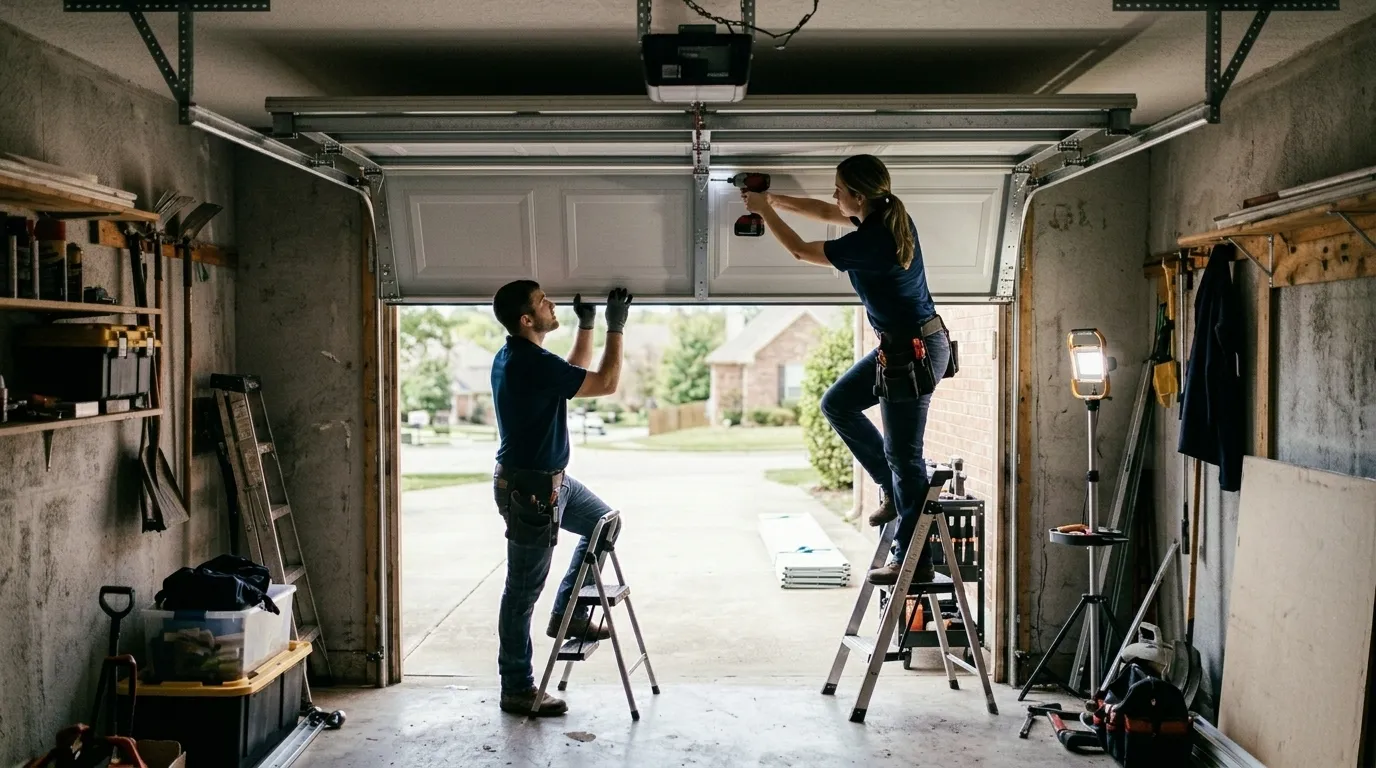
Broken springs, worn rollers, frayed cables, opener failures, off-track doors, panel problems, and alignment issues make up much of the work across Minneapolis's 1960s- and 70s-heavy housing stock. With most homes built between 1952 and 2003 (median around 1975), many single- and double-car garages still run older spring, drum, bracket, roller, and track configurations, and openers from the 1980s and 90s are now reaching the point where gears, motors, or controls need work.
Older springs can eventually reach the end of their useful cycle life after years of repeated opening and closing, and a snapped spring is one of the most common calls on doors from the earlier build years.
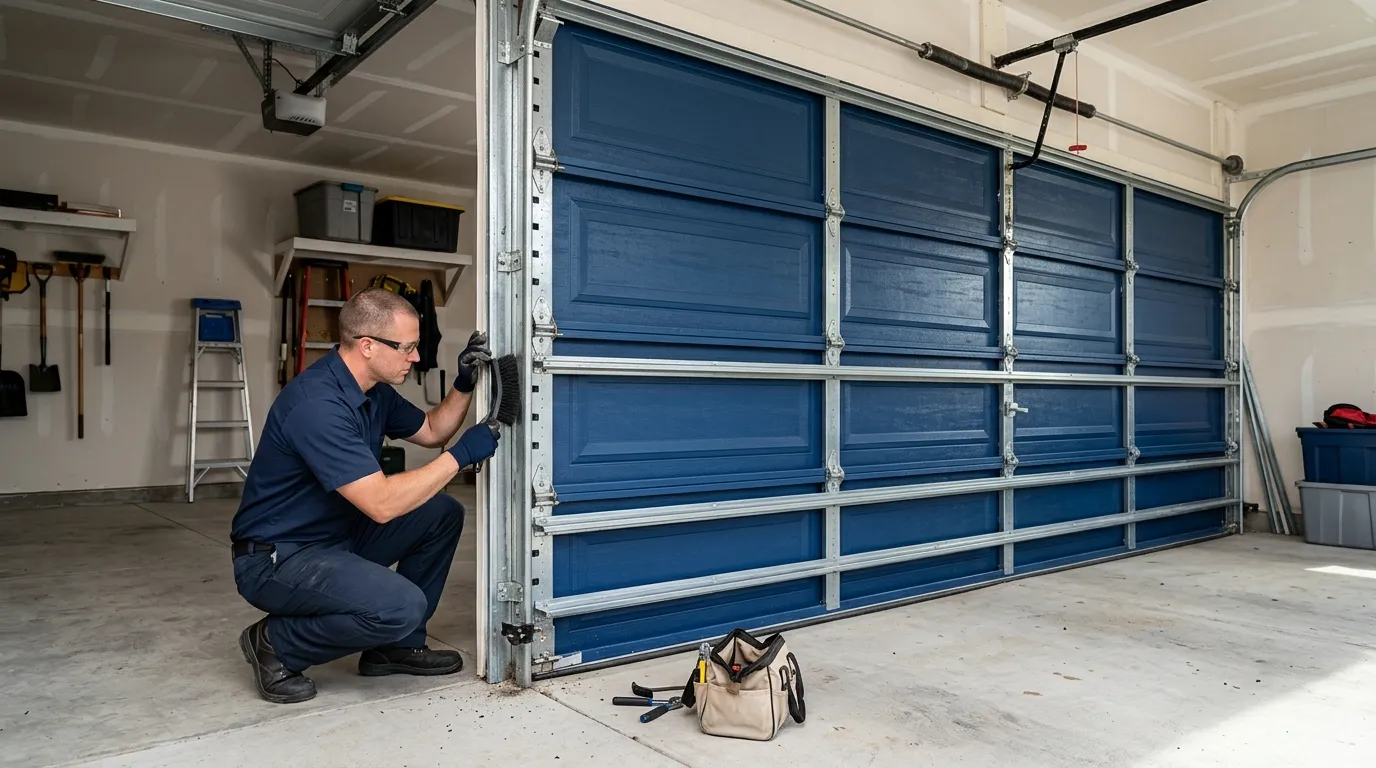
Older steel or nylon rollers can become rough, noisy, cracked, or resistant as they age, which leaves the door binding or shaking in the track.
Cables can fray or wear at the drum after years of carrying repeated lifting loads, and the damage often shows up alongside spring wear on heavier doors.
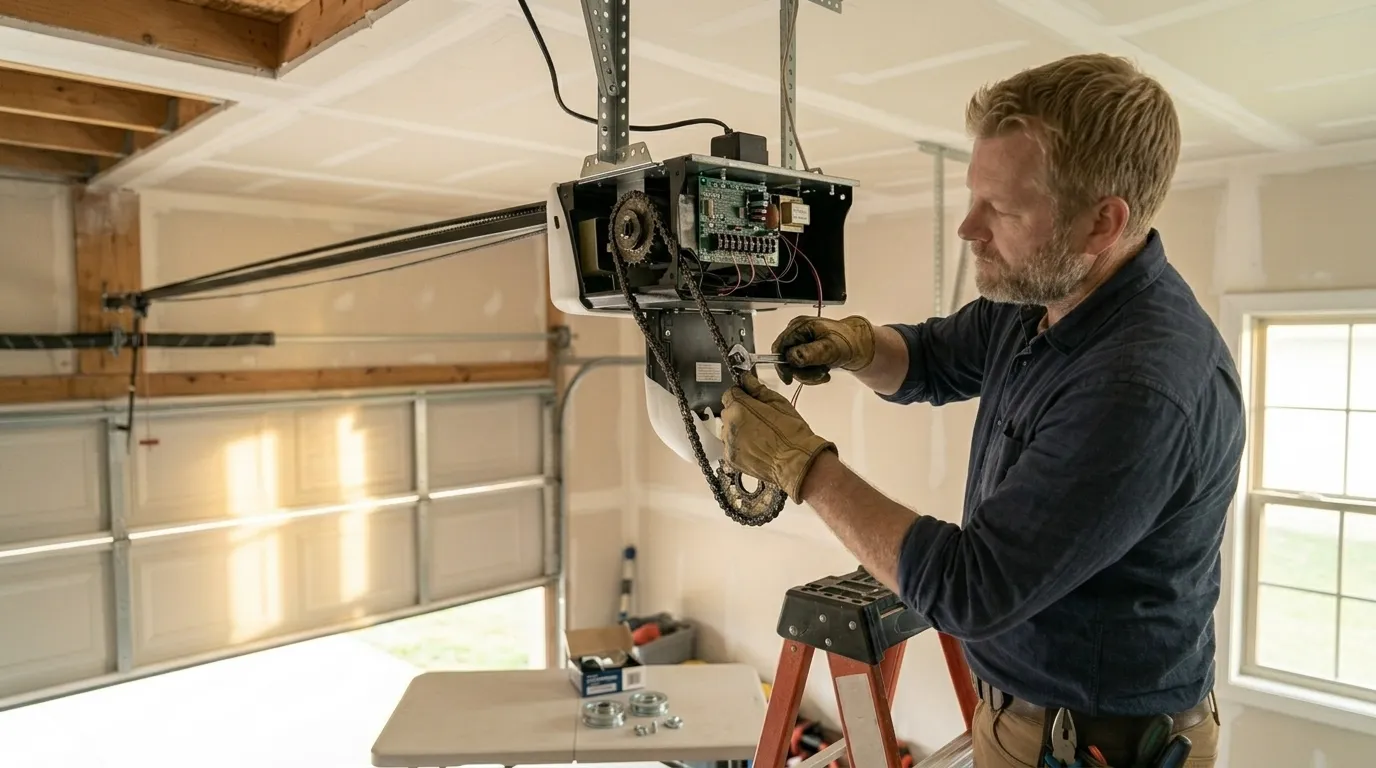
Older opener gears, motors, drive systems, remotes, controls, and sensors can develop faults after decades of use, particularly on units installed in the 1980s and 90s.
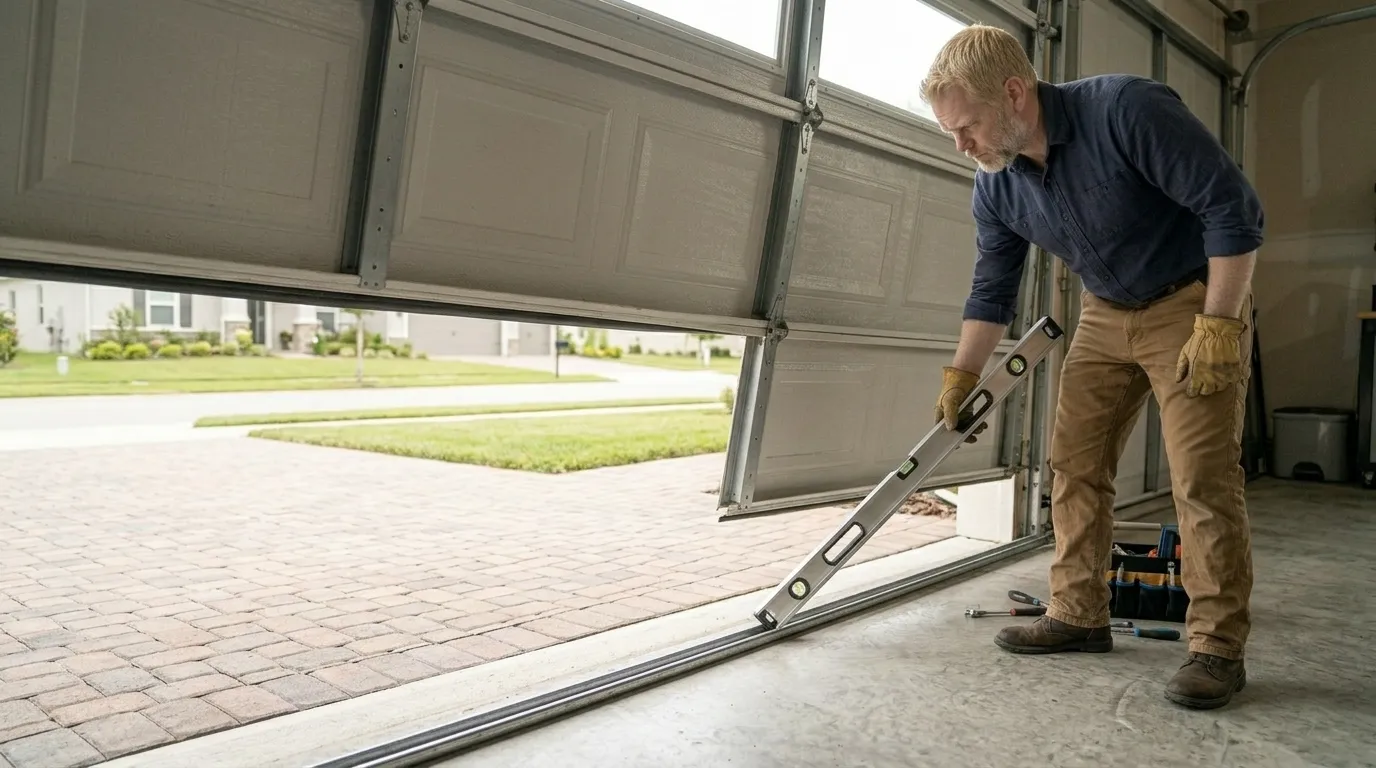
Roller wear, cable problems, impact, or long-term mounting movement can leave a door uneven or off track, so correcting it usually means addressing the underlying cause.
Cold-weather garage door wear
Minneapolis sits in a severe cold climate, and winter conditions can make existing spring, roller, cable, track, lubrication, and seal problems far more noticeable as the door works against the cold.
Cold-weather operation can expose weakness in a spring that is already nearing the end of its cycle life, which is why a marginal spring often lets go on the coldest mornings.
Older steel or nylon rollers can become increasingly rough or brittle as existing wear accumulates, and the cold makes that resistance more obvious in daily use.
Existing track or mounting problems can become easier to notice when the system is operating with additional winter resistance, showing up as uneven travel or new noise.
Older grease and lubricant can move less freely in very cold conditions and increase resistance through moving components, leaving the door slow and loud until it warms.
Clear repair guidance
There isn't one flat price, because different failures require different parts and labor.
A broken spring on a double door is a different job from a stripped opener gear, roller replacement, panel work, or track realignment.
Older residential doors can also use drum sizes, brackets, springs, panels, or opener components that differ from current universal replacement assumptions.
We focus on fixing the actual failed component when the surrounding door remains worth keeping.
Some older opener or drum components may also need to be sourced rather than carried as standard truck stock, and we'll say so up front.
Repair or replace?
A worn roller, broken spring, cable problem, opener failure, or track issue does not automatically mean the complete door needs replacement. The decision changes when panels, tracks, or other major structural components are too deteriorated for another repair to hold.
A targeted repair can make sense when the door, panels, tracks, rollers, and opener remain serviceable. One failed part is no reason to replace a sound door.
Worn rollers and minor alignment problems are often repairable without replacing the complete garage door, restoring smooth, quiet travel.
Replacement becomes more practical when panel deterioration has progressed beyond a reliable section repair, especially on older doors.
A badly damaged track or several major failures at once can make broader replacement more practical than repeated patchwork that only delays the next call.
What to expect
We start with what the door is actually doing, narrow down the likely cause from the symptoms, then check the door with the opener disconnected before explaining the repair and its cost.
Tell us whether the door won't open, moves crooked, made a loud bang, or the opener runs without moving the door. That symptom is the starting point for narrowing the cause.
The symptoms help indicate whether the issue is more likely a spring, cable, track, roller, panel, or opener problem, so we can plan the visit and bring the right parts.
We inspect the door with the opener disconnected so the springs, cables, rollers, and tracks can be evaluated directly, rather than assuming the opener is at fault.
The failed component, recommended repair, and expected cost are discussed before the work begins, so there are no surprises once the job is underway.
Some Parts Can Require a Return Visit
Many common repairs can be completed in one visit, while custom panels or uncommon older opener parts can require additional sourcing and a short wait for the right piece.
Local housing matters
Housing across the broader source service area runs from 1952 through 2003, with a median build year around 1975.
That creates a large concentration of ramblers, split-levels, story-and-a-half homes, and attached garages associated with 1960s and 70s construction.
Across the broader area there are approximately 415,224 households and 168,625 owner-occupied houses, with median household income around $96,224.
Garage door systems from this era can use torsion or extension springs, older drums, brackets, tracks, and mounting arrangements that do not always match current universal-fit parts.
The age of the home provides useful context, but the installed door still needs to be measured and inspected before parts are selected.
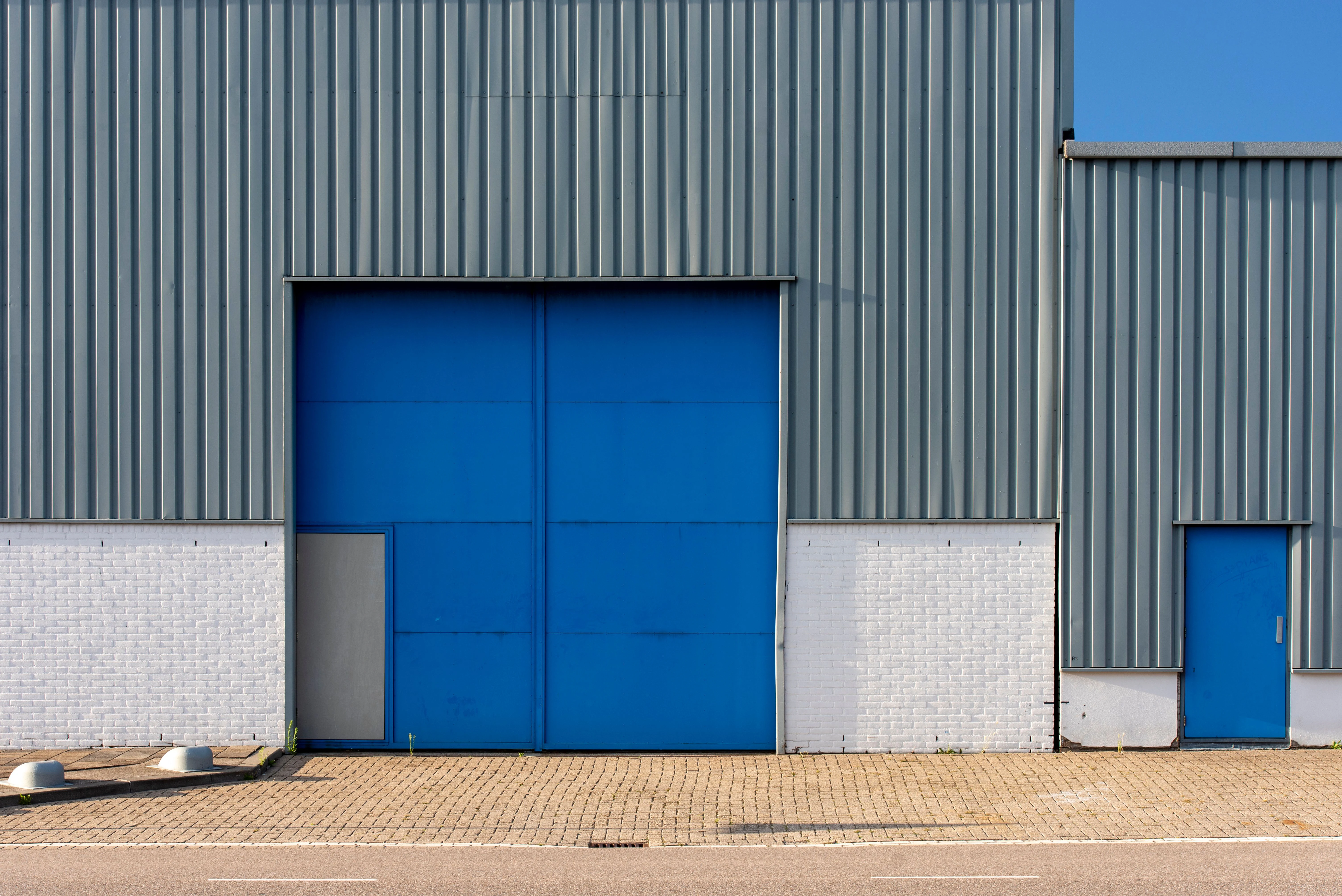
1960s–70s garage door systems
Homes concentrated around the 1960s and 70s can combine older spring systems, legacy drums, steel tracks, aging openers, replacement panels, and several generations of repair hardware.
Older single-car garages can use spring and track configurations that differ from later double-door systems, so the fix isn't always a drop-in match for modern parts.
Split-levels and ramblers can use larger torsion systems that need to be matched to the actual door weight, not a generic universal spring.
Legacy drum diameters, mounting brackets, and track components may differ from parts sold today as universal replacements, which is why the door gets measured first.
An older door may already have gone through one or more opener replacements while retaining earlier tracks, springs, or panels, leaving a mix of hardware to work around.
Built around Minneapolis garage doors
The correct repair depends on the springs, cables, rollers, tracks, opener, panels, drums, brackets, and previous changes actually installed on the door today — not a generic national parts list.
The local housing range includes several generations of spring systems, tracks, rollers, openers, and replacement panels, so the hardware on the door varies from house to house.
Older drum, spring, bracket, and panel dimensions can differ from current standard assumptions, so the door is measured and inspected before parts are selected.
If the door remains structurally sound, targeted spring, roller, cable, opener, or track repair can still make practical sense rather than a full replacement.
If an older opener component or custom panel needs sourcing, the repair timeline should reflect actual availability rather than an optimistic guess.
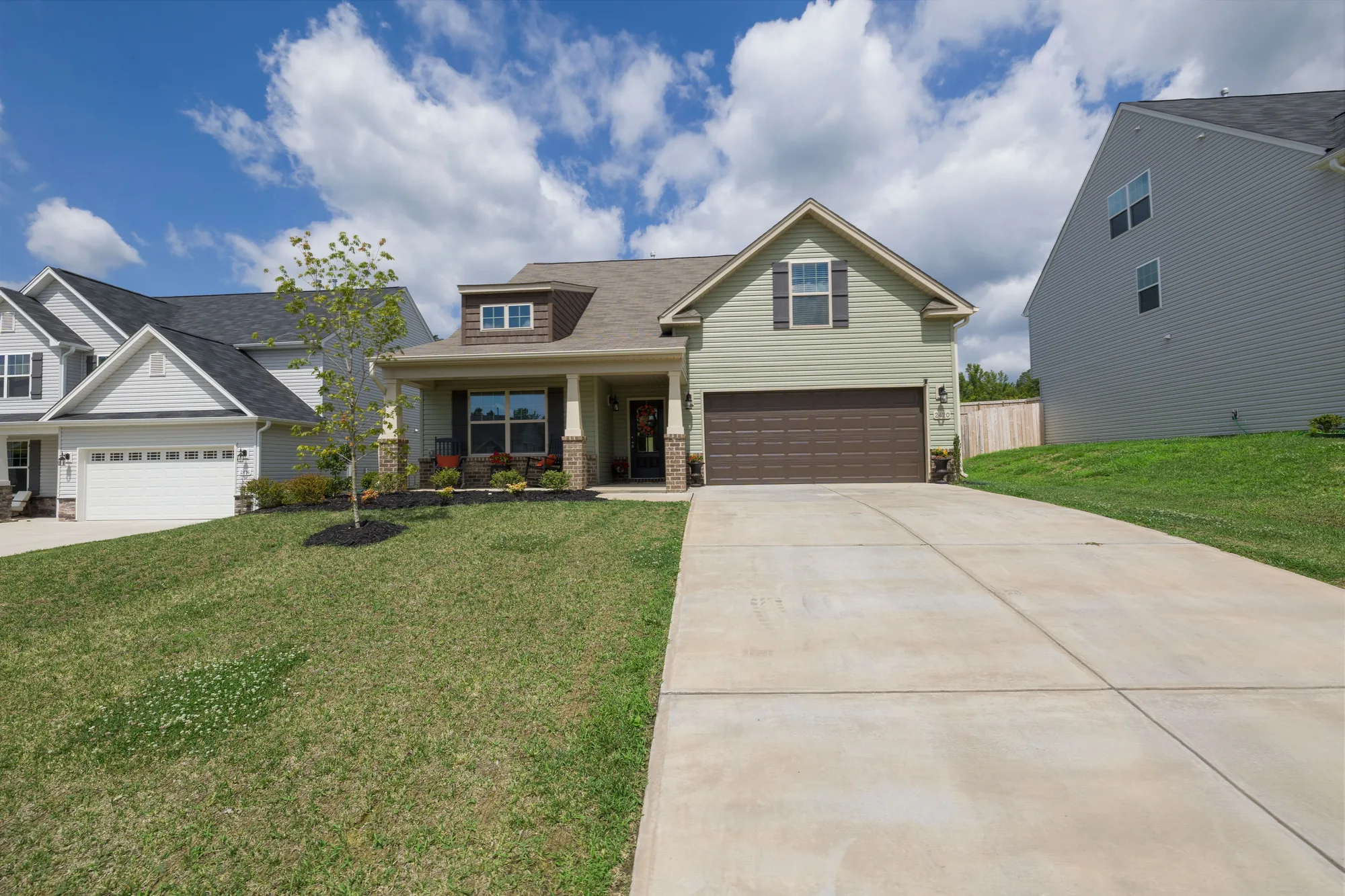
Service areas
Questions
Cold makes steel springs lose tension and contracts the tracks, which throws rollers slightly out of alignment. In a COLD severe climate like ours, that shift is enough to turn a door that worked fine in October into one that groans or sticks in January. It's usually not a new problem - the cold just exposes wear that was already there.
Not usually. A lot of the doors we work on date to the 1960s and 70s building wave that's common across this area, and most of that hardware can still be repaired - springs, cables, rollers, and tracks are all replaceable. The exception is a door with a badly bent track or rotted panels, where a repair won't hold and replacement makes more sense.
For common spring, cable, and roller repairs, yes, we carry what we need on the truck. Some older or discontinued opener models use parts we don't stock, which can mean a short wait to order the right piece instead of a same-visit fix. We'll tell you up front if that's the situation with your door.
For this site, the configured surrounding service areas are Chanhassen, Columbia Heights, Falcon Heights, Golden Valley, St. Louis Park, and St. Paul.
Ready when you are
Tell us what the door is doing and we'll help you figure out whether you're dealing with an opener, roller, track, damaged panel, off-track door, maintenance issue, aging hardware, or a system that's reached the point where replacement makes more sense.