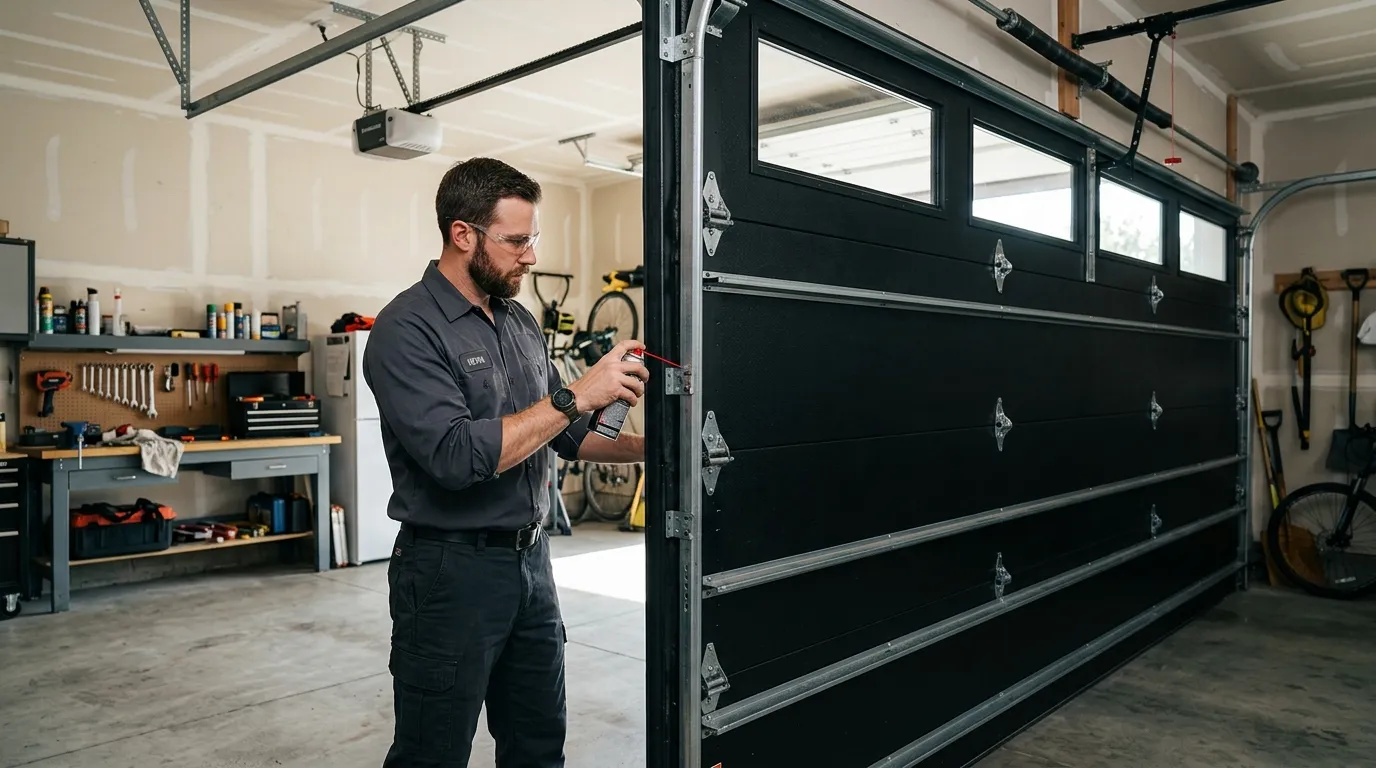
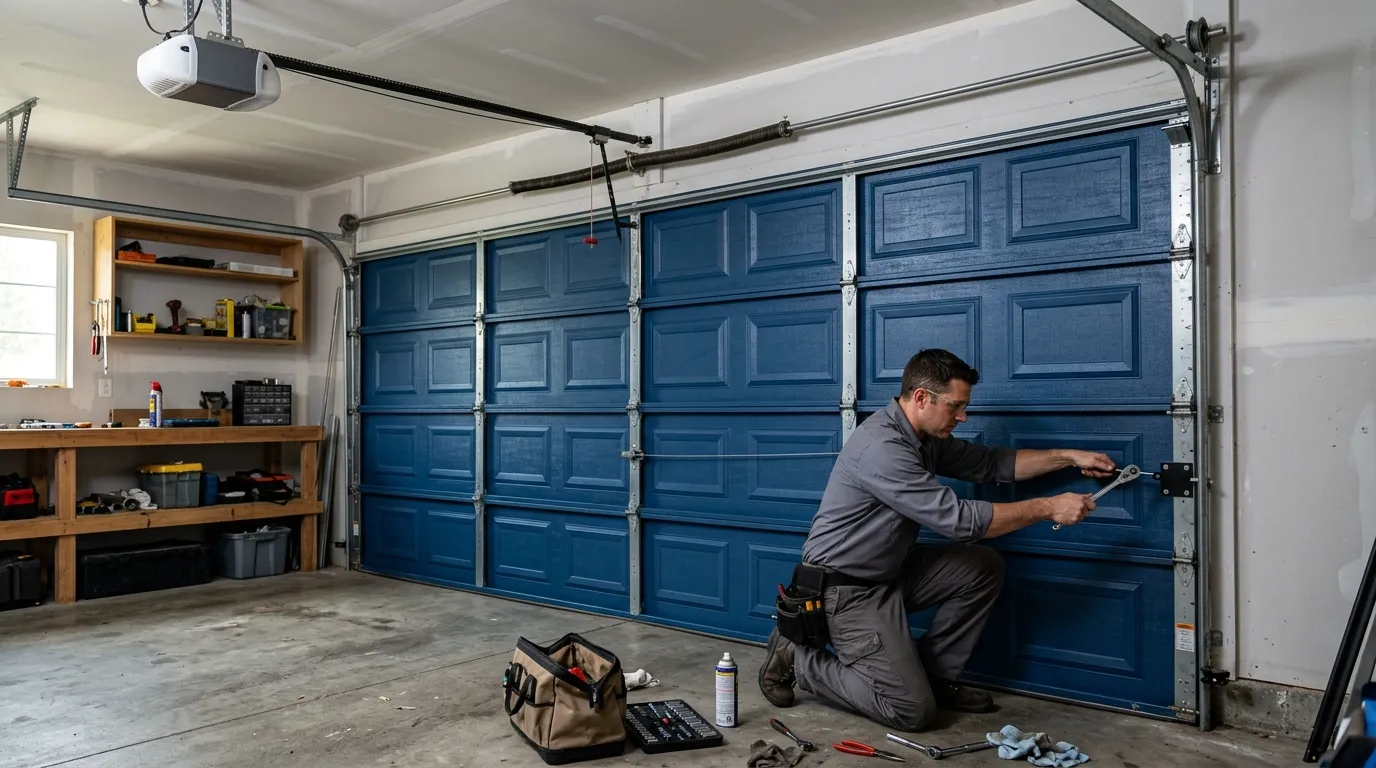
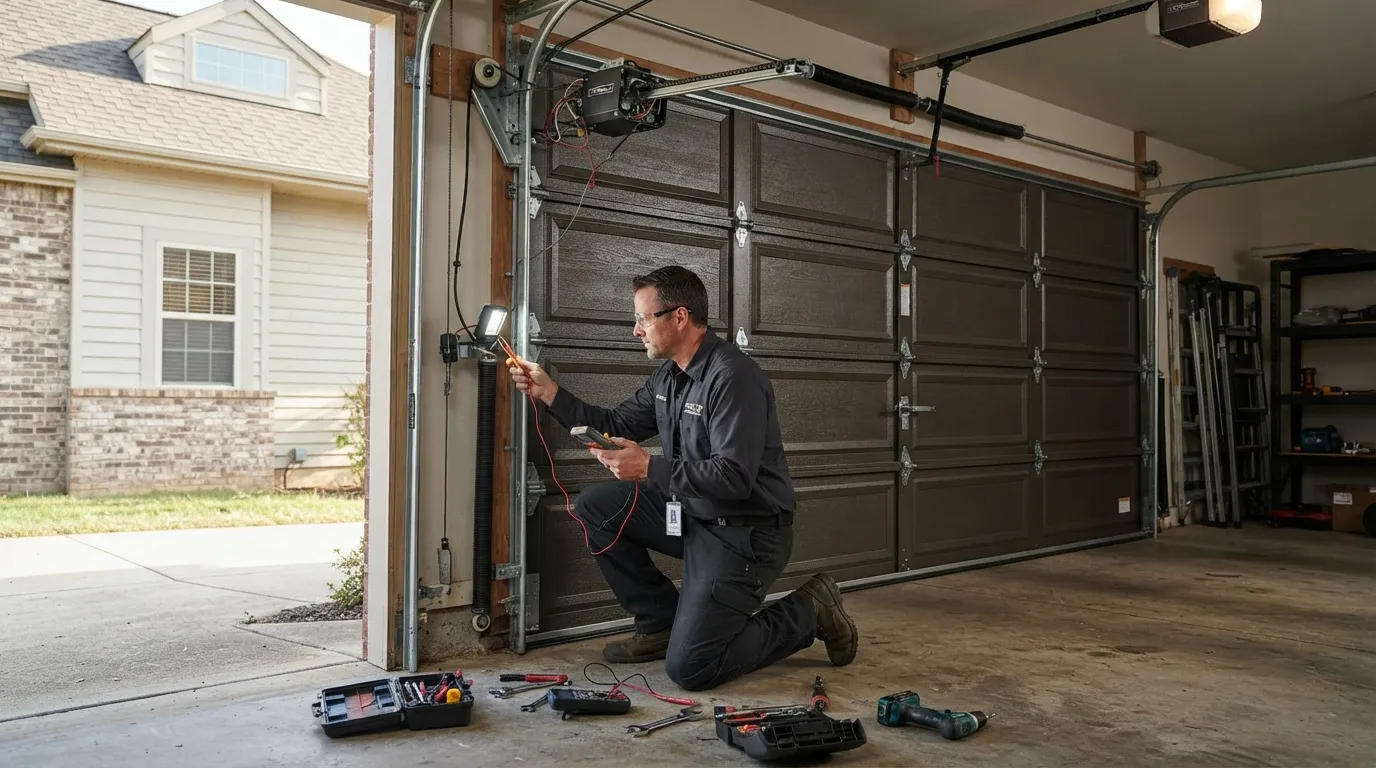
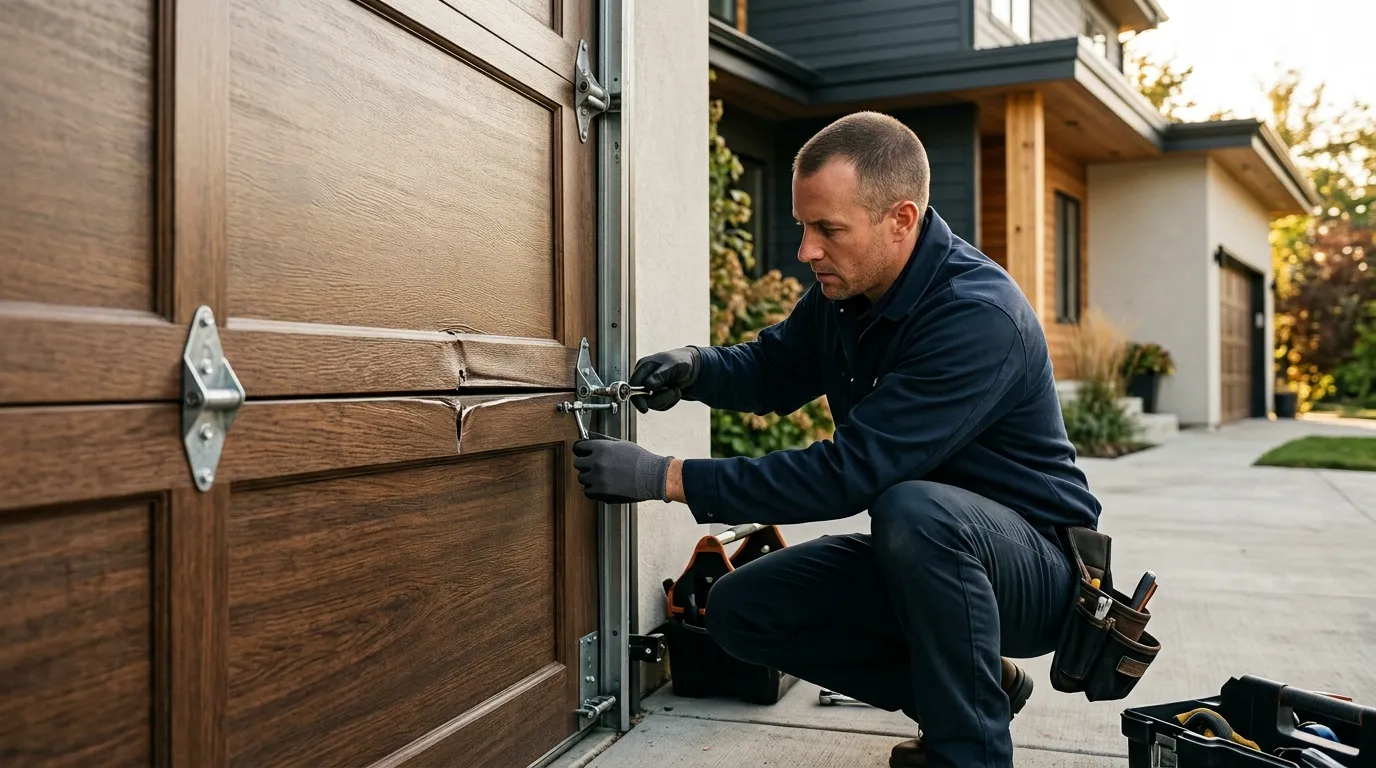
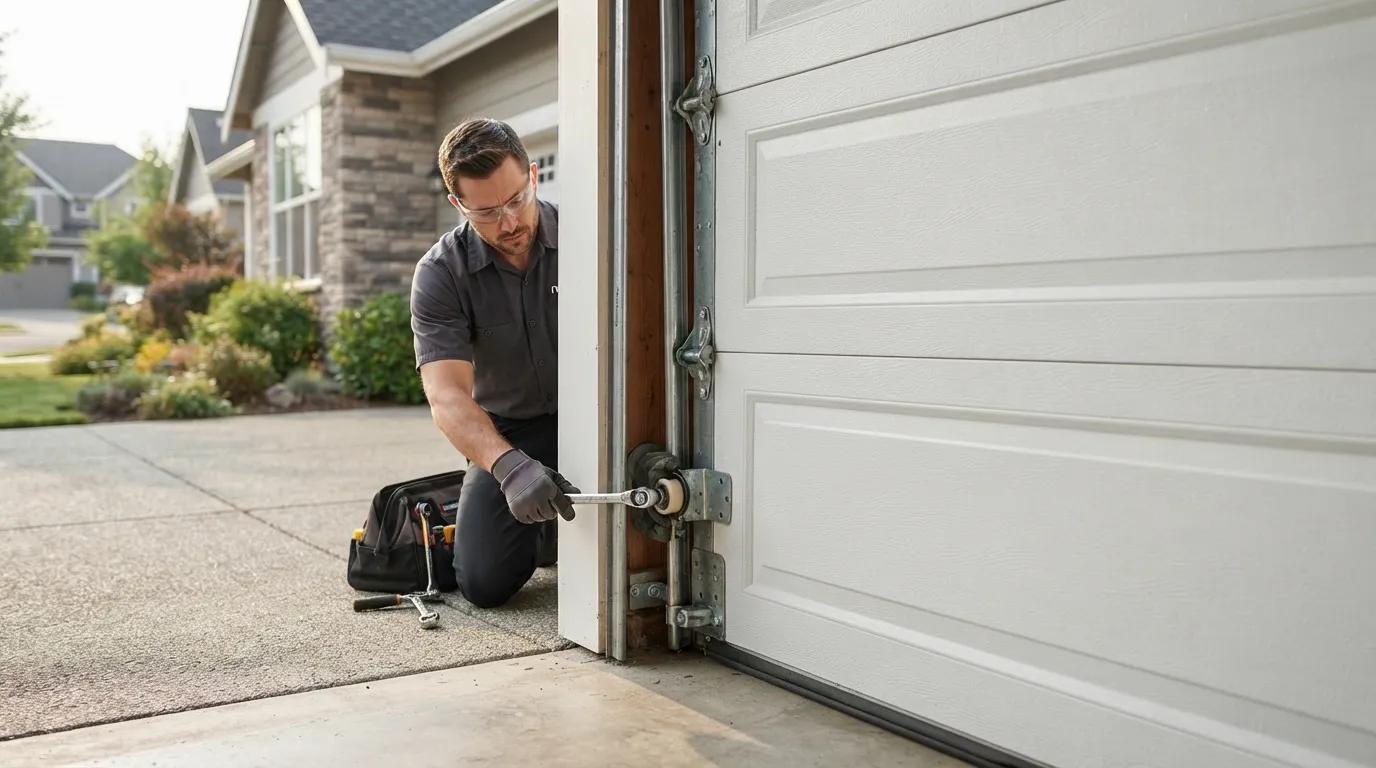
Minnesota's climate band is cold and severe, and that doesn't change block to block - what changes is how a specific door handles it. A 1960s-built door with steel rollers and a torsion spring that's cycled through fifty-some winters is going to seize or snap differently than a newer insulated door with nylon rollers. In St. Louis Park's newer-built stock, the more common cold-weather failure is opener strain: cold makes lubricant thick and lift chains stiff, and an opener that's already working near its rated capacity for a heavy insulated door starts tripping breakers or grinding gears before it ever fully fails.
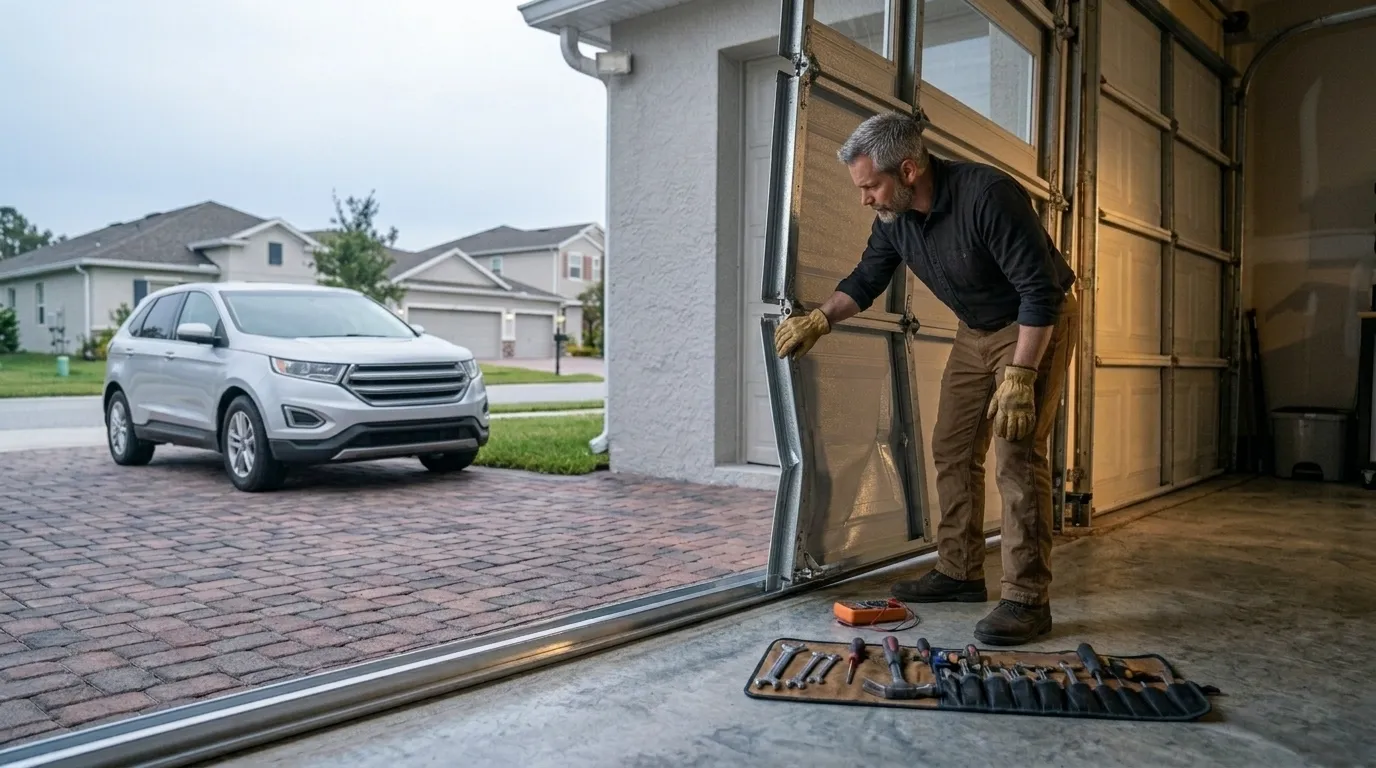
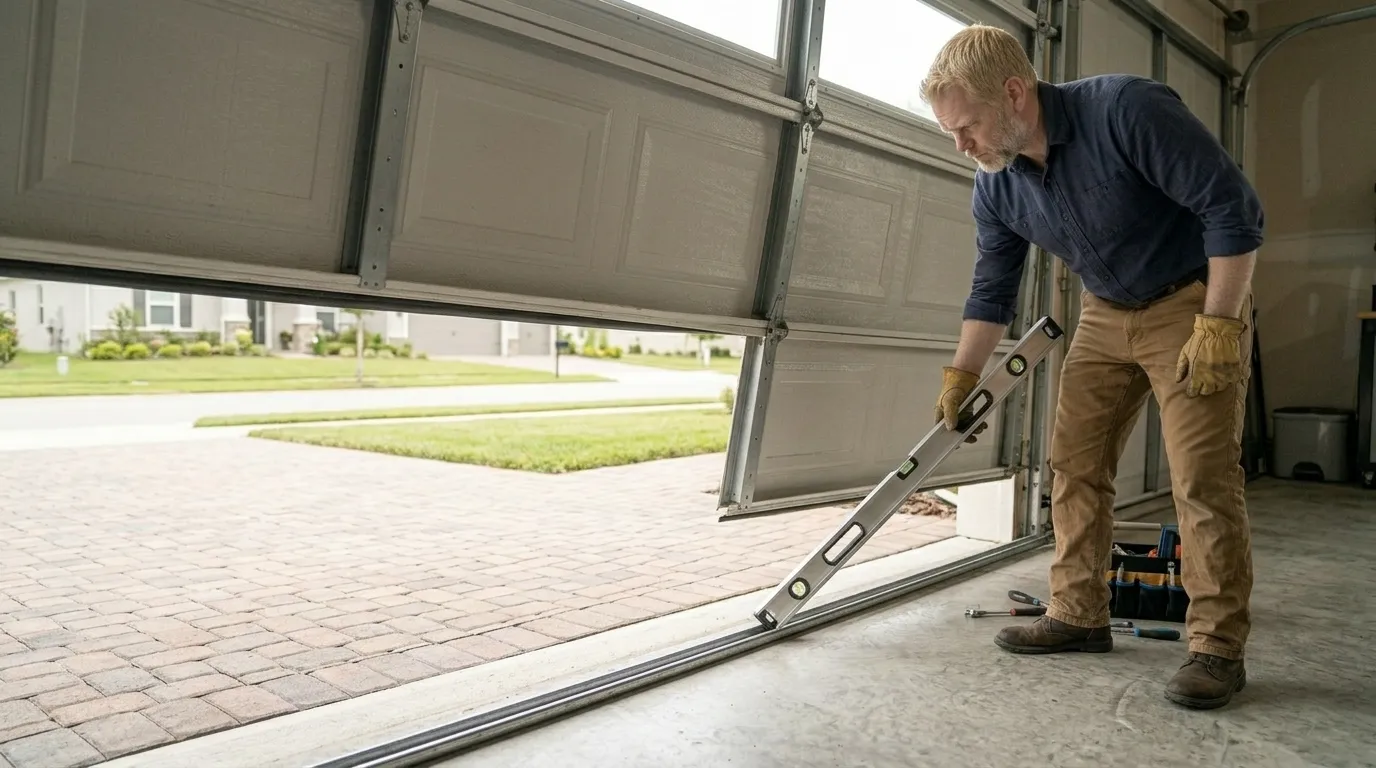
We also see nylon rollers going brittle and cracking in the cold on these later-build doors, which is less an issue on older uninsulated doors with steel rollers. It's a smaller fix than a spring job, but it's the kind of thing that gets ignored until the door comes off track.