
Blog
Detached or Attached: The Garage Door Difference in Minneapolis
Minneapolis houses built mostly between 1952 and 1975 split fairly evenly between attached and detached garages, and the difference matters more once winter cold sets in.
How Local Conditions Play In
Minneapolis housing stock runs 1952 to 2003, with the median build year sitting at 1975, and most of the 54 named areas we cover still show that 1960s-70s character in their garages. That era is when detached single garages at the back of the lot started giving way to attached two-car garages built right into the house. Both types are common across the service area, and each one behaves differently once the temperature drops into the range that defines our climate band here: cold, and severe with it.
An attached garage shares a wall with living space, so the door is doing double duty - keeping weather out and acting as a thermal buffer for whatever room sits on the other side of that wall. A detached garage has no such buffer. It's an unheated box sitting in the same cold as the driveway, and the door on it takes the full brunt of winter with nothing behind it to soften the swing.
That distinction isn't cosmetic. It changes what hardware makes sense, how much insulation actually pays off, and how often cold-weather failures show up. A door and opener setup that's fine on a detached garage can be the wrong call on an attached one, and the reverse is also true.
What Most People Get Wrong
The most common mistake we see: treating an attached garage door like it only needs to look good, when in a cold-severe climate it's functioning as an exterior wall of the house. If that garage sits under or beside a bedroom, an uninsulated door lets a lot of cold radiate straight through, and homeowners often don't connect a chilly upstairs room to the door two floors down.
The opposite mistake happens on detached garages. People sink money into heavy insulated doors and openers rated for smart features, when the building itself has no heat source and no insulated walls to match. In that case the door's insulation value barely moves the needle - the garage still swings to outdoor temperature within an hour either way. The smarter spend there is usually weatherstripping and a bottom seal that actually seats tight, not a jump in R-value.
Given the age of most garages here - built in that 1952 to 2003 window, a lot of it clustered in the 60s and 70s - original hardware is also frequently mismatched to the door that's on it now. A homeowner replaces a door over the years but keeps the old track or spring sizing, and it works until a cold snap finds the weak point.
When to Call Someone
If you've got an attached garage and you notice a specific room nearby running colder than the rest of the house, that's worth a look before you assume it's the furnace. A gap at the bottom seal or a warped panel on a decades-old door is an easy thing to miss and a straightforward thing to fix.
For detached garages, the signal is usually mechanical rather than thermal: a door that binds, drags, or won't seat square once the cold sets in. Steel contracts, old lubricant thickens, and hardware sized for a lighter original door starts to show it. If the door is fighting the opener every cold morning, that's not a lubrication problem you can oil your way out of forever.
One honest limitation: we can't tell you which situation you're in from a description over the phone. Attached and detached garages fail differently enough, and houses here span enough decades of construction, that it takes an actual look at the door, the track, and the wall behind it to know whether you're looking at a seal, a spring, or a full replacement.
The Situation
Across the service area - 415,224 households, with 168,625 of those in owner-occupied houses - garages split between attached and detached in rough proportion to when the neighborhood went up. Median household income here runs $96,224, which is worth mentioning only because it shapes a real choice: replace an aging door outright versus keep repairing hardware that was sized for a house built decades before the current door went on.
Neither option is automatically right. A detached garage with a sound frame and dated but functional hardware often doesn't need a full replacement - it needs seals, a spring matched to the actual door weight, and maybe a new bottom panel. An attached garage acting as a cold spot in the house is a different conversation, one where insulation value and air sealing matter more than they do fifty feet away in a standalone structure.
We look at the two differently because the climate here doesn't let you treat them the same. A cold-severe winter finds every gap, whether that gap is in a house wall or a garage that was never meant to hold heat in the first place.
Questions
Common questions
Does my detached garage door need to be insulated in Minneapolis?
Not necessarily. If the garage itself is unheated and uninsulated, an insulated door won't keep it much warmer - the whole structure equalizes with outdoor temperature anyway. Insulation matters more when the garage is attached and backs onto living space, since then the door is part of the house's thermal envelope.
Why does my attached garage make one room in my house cold?
An attached garage door functions as an exterior wall for whatever room sits against it. In a cold-severe climate like ours, gaps at the bottom seal or an aging, poorly sealed panel let cold radiate through, which can show up as a chilly bedroom or hallway well before you'd think to blame the garage.
My house was built in the 60s - is the garage hardware original?
A lot of houses in this area date to that 1960s-70s stretch, and it's common to find a door that's been replaced over the years while the track or spring sizing stayed original. That mismatch often holds up fine until a cold snap puts extra strain on it.
Recommendation
You Might Also Like
More garage door guides for Minneapolis homeowners.
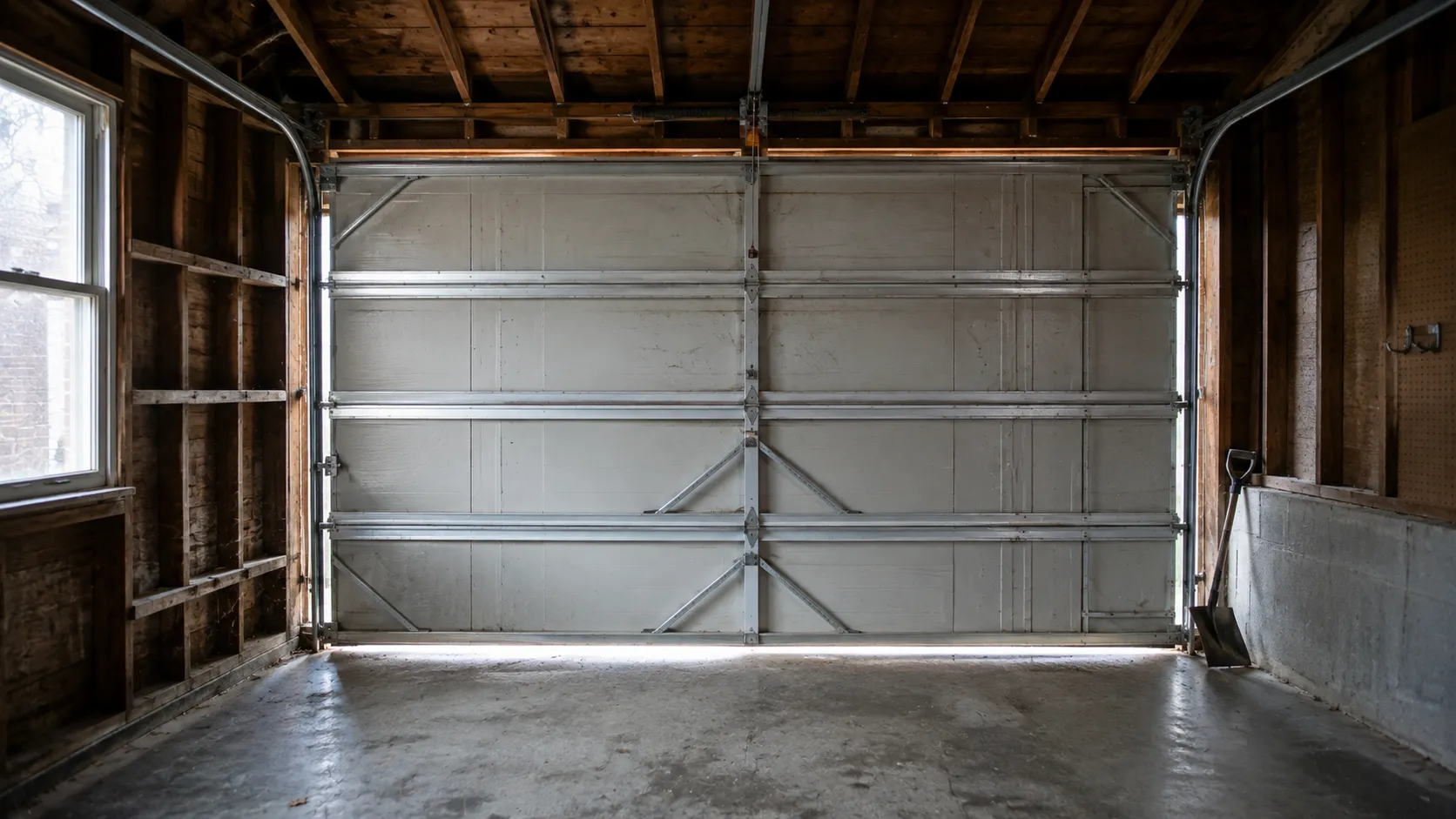
What an Uninsulated Door Costs You in a Minneapolis Winter
Minneapolis homes built 1952-2003 often carry uninsulated garage doors that fought cold weather rules never applied.
Read guide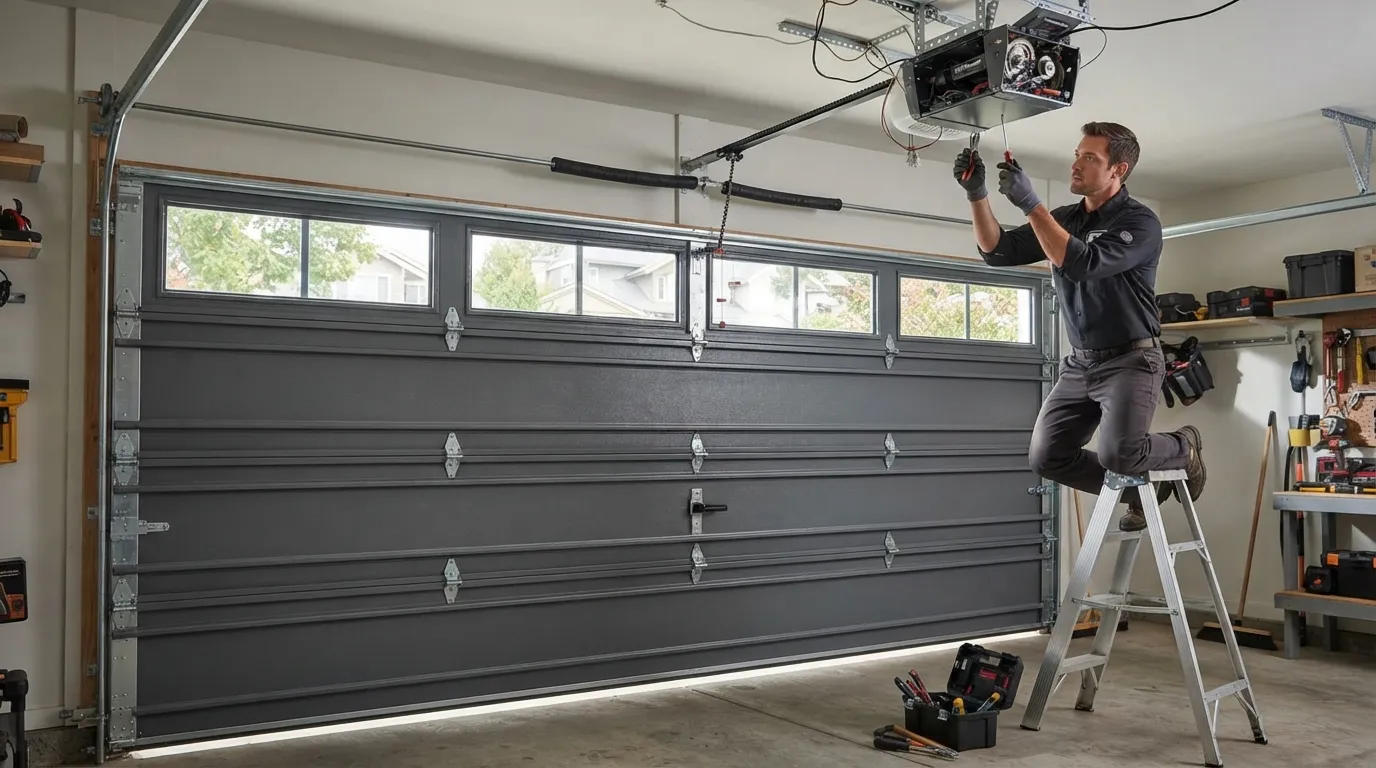
What a Power Cut Does to a Minneapolis Garage Door Opener
Minneapolis homes built 1952-2003 face cold-climate opener strain and outages.
Read guide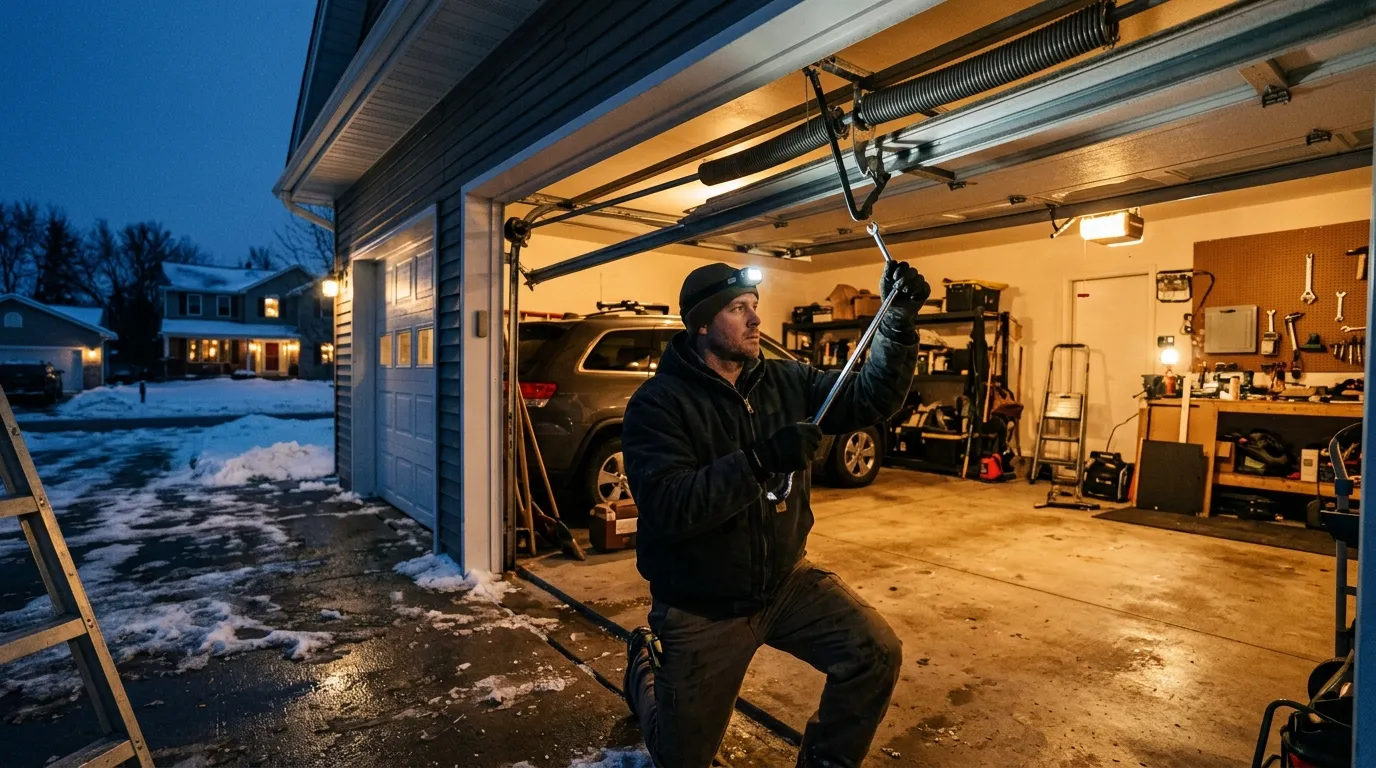
Why Garage Door Safety Sensors Drift Out of Alignment Here
Minneapolis garages built between 1952 and 2003 see sensor brackets shift with frost heave and slab movement.
Read guideReady when you are
Need a garage door sorted in Minneapolis?
Minneapolis Garage Door Pros repairs and installs garage doors, springs and openers in Minneapolis, MN and the surrounding area.