St Louis Park, Minneapolis

Off-Track Garage Door Repair for St. Louis Park Homes

St. Louis Park homes date to about 1965. Off-track failures here trace to original rollers and track brackets that have never been swapped. Here's what that repair involves.

Off-Track Garage Door Repair for St. Louis Park Homes in Minneapolis
Serving Minneapolis, MNBackground-checked techsHonest, upfront pricingFast local response

Symptoms

The Symptom

A door that's jumped its track in St. Louis Park is almost always a house built close to 1965, the median year for this suburb, where track brackets and rollers bolted to the jamb have often never been touched since the framer walked off the job decades ago.

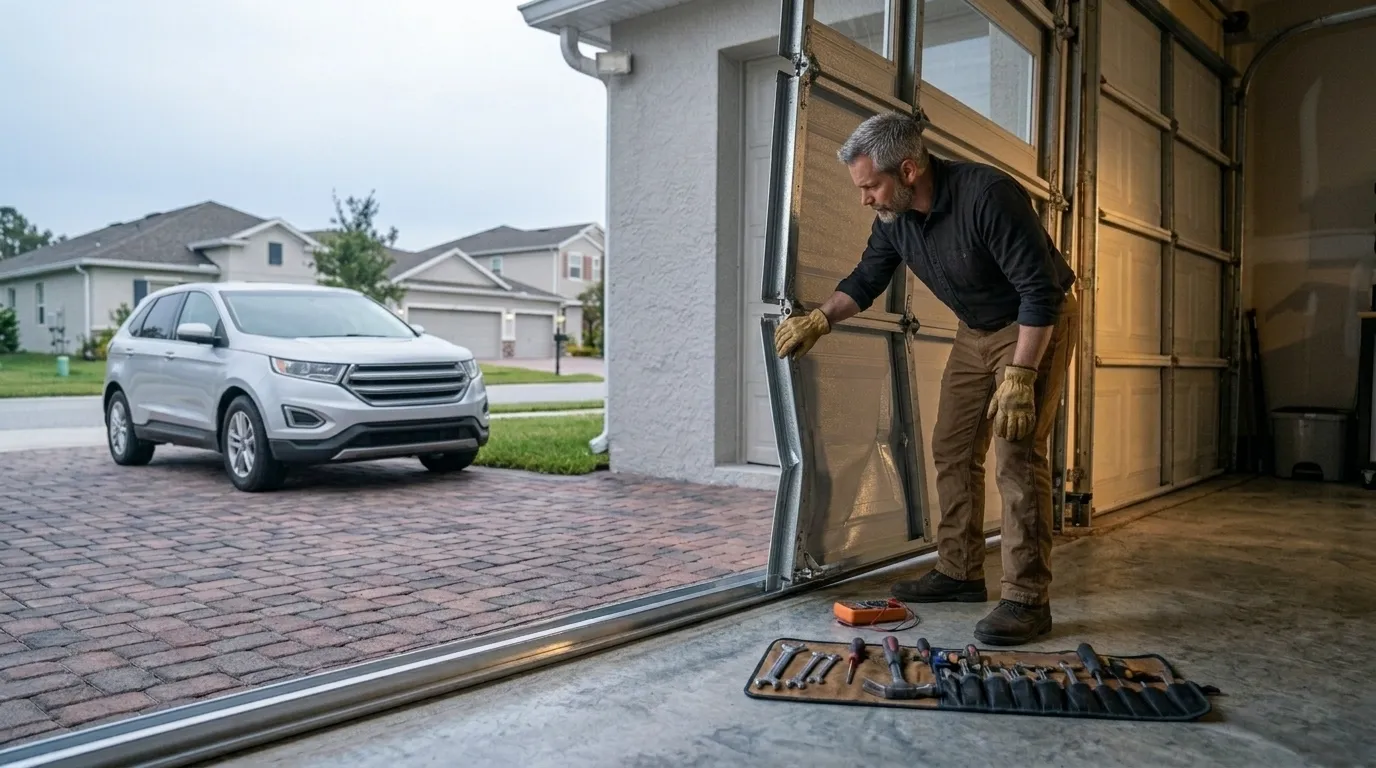
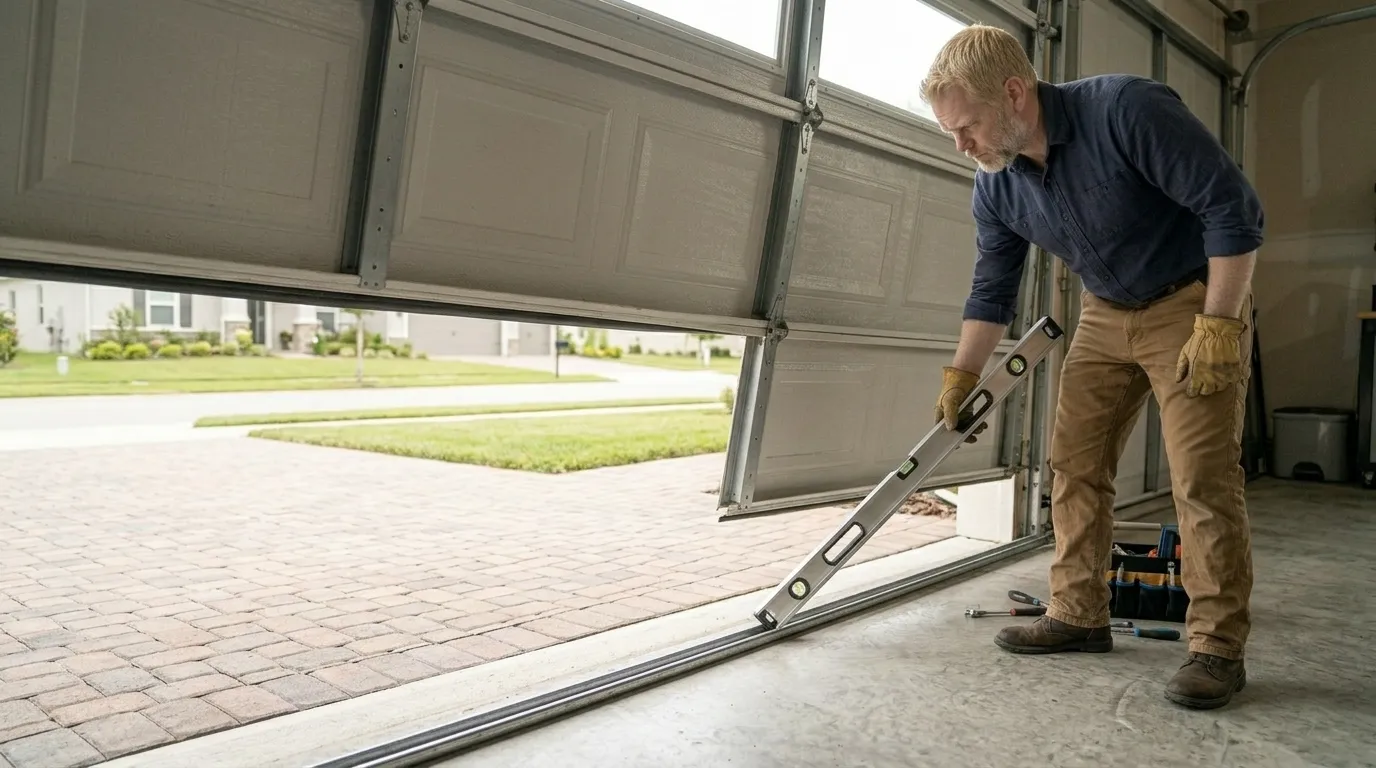
Door Hangs at an Angle

Steel track from the 1965 era is lighter gauge than what gets installed now, and after five or six decades of expansion and contraction, the brackets holding it to the jamb work loose a fraction at a time. You don't see it happening until the door hangs at an angle one morning.

Roller Pops Out of Track

A roller can pop clean out of the track on the way down, and the door drops crooked on one side while the other side keeps rolling - a sudden, visible failure of hardware that's been loosening quietly for years.

Sudden Impact Damage

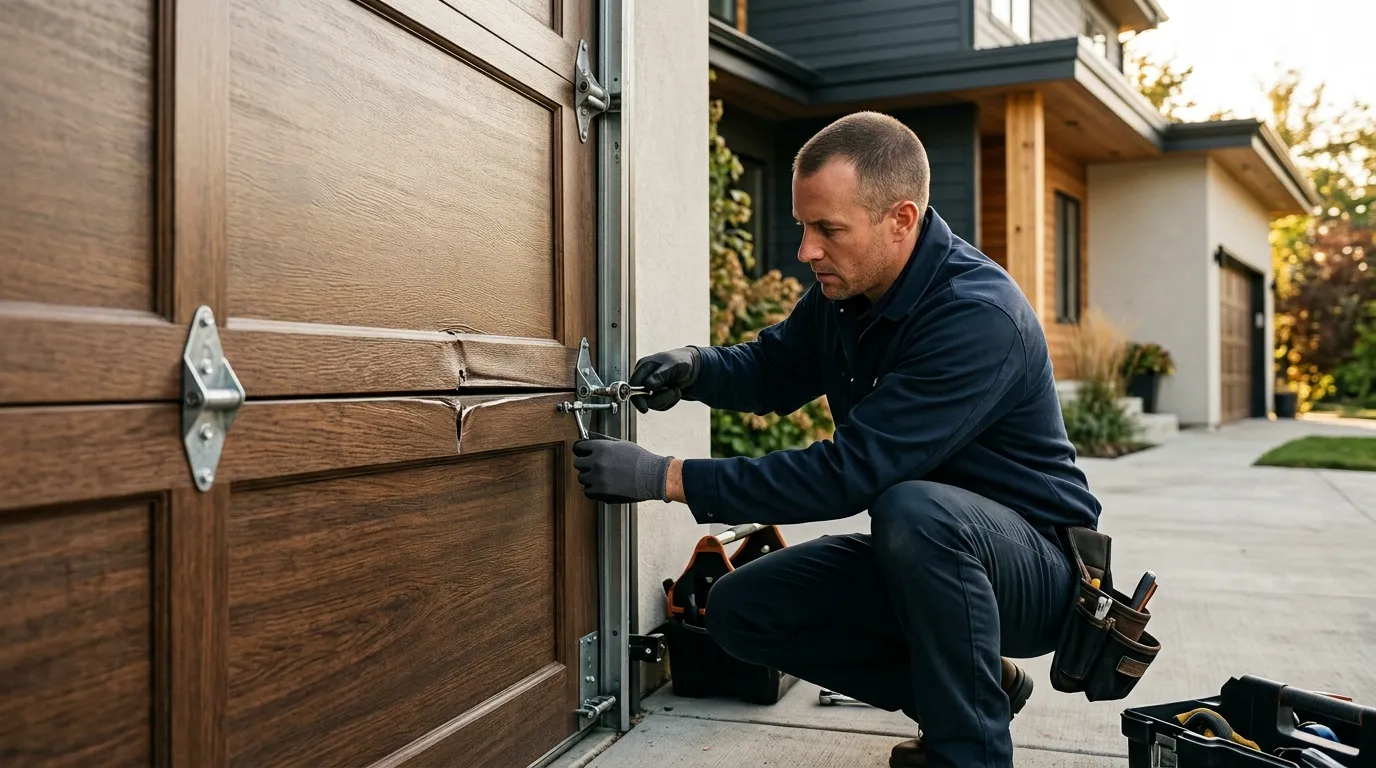
Sometimes the cause is sudden - a slammed door, a car bumper clipping the bottom panel, a kid on a bike - rather than gradual wear. Either way, the door won't move safely once it's off the rail.

Fatigue from Roller Riding the Edge

More often in this stretch of houses it's just fatigue: track bolts backed out a turn, brackets bent from years of a roller riding the edge instead of the center. Forcing the opener to keep trying usually bends the track further or cracks a stile.

The repair

What the Repair Takes

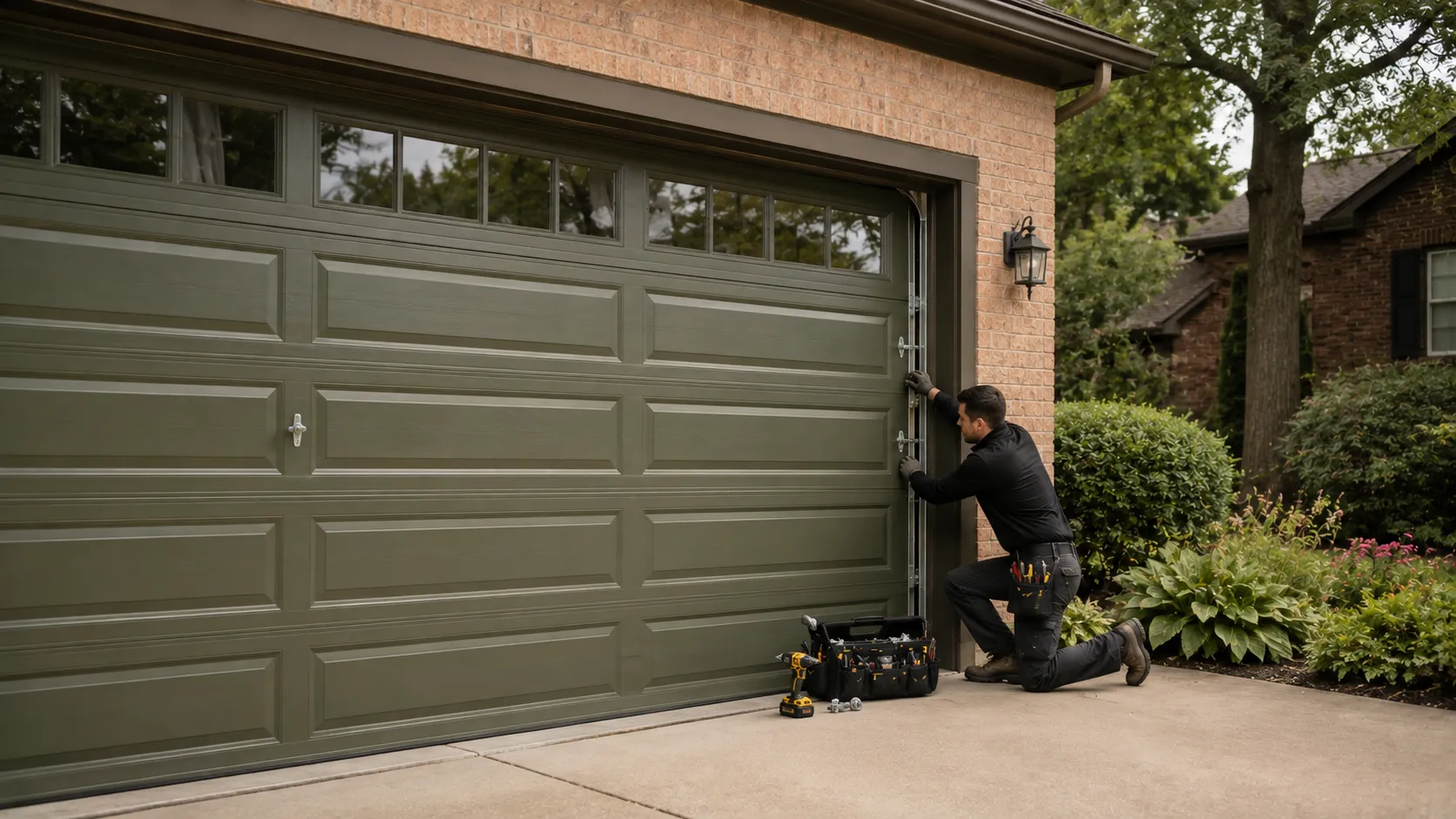
First step is getting the door off the opener and secured by hand, because a torsion spring under load on a door that's already off-track is not something to fight with a drill. From there it's a matter of checking whether the track itself bent or just came loose.

  1. Secure the door by hand

    We get the door off the opener and secured by hand first, because a torsion spring under load on a door that's already off-track is not something to fight with a drill.

  2. Check whether the track bent

    We check whether the track itself bent - which happens more than people expect on a door running the same original rail since the mid-1960s - or whether it's just knocked loose and can be reset.

  3. Reset rollers and re-torque brackets

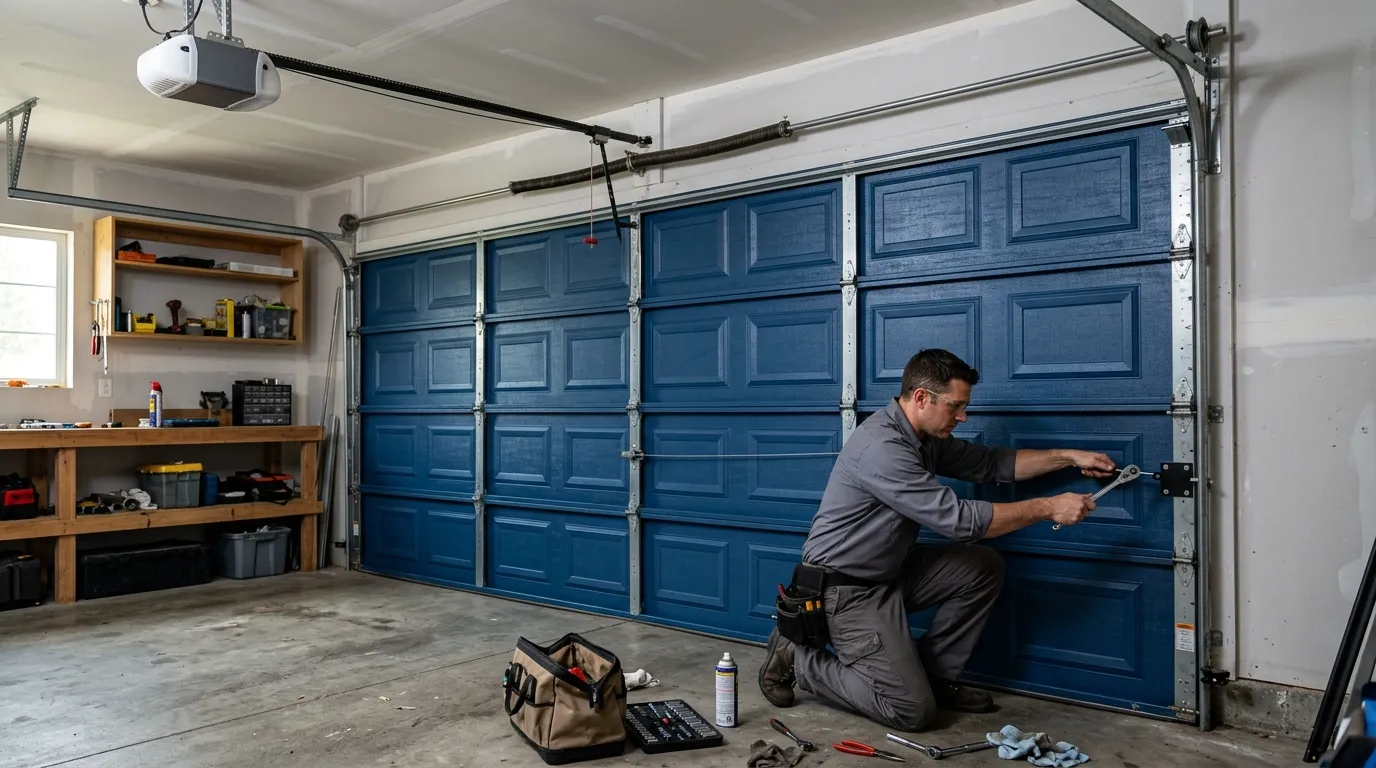
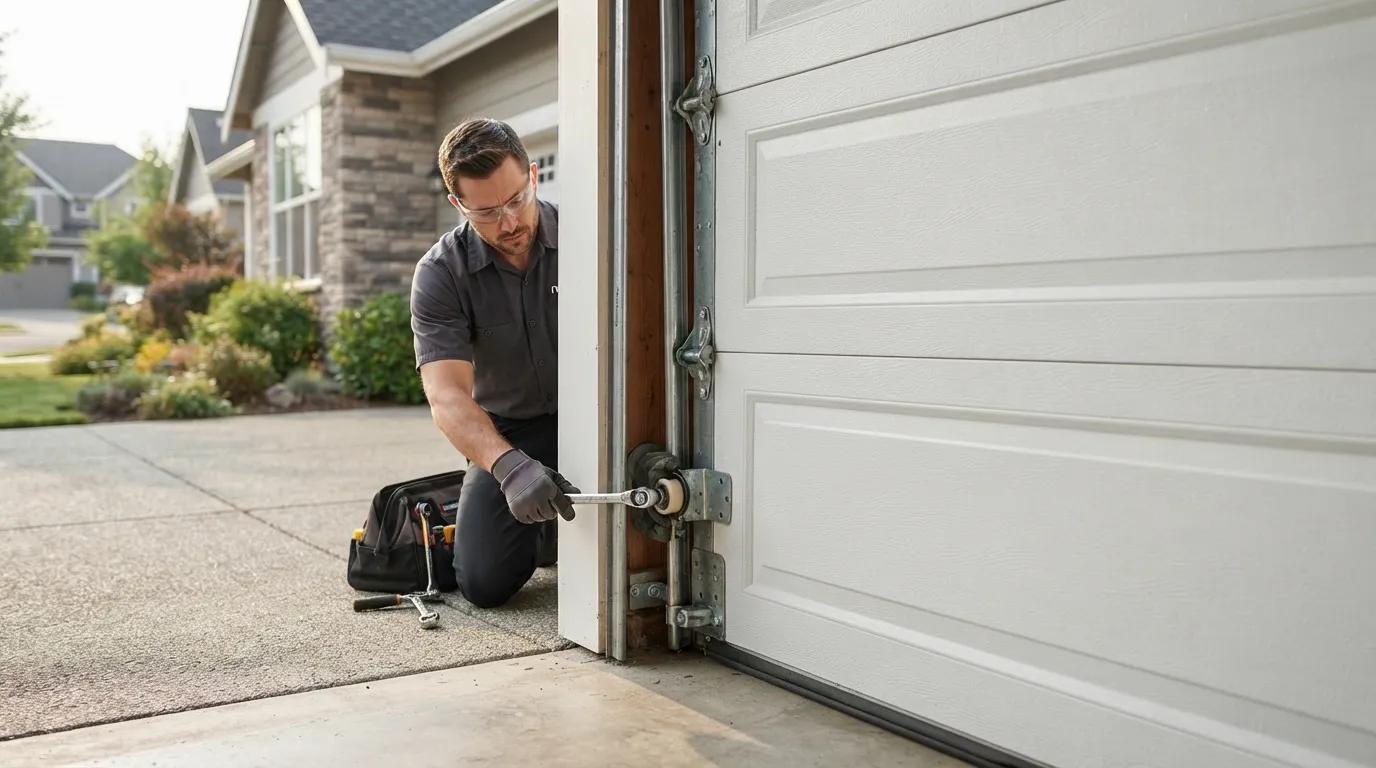
    If the track's straight, we reset rollers into the rail, re-torque the bracket bolts into the jamb, and check the whole run for square, which usually gets the door moving again in one visit.

  4. Replace bent sections rather than straighten

    If the track bent, that section gets replaced rather than hammered back straight, because a track that's been forced back into shape once will do this again.

  5. Check roller type while open

    While the door's open we also check the rollers themselves - on a house of this age, if they're still the original steel rollers instead of nylon, that's often the actual root cause and worth flagging even if it's not the day's job.

Local causes

Why This Fails Locally

St. Louis Park sits inside a cold-climate band with real winter severity, and that matters for track hardware specifically. Steel track and steel brackets contract in cold and expand in heat every single year, and on a house built around 1965 that's close to sixty annual cycles of movement working the same bolt holes. Wood jambs dry out and shrink over that many decades too, so the screws holding the bracket to the jamb have less grip than they did the day they went in. That's a different failure path than you'd get on newer construction with engineered framing and shimmed brackets.

The median household income here runs around $100,250, noticeably above the roughly $96,224 median across the wider service area, and that tends to show up as more owners catching this early - fixing a loose bracket before it becomes an off-track emergency - rather than running hardware to total failure. Still, original track on a house this age is original track, and it doesn't know what the income figures are.

Why This Fails Locally
What It Costs

Pricing

What It Costs

I don't have a published price list for off-track repair here, and I'm not going to guess at a number - it depends on whether the track bent, whether rollers need replacing, and whether the bracket pulled loose from the jamb or just backed out. What I can tell you is that a straightforward reset-and-retorque job, with nothing bent, is a smaller job than a bent-track replacement, and both are smaller than what happens if a door keeps getting run off-track and a panel or stile finally cracks. If you're not sure which category you're in, that's exactly what a look at the door tells us before any work starts.

Watch-outs

What Can Go Wrong

Two risks come up regularly on off-track repairs here: hardware too far gone for a simple reset, and the damage that piles up if the opener keeps running against a door that's already off one side.

Track or Jamb Too Far Gone

If the track bent badly enough, or the jamb wood has softened where the brackets mount, a reset isn't the fix - that section needs replacing, and on an older house that sometimes means the whole track run instead of a patch, since matching decades-old rail profile isn't always practical. We'll tell you straight if that's what we're looking at.

Running the Opener Off-Track

Running the opener against a door that's already off one side is the other risk. Every cycle after that first jump tends to bend the track further, stress the opposite bracket, and in worse cases crack a panel where the roller was dragging.

Leave It Alone Until Checked

If the door's off-track, the safest move is to leave the opener alone and get it looked at before it runs again - covered from our Minneapolis crew, about 5 miles out to St. Louis Park.

Questions

Common questions

Is off-track always an emergency repair?

Not always. If the door's resting safely and nothing's forcing it, it can usually wait a day or two. The risk is running the opener on it, which tends to turn a loose bracket into a bent track. If you can leave it alone until someone looks at it, that's the safer move.

Why does this happen more on older St. Louis Park homes?

Houses here run to a median build year around 1965, and a lot of that original track and bracket hardware has never been swapped. Decades of seasonal expansion and jamb shrinkage loosen the mounting bolts gradually, so a house this age is more likely to have hardware that's simply worn out rather than damaged in one event.

Can you fix off-track without replacing the whole track?

Often, yes - if the rail itself is still straight and the problem is loose brackets or rollers out of the channel, resetting and re-torquing is usually enough. If the track bent, that section gets replaced rather than forced back straight, since a bent track that's been straightened once tends to fail again.

Ready when you are

Need a garage door sorted in Minneapolis?

Minneapolis Garage Door Pros repairs and installs garage doors, springs and openers in Minneapolis, MN and the surrounding area.

CallGet a quote