
Blog
Deciding Whether to Repair or Replace an Older Door in Minneapolis
In Minneapolis, most garage doors date to homes built between 1952 and 1975, and our severe cold winters decide whether an old door repair still makes sense.
How Local Conditions Play In
Housing in this service area went up mostly between 1952 and 2003, with the bulk of it clustered in the 1960s and 70s across the 54 neighborhoods and inner-ring cities we cover, from Phillips and Powderhorn out toward St. Louis Park and Golden Valley. That means a lot of the doors we look at aren't old because someone neglected them - they're old because the garage itself is old, and the door has been doing its job since before steel springs were rated the way they are now.
The bigger factor is the climate band this area sits in: severe cold. A door that would coast along fine in a mild climate gets worked harder here. Steel contracts in a January cold snap, then a heated garage or a warm afternoon expands it back. That cycle, repeated every winter for forty or fifty years, is what actually breaks down torsion springs, dries out weatherseal, and pits rollers - not simple age on a calendar. So the question with an older Minneapolis door is never just "how old is it," it's "how many cold cycles has this specific hardware absorbed."
What Most People Get Wrong
The mistake we see most is treating the door panel and the hardware as one unit. A steel door from a house built in the 1960s or 70s can still be straight, solid, and worth keeping, while the torsion spring, cables, and rollers underneath it are the original parts and long past due. People assume a sagging or noisy door means the whole unit is shot, when often it's one spring rated for a much lighter cycle count than modern hardware, straining under decades of cold-to-warm swings.
The opposite mistake happens too. Someone replaces a cable or a roller, the door runs quiet for a season, and they assume the door is good for another twenty years - without checking whether the drum, the track alignment, or the bottom seal are also original to a house built in that same 1952-1975 window. In a severe cold climate, one weak point in an aging system tends to drag the rest down with it faster than owners expect, because every part is absorbing the same freeze-thaw stress at the same time.
When to Call Someone
Call before the door fails completely, not after. In a severe cold climate, a spring that's been degrading quietly for years tends to let go on the coldest morning of the year, which is also the worst time to be stuck with a door that won't open. If a door on a house from this era is starting to sound different in winter than it does in summer - more grinding, more hesitation on the first lift of the day - that's the cold cycling talking, and it's worth a look before it's an emergency.
We won't tell you to replace a door that just needs a spring, a cable, or a set of rollers. If the panels are straight and the track is true, fixing the original hardware on a house built in the 1960s or 70s is usually the right call and the cheaper one. Where it stops making sense is when the door itself has rusted through at the bottom panel or the track has bent from years of an unlevel slab settling - at that point you're paying repair prices to delay a replacement you'll still need.
The Situation
Across this service area there are roughly 168,625 owner-occupied houses out of 415,224 households total, and a large share of them still carry the door and opener that came with construction sometime between 1952 and 2003. With a median household income of $96,224 here, most owners can cover a full replacement without much strain - but plenty of these doors don't need one yet.
Our honest limitation: we don't stock every original spring size or drum for doors from every decade in that build window, and on some of the oldest units, matching an exact original part means an order and a wait rather than a same-day fix. When that happens, we'll tell you upfront what the wait looks like, and whether a compatible modern spring or drum is a reasonable swap instead of holding out for an exact match. Sometimes replacement ends up being faster than the parts search, and we'll say so rather than stringing out a repair that isn't worth the delay.
Questions
Common questions
How do I know if my garage door's age means it needs replacing instead of repair?
Look at the panel and track first, separately from the hardware. If the steel is straight and the track is true, a spring, cable, or roller repair usually makes sense even on a door original to a house built in the 1960s or 70s. Rust through the bottom panel or a bent track from slab settling is where repair stops being the cheaper option.
Why does my old garage door act up more in winter?
This area sits in a severe cold climate band, and the swing between a heated garage and sub-zero mornings puts real stress on steel springs and cables. Hardware that's been cycling through that swing since the 1960s or 70s has absorbed a lot more freeze-thaw stress than its calendar age suggests.
Can you always get parts for a door this old?
Not always same-day. Some original spring sizes and drums from houses built decades ago take longer to source, and we'll tell you that wait time upfront rather than guess. In some cases a compatible modern part is a fair substitute; in others, waiting for the exact match is worth it.
Recommendation
You Might Also Like
More garage door guides for Minneapolis homeowners.
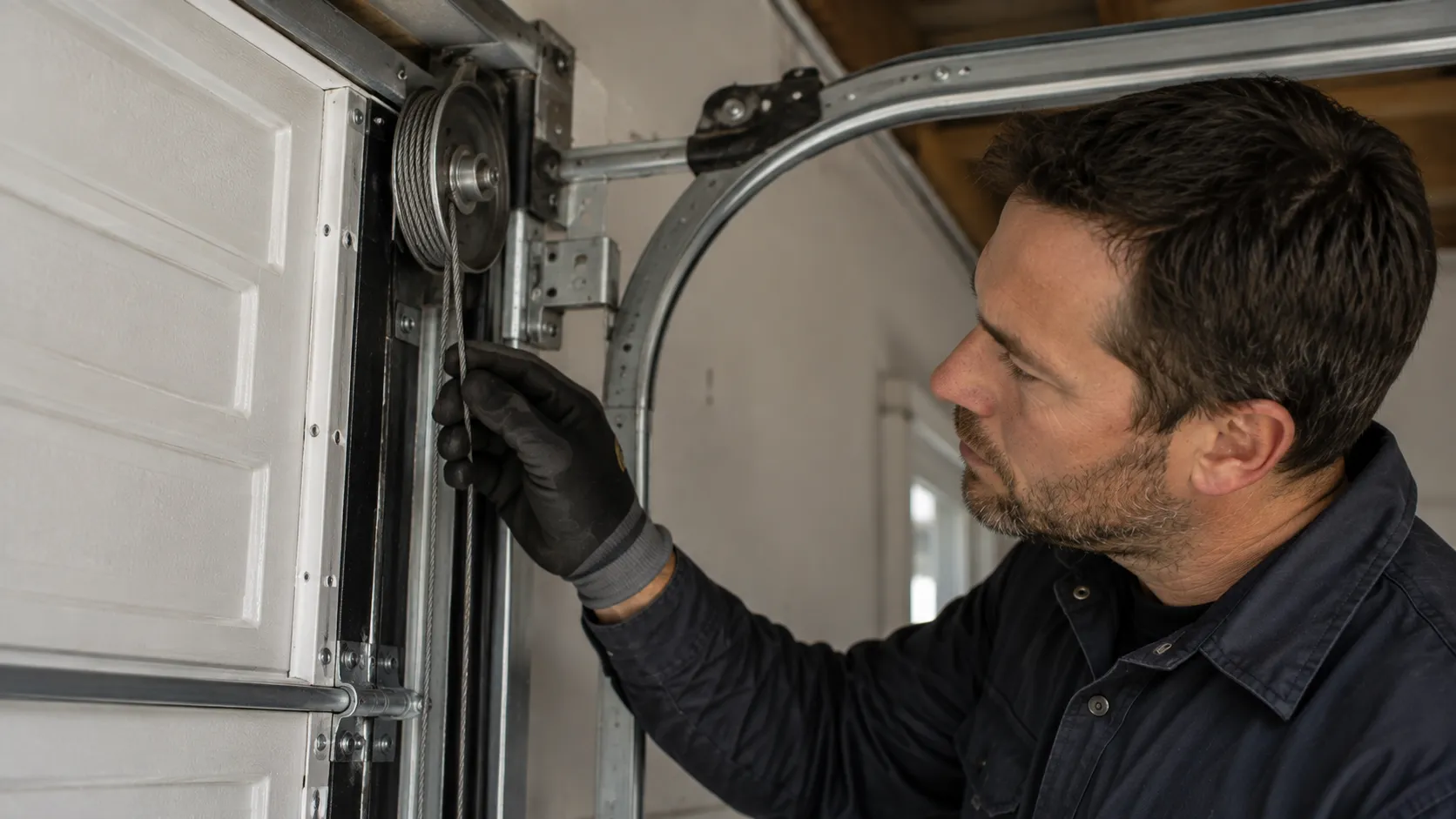
Checking a Garage Door the Minneapolis Way: What Comes First
A Minneapolis tech checks the spring, rollers, and weatherstrip first, since most homes here date to 1952-2003 and face severe cold winters each year.
Read guide
What to Know Before You Replace a Garage Door in Minneapolis
Most Minneapolis garage doors date to the 1960s-70s building boom.
Read guide
Garage Door Weather Seals for Minneapolis Winters
Minneapolis garage doors face cold-band winters, and homes built between 1952 and 2003 here need weather seals that match the era, not a generic strip.
Read guideReady when you are
Need a garage door sorted in Minneapolis?
Minneapolis Garage Door Pros repairs and installs garage doors, springs and openers in Minneapolis, MN and the surrounding area.