
Blog
What Your Garage Door Is Trying to Tell You
Minneapolis houses run 1952 to 2003, median 1975, and cold winters change how a door sounds. Here's what a bang, grind, or squeal is actually telling you.
How Local Conditions Play In
Most houses in Minneapolis and the surrounding named areas were built between 1952 and 2003, with a lot of that stock centered around 1975. That matters for noise because a door built or replaced in that window is old enough that its hardware has cycled tens of thousands of times, but the house itself usually wasn't built with insulated, sealed garages in mind. Add a cold climate with severe winter swings and you get metal that contracts hard overnight and expands again by afternoon. A track bolted to a wall in a 1975-era garage moves slightly with those temperature swings, and that movement shows up as sound before it shows up as a failure you can see.
A squeal on a below-zero morning that goes quiet by mid-day isn't your imagination. It's usually a roller or hinge that's lost its lubrication and is now grinding metal on metal while the steel is contracted tight. In a warmer climate that same worn roller might just wear out slowly and silently. Here, the cold makes it announce itself. That's useful, because it means the noise itself is often your best early warning system, not something to tune out.
What Most People Get Wrong
The most common mistake is assuming a loud noise means a big problem and a quiet door means everything's fine. It's often backwards. A door that's started making a rhythmic thump on the way down is frequently just a worn roller in a bent track section, a cheap fix if you catch it early. A door that's gone eerily quiet and slow, though, especially in a house from the 1960s or 70s with original torsion hardware, can mean a spring that's about to let go with no warning at all.
The other mistake is spraying WD-40 on everything and calling it maintenance. WD-40 is a solvent, not a lubricant, and on a track or hinge in a cold garage it can actually strip what grease is left and make the grinding worse within a week. Given how much of the housing stock here dates to that 1952-2003 window, a lot of the hardware in question is original or a first replacement, and it needs actual lithium grease, not a shop-rag fix.
People also tend to wait for a noise to get worse before calling. In severe cold, a small problem can go from annoying to a door stuck shut overnight, which is a bad morning for anyone heading to work.
When to Call Someone
Call when a noise changes character rather than just volume. A steady squeak that turns into a bang, a smooth roll that turns into a stutter, or any noise that starts happening at the same spot on the track every time - that's a part failing, not just aging. On a torsion spring system, a loud pop followed by the door refusing to lift is the spring letting go, and that's not a lubricate-and-wait situation.
We don't recommend DIY spring adjustment or replacement. Torsion springs on a garage door carry enough stored tension to cause serious injury, and that's true whether the door is original 1975 hardware or a recent replacement. If the noise is coming from the spring area, that's a call, not a project.
We also won't tell you every noise needs a truck out same day. Some, like a light rattle from a loose bracket, are a five-minute tightening job you can do yourself with a socket wrench, and we'd rather you save the service call for something that actually needs a tech.
The Situation
Across the service area - 415,224 households and 168,625 owner-occupied houses - a big share of garages are original to houses built decades ago, and cold-climate cycling has been working on that hardware the whole time. That's not a reason to panic about every squeak, but it is a reason to listen to what changes. The median household income here, just over $96,000, means most owners can afford to fix a problem properly instead of patching it, and that's usually the better call anyway once a part's actually failing rather than just aging.
A door making noise for the first time in a cold snap is common and often minor. A door that's been noisy for months and is now getting worse is a different story, and in a house from the 1960s or 70s that's run its original torsion hardware through fifty winters, worse can arrive fast.
Questions
Common questions
Why does my garage door only squeal in winter?
Cold contracts the metal in rollers, hinges, and tracks, which tightens tolerances that are looser in summer. If a roller or hinge has lost lubrication, that tighter fit turns a minor friction point into an audible grind. It usually eases up as the garage warms during the day, but the wear is happening either way.
Is a loud bang from my garage door always the spring?
Not always, but a single loud pop followed by the door feeling heavy or refusing to open is a strong sign of a broken torsion spring. A repeated thumping sound while the door is moving is more often a bent track section or a bad roller. Either way, don't force the opener if the door won't move smoothly.
My house is from the 1960s and the door's always been loud. Is that normal?
A lot of houses in this area were built in that era, and original hardware from that period can run for decades with normal wear noise. The question isn't whether it's loud, it's whether the sound is changing. Steady, consistent noise for years is different from a new grind, stutter, or bang.
Can I just oil everything myself?
Cleaning tracks and lubricating rollers and hinges with lithium grease is a reasonable homeowner job. Avoid WD-40, which can strip what lubrication remains. What you shouldn't touch is the torsion spring itself - that's under enough tension to cause real injury and isn't a maintenance task.
Recommendation
You Might Also Like
More garage door guides for Minneapolis homeowners.
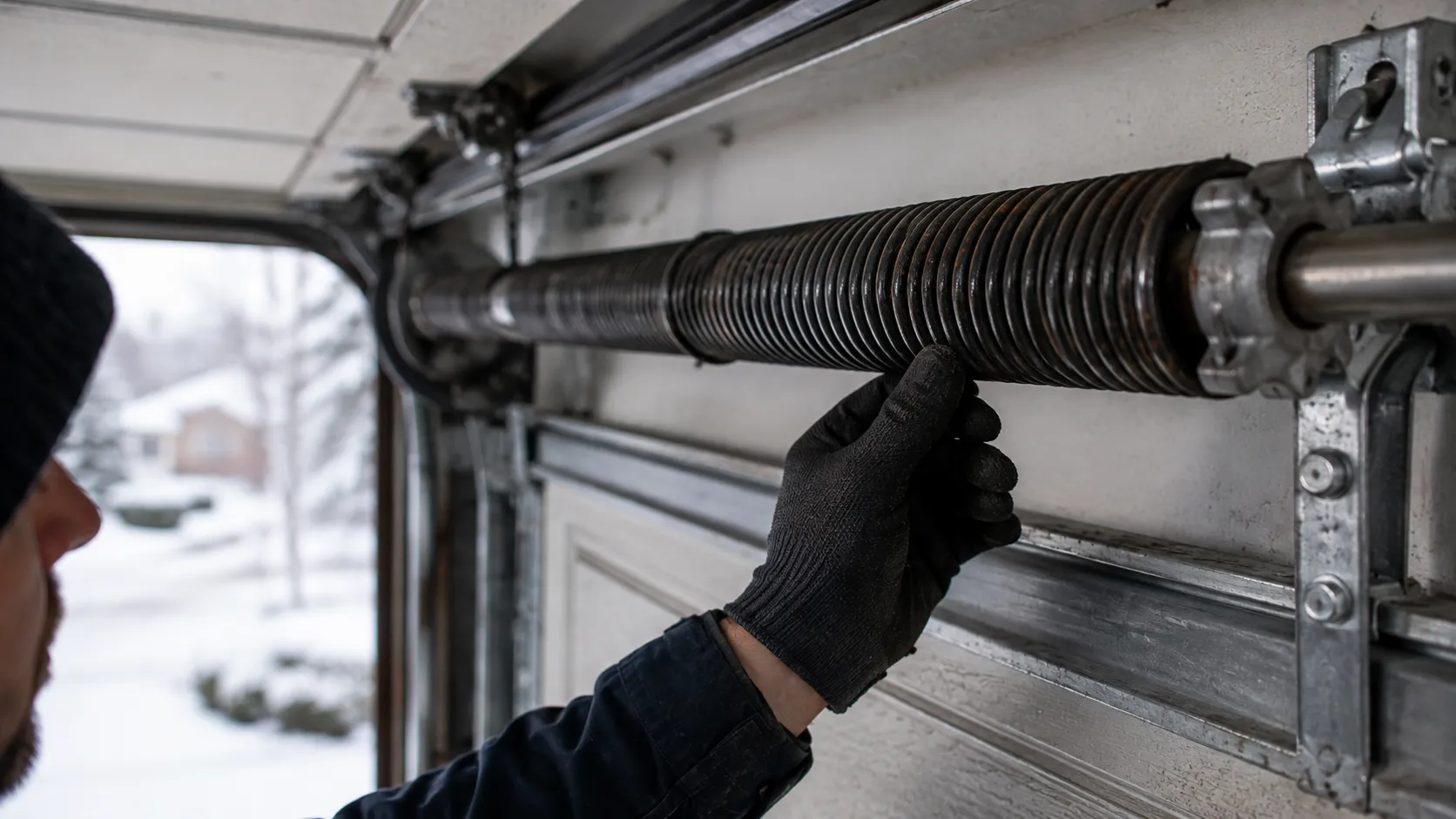
When a Spring Goes in Cold Weather
Minneapolis houses built 1952-2003 carry original torsion hardware that cold-snaps under our severe winters.
Read guide
Garage Door Weather Seals for Minneapolis Winters
Minneapolis garage doors face cold-band winters, and homes built between 1952 and 2003 here need weather seals that match the era, not a generic strip.
Read guide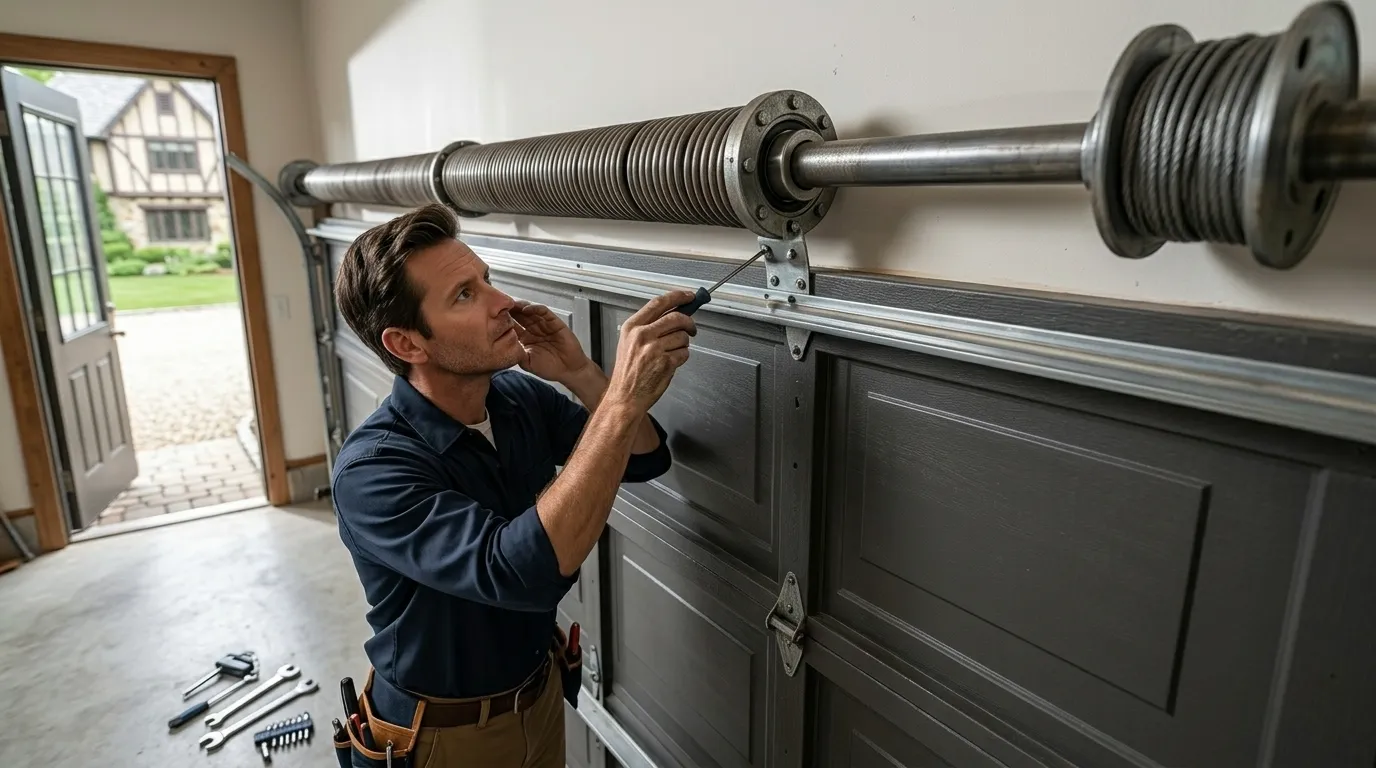
What Actually Happens During a Service Call in Minneapolis
A breakdown of what our techs actually check on a Minneapolis service call, from cold-weather spring tension to hardware common on 1950s-2000s homes here.
Read guideReady when you are
Need a garage door sorted in Minneapolis?
Minneapolis Garage Door Pros repairs and installs garage doors, springs and openers in Minneapolis, MN and the surrounding area.