Minneapolis, MN

Garage Door Maintenance for Minneapolis Homes

Garage door maintenance for Minneapolis homes built 1952-2003, tuned for our severe cold winters. Lubrication, hardware checks, and balance work done right.

Garage Door Maintenance for Minneapolis Homes in Minneapolis
Serving Minneapolis, MNBackground-checked techsHonest, upfront pricingFast local response
1952–2003
Typical build years of local homes
Hard winters
Climate that shapes door wear
169K
Owner-occupied homes in the area

DIY or pro

Doing It Yourself

You can do some of this yourself, and you should - the routine maintenance below is safe for most homeowners. Here's what's fine to handle on your own, and where the stored tension means it's a tech's job instead.

Wipe, inspect, lubricate

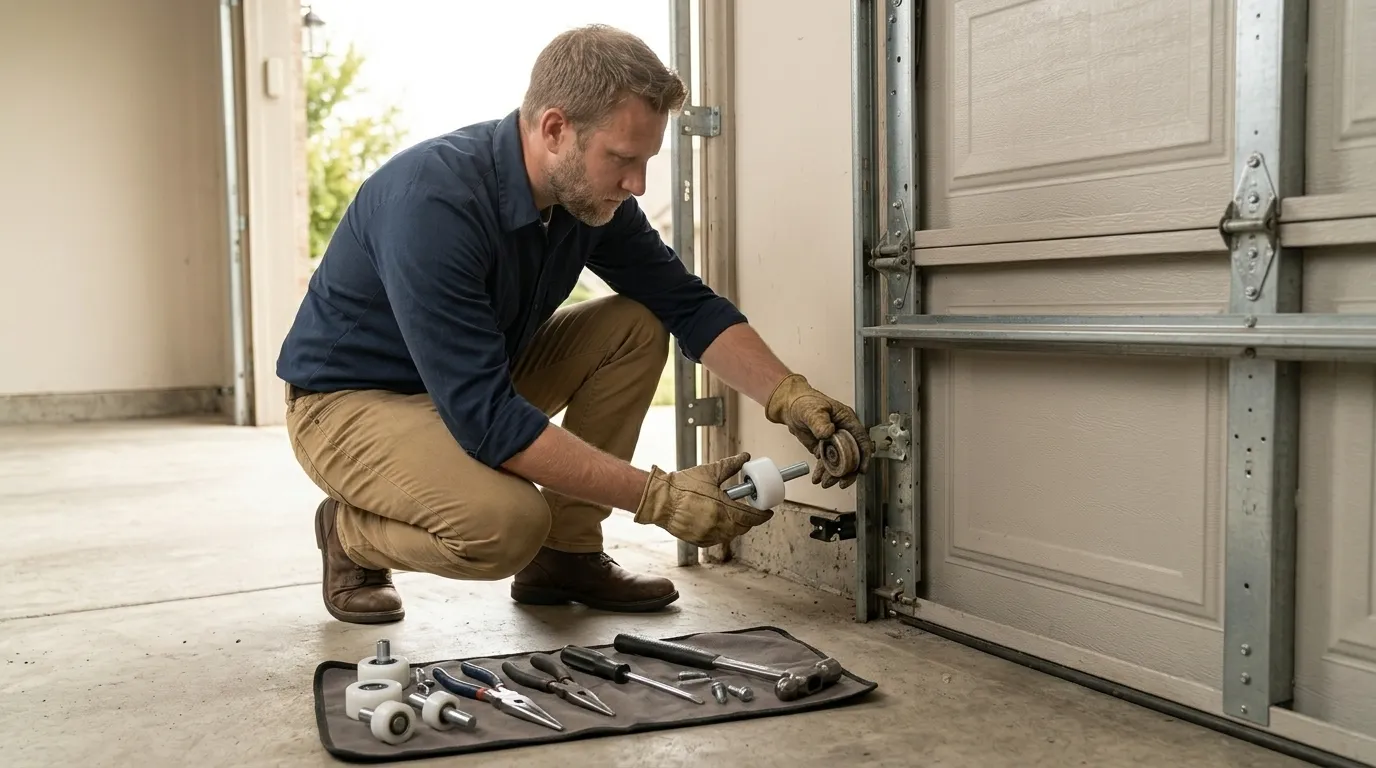
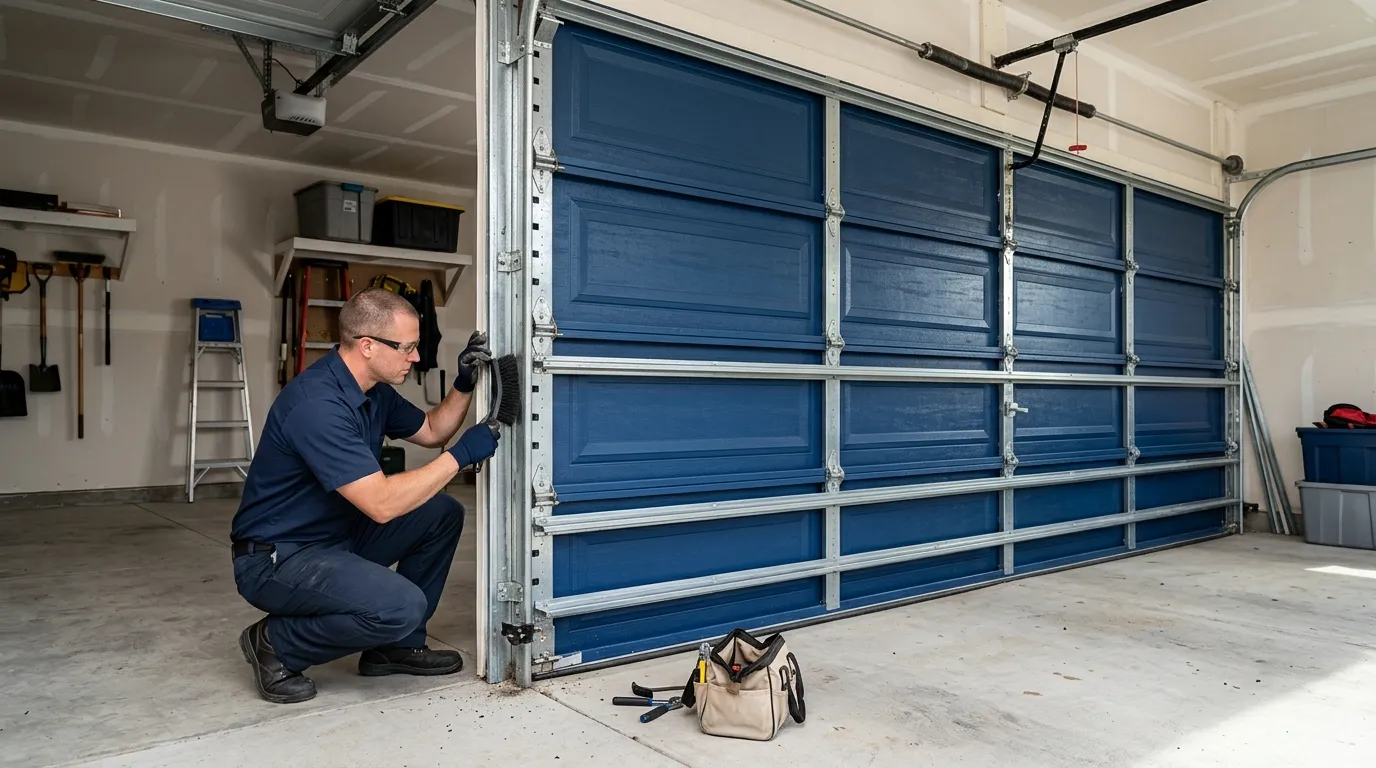
Wipe down the tracks, check that rollers spin freely instead of grinding, and look at the bottom seal for cracks before the cold sets in. A can of white lithium grease on the hinges and rollers twice a year keeps a lot of noise away.
Leave the spring alone

Touching the torsion spring or checking cable tension with the door under load isn't safe to do yourself - that's simply where the stored force lives. It's the same reason we ask homeowners to leave that part to a tech.

Have the opener checked yearly

If your opener is more than a decade old, a yearly force and travel-limit check is worth having a tech do, since a misadjusted opener is the most common reason a door slams down on something it shouldn't.

Find out when it was last serviced

A lot of houses in this service area, going back to the 1952-2003 building wave, still run original hardware that's never been touched since installation. If you don't know when your springs were last serviced, that's the first thing worth tracing down.

Symptoms

The Symptom

The complaint we hear most from Minneapolis homeowners isn't a door that won't open - it's small signs that build up quietly. Here's what those maintenance symptoms look like, and why they're worth acting on early.

Loud, slow, or shuddering

The complaint we hear most from Minneapolis homeowners isn't a door that won't open - it's one that's gotten loud, or slow, or that shudders partway up the track before catching again.

Early rust and uneven springs

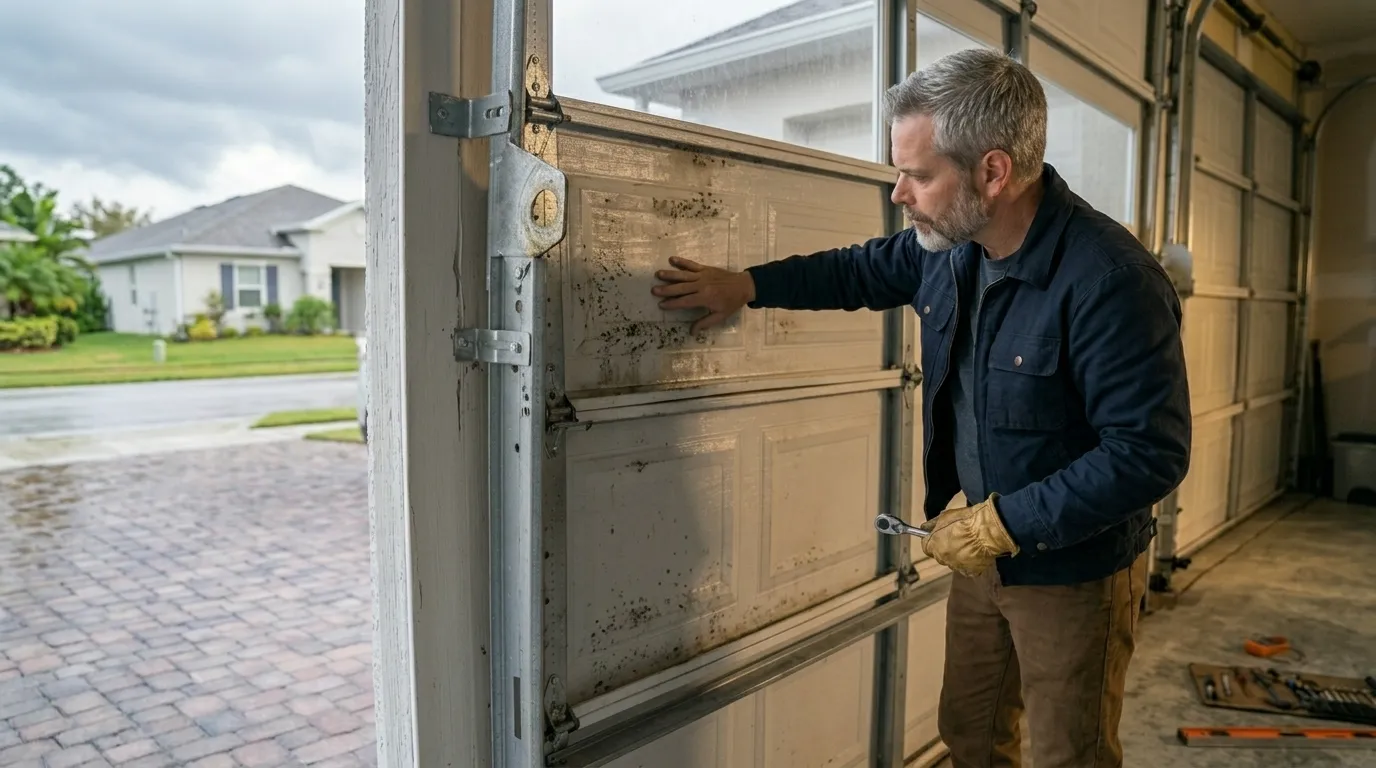
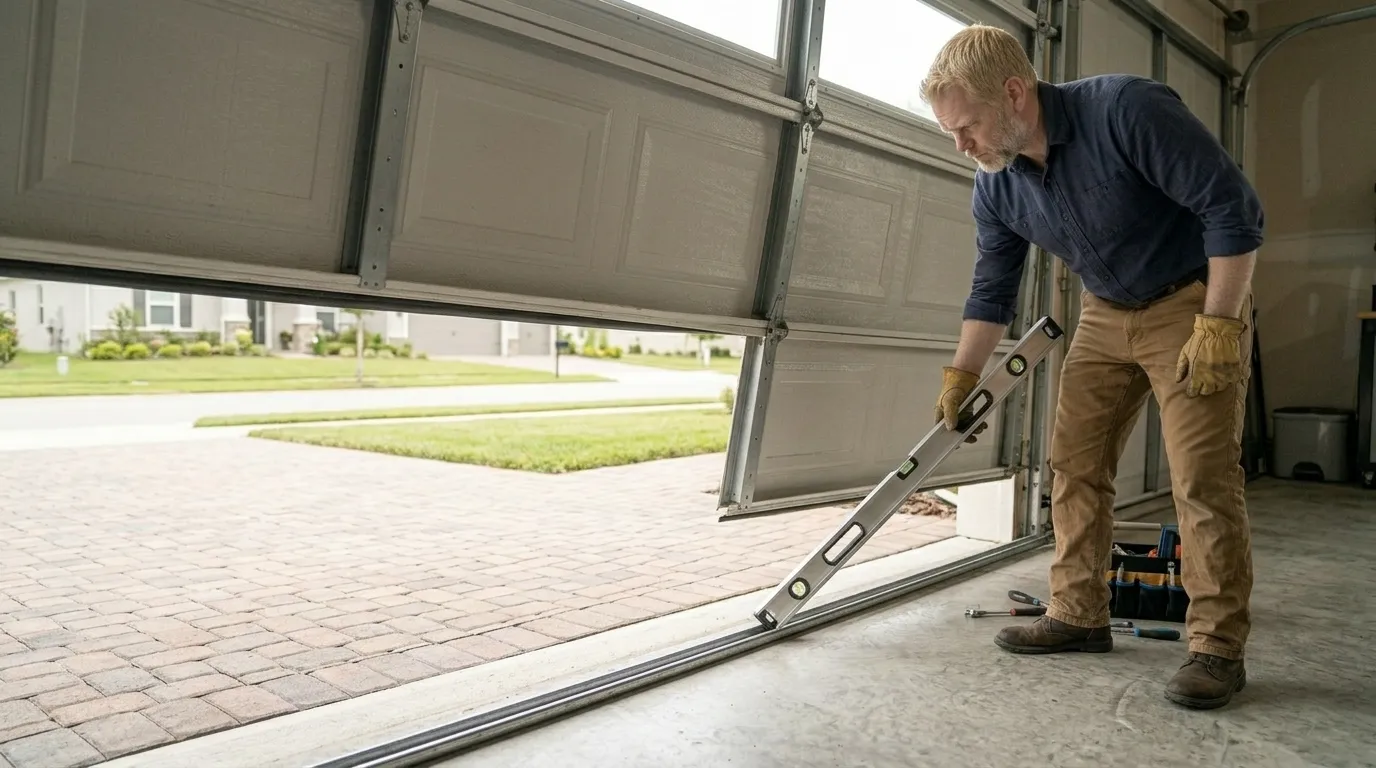
Sometimes the sign is a fine layer of rust starting on the bottom roller brackets, or a spring that's visibly stretched wider on one coil than the other. Neither stops the door from working yet.

Ignoring it costs more later

The door still works, which is exactly why these signs get ignored. But a door that shudders on the track today is a door with a seized roller or bent track next winter - a repair call instead of a tune-up. Across this area's 1952-2003 housing stock, that pattern shows up constantly.

Job timing

Time on the Job

A standard maintenance visit runs through the full door system rather than just one part. Here's what we check, and what changes the pace of the visit once we're on site.

  1. Run the full-door checklist

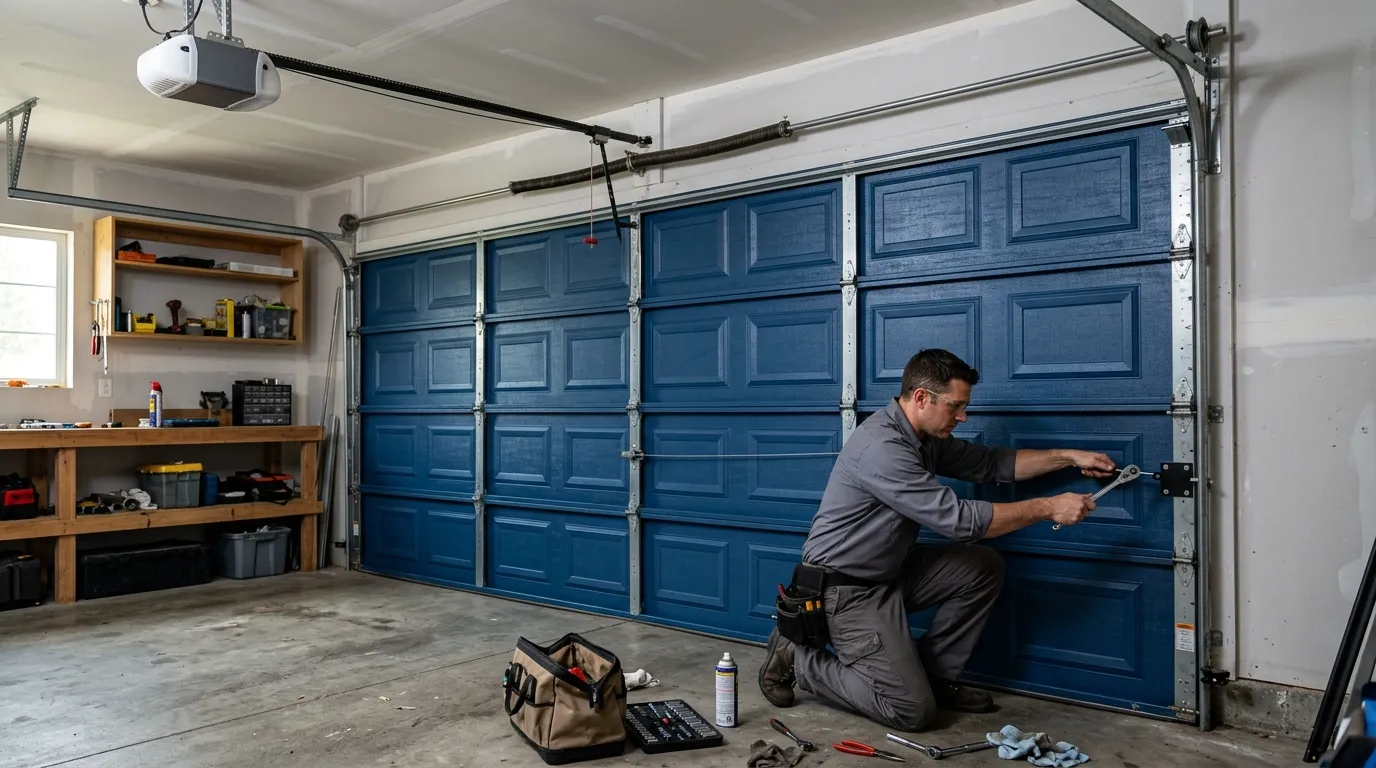
    A standard maintenance visit runs through the full door: springs, cables, rollers, hinges, track alignment, weatherstripping, opener force settings, and lubrication, covering every point that wears with age.

  2. Check for era-specific wear

    On a house with hardware that's still original - common enough in this area's 1952-2003 housing stock - we're also checking for wear patterns that wouldn't show up on a newer install.

  3. Stop and tell you if something's wrong

    Most visits move at a steady pace because we're inspecting a working system, not troubleshooting a failure. If we find a spring under uneven tension or a bent track mid-visit, we tell you before doing anything else, since a repair quote is a different conversation than a maintenance visit.

Local causes

Why This Fails Locally

Minneapolis sits in a severe cold climate band, and that matters more for garage doors than most people expect. Steel contracts in cold, lubricant thickens, and rubber seals stiffen and crack faster than they would in a milder climate. A door that was fine in September can start binding on its track by January, not because anything broke, but because the grease that was fine in warm weather is now too stiff to let the rollers move freely.

Combine that with a housing stock built mostly between 1952 and 2003 - a lot of it clustered in the 1960s-70s wave - and you get thousands of doors running original torsion springs and steel rollers that were never rated for decades of freeze-thaw cycling. Across the 168,625 owner-occupied houses in this service area, that's a lot of hardware doing the same slow degrade at the same time every winter.

This is a service-area pattern, not a one-house problem. The same cold-climate stress and the same housing-era hardware show up whether you're a few miles from downtown or out toward the edge of the service area - the specifics of any one neighborhood's stock belong on that neighborhood's own page, but the underlying cause is the same across all of it.

Why This Fails Locally

Questions

Common questions

How often should I get my garage door serviced in Minneapolis?

Once a year is the baseline, ideally before winter sets in, since Minneapolis's severe cold climate is what stresses hardware the most. If your door is original to a house built in the 1952-2003 wave that makes up most of this area's stock, catching wear before the cold locks it in place matters more than the calendar date you pick.

Can I lubricate my garage door myself?

Yes - rollers, hinges, and the torsion spring coils (not the tension itself) take a light coat of white lithium grease safely. Avoid WD-40 on the springs; it's a cleaner, not a lubricant, and it washes out too fast in cold weather. Leave anything involving cable tension or spring adjustment to a tech.

Why does my door get loud in winter but not summer?

Cold thickens lubricant and stiffens rubber seals, so rollers that moved freely in warm weather start dragging once temperatures drop. This is a normal seasonal pattern in a severe cold climate like ours, not a sign your door is failing - but it's a sign the lubrication is overdue.

Is maintenance worth it on an older door?

Usually, yes, especially on hardware original to the 1952-2003 housing stock common here - a lot of noise and binding comes from grease and adjustment, not worn-out parts. If a spring is visibly stretched unevenly or a track is bent, that's a repair conversation, and we'll tell you plainly if maintenance won't fix what's actually wrong.

Ready when you are

Need a garage door sorted in Minneapolis?

Minneapolis Garage Door Pros repairs and installs garage doors, springs and openers in Minneapolis, MN and the surrounding area.

CallGet a quote