
A common-size swap can be DIY
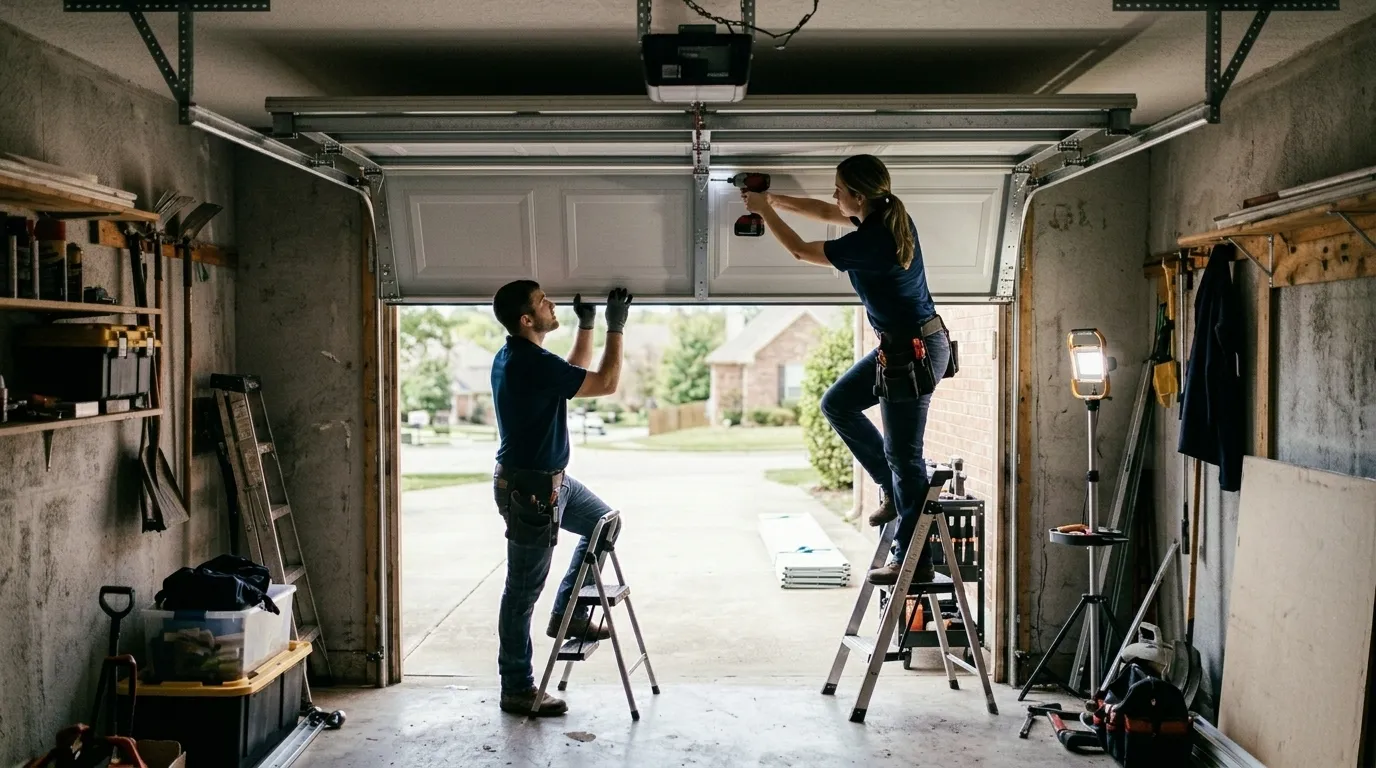
If the door is a common size and the manufacturer still makes that panel profile, ordering the single section and swapping it yourself saves the labor cost. Sometimes a cracked or caved-in panel really is a weekend job.
Minneapolis, MN
Panel replacement for Minneapolis garage doors built between 1952 and 2003 - cracked, dented, or rusted-through sections replaced without swapping a door that still works.
DIY or pro
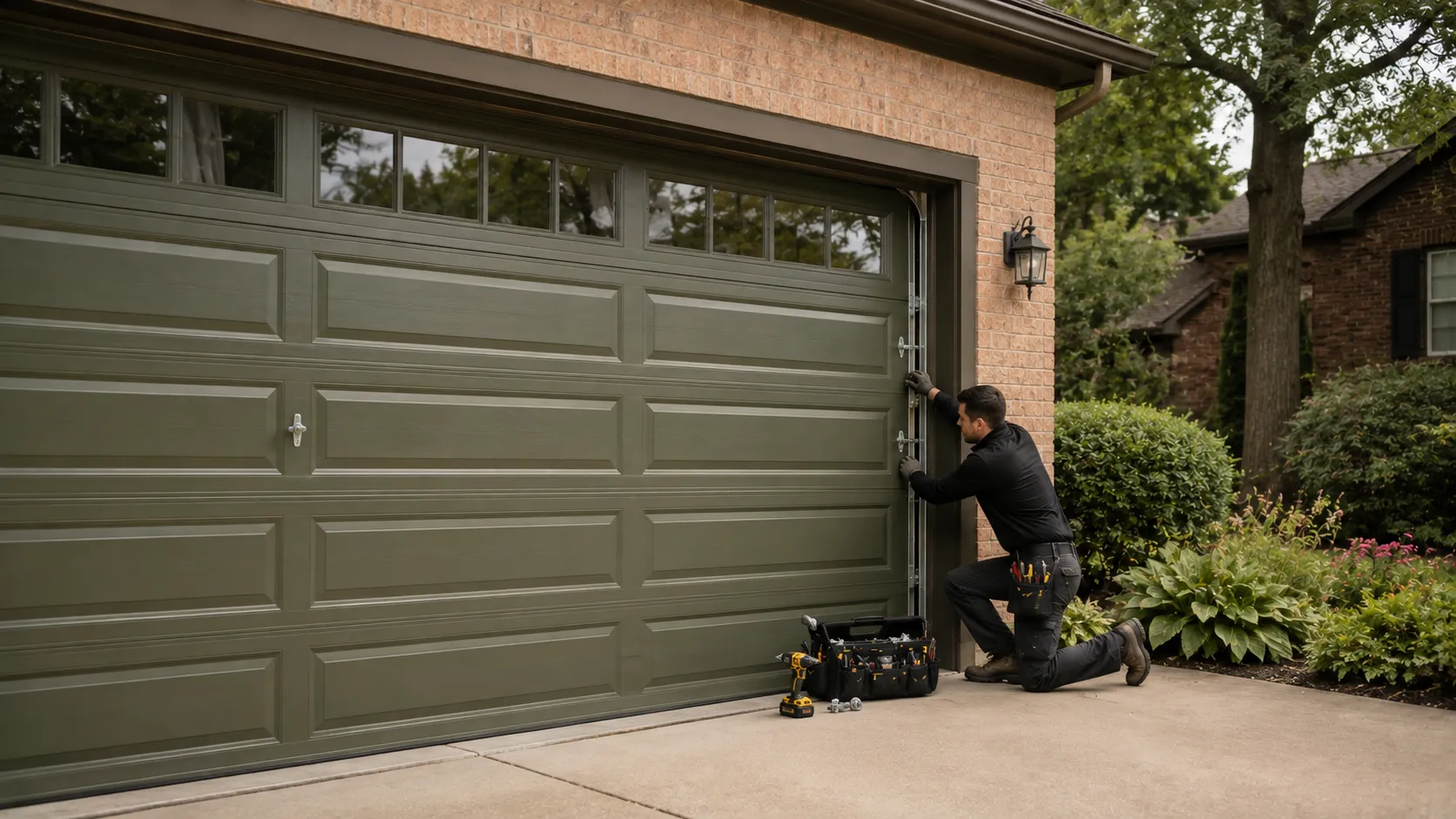
A cracked or caved-in panel looks like a weekend job, and sometimes it is. Here's where a DIY swap works cleanly, and where matching an older profile or steel gauge trips people up.
If the door is a common size and the manufacturer still makes that panel profile, ordering the single section and swapping it yourself saves the labor cost. Sometimes a cracked or caved-in panel really is a weekend job.
Doors built in the 1960s and 70s, which make up most of the stock across this area's 54 named neighborhoods, often carry panel profiles and mounting hole patterns that got discontinued or changed slightly over the decades. A panel that looks identical in a catalog photo can be off by a few millimeters on the hinge stile.
Newer doors run lighter-gauge steel than what went into houses built through the 1970s and 80s. Bolt a new panel to an old frame and you can end up with a section that flexes differently, which shows up as a wave in the door face within a season.
We don't stock every panel profile for every era of door on the truck. On an older or unusual door, we may need to order the section before we can finish the job, and we'll say so up front instead of forcing a mismatched piece onto your door.
Symptoms
The panel doesn't fail on its own - something hits it, or something works on it slowly over a Minneapolis winter. Here's how to tell corrosion from impact damage, and when it's actually time to replace a section.
The panel doesn't fail on its own. Something hits it, or something works on it slowly, and by the time you notice, the section is bowed, cracked at a seam, or rusted through at the bottom corner where snowmelt sits against the steel.
Across this area's housing - built mostly between 1952 and 2003, median around 1975 - road salt, meltwater refreezing against the bottom seal, and months of wet-to-frozen cycling corrode bottom panels from the inside of the seam outward, so the rust is often worse than it looks from the driveway.
A dented or caved section from a car bumper or a thrown shovel, usually mid-door and usually one panel only, is almost always a clean single-panel swap with no structural surprise waiting behind it.
The tell that you need panel replacement instead of cosmetic repair is a section cracked through, bowed enough to bind against the track, or rusted to the point the steel flakes when pressed. A flat dent that hasn't cracked the paint can sometimes wait.
Job timing
A single-panel swap is usually a quick same-visit job. Here's when it stays that simple, when a full-door replacement starts making more sense, and where a discontinued profile can add real time.
A single-panel swap on a door where the section is in stock is usually a same-visit job - a couple of hours including removing the old panel, fitting the new one, and adjusting the door balance, since a new panel changes the door's weight and the spring tension needs to match.
Multi-panel jobs take longer. Once we're past two panels, we walk the homeowner through whether replacing the whole door makes more sense, since labor on three or four individual swaps can approach the cost of a new door without matching color or finish.
On a door near the early end of this area's 1952-2003 housing range, the manufacturer may no longer produce that exact profile, and finding a match can add days. We check the hinge spacing and steel gauge at the estimate, so it's not a surprise later.
Local causes
This isn't a generic garage door problem - it's a housing-stock problem. Across the neighborhoods this service covers, the bulk of doors went in during the 1960s and 70s, on houses that have since gone through decades of severe cold winters. Steel panels from that era weren't coated the way current panels are, and after 40-plus years of salt-laden slush freezing against the bottom rail every winter, the failure point is almost always the same two bottom sections.
Houses built later in the 1952-2003 range, closer to the 2003 end, tend to have doors with better factory coating and insulation, so panel failure there shows up more from impact than from corrosion. Knowing which era your house falls into changes what we expect to find when we pull the bottom panel off.
The median household income across this area sits around $96,224, with roughly 168,625 owner-occupied houses among 415,224 total households - a market with enough older housing stock that panel mismatches and discontinued profiles come up often enough that we plan for them, rather than assuming every job is a stock part off the shelf.
Questions
Usually, yes, if the rest of the door is still sound and the panel profile is available. Bottom panels take the worst of the winter corrosion here, and a single-section swap is common. If two or more panels are rusted or cracked, we'll talk through whether a full door makes more sense.
Not always exactly. Paint fades unevenly over years of sun and cold, so a new panel can look slightly different in tone even when it's the correct manufacturer part. We'll show you the panel before install so there's no surprise.
It usually shows in the hinge spacing and steel gauge, which we check against the door's likely age. Doors on the older end of this area's housing stock are more likely to need an ordered part instead of a stock swap, and we'll tell you that at the estimate, not after the job's started.
Not necessarily. A dent that hasn't cracked the paint or bowed the section can sometimes be left alone or pulled out. Once the steel has cracked or the section binds against the track, it needs replacing rather than repairing.
Explore more
Ready when you are
Minneapolis Garage Door Pros repairs and installs garage doors, springs and openers in Minneapolis, MN and the surrounding area.