St Louis Park, Minneapolis

Garage Door Maintenance for St. Louis Park's 1960s Housing Stock

St. Louis Park's typical home dates to 1965, a decade older than the metro median. Maintenance here means checking hardware that's outlived its design life. Traveling from Minneapolis, 5 miles out.

Garage Door Maintenance for St. Louis Park's 1960s Housing Stock in Minneapolis
Serving Minneapolis, MNBackground-checked techsHonest, upfront pricingFast local response

Symptoms

The Symptom

The median home in St. Louis Park went up around 1965, a decade older than the broader service area's 1975 median, so original hardware here has been through roughly six full decades of Minnesota winters. Maintenance isn't a service you notice working - it's the reason you don't get the 6 a.m. call where the door won't move at all.

Door Gets Loud

A door that's gotten loud, sometimes with a grinding sound on the way down, is the complaint we hear most from St. Louis Park. Track alignment drifts slowly enough that owners adjust to it without noticing, until a hinge or roller finally gives out.

Door Hesitates Mid-Travel

A door that hesitates halfway up before the opener catches back up with it is another common sign of aging hardware. On a house from this era, original components engineered for a different set of expectations than what's sold today start showing their wear this way.

Heavy to Lift by Hand

A door that looks fine but takes real effort to lift by hand when the opener's disconnected usually means spring tension has drifted from where it should be. That gradual wear is exactly what routine maintenance catches before it becomes a stuck door or a snapped cable.

The repair

What the Repair Takes

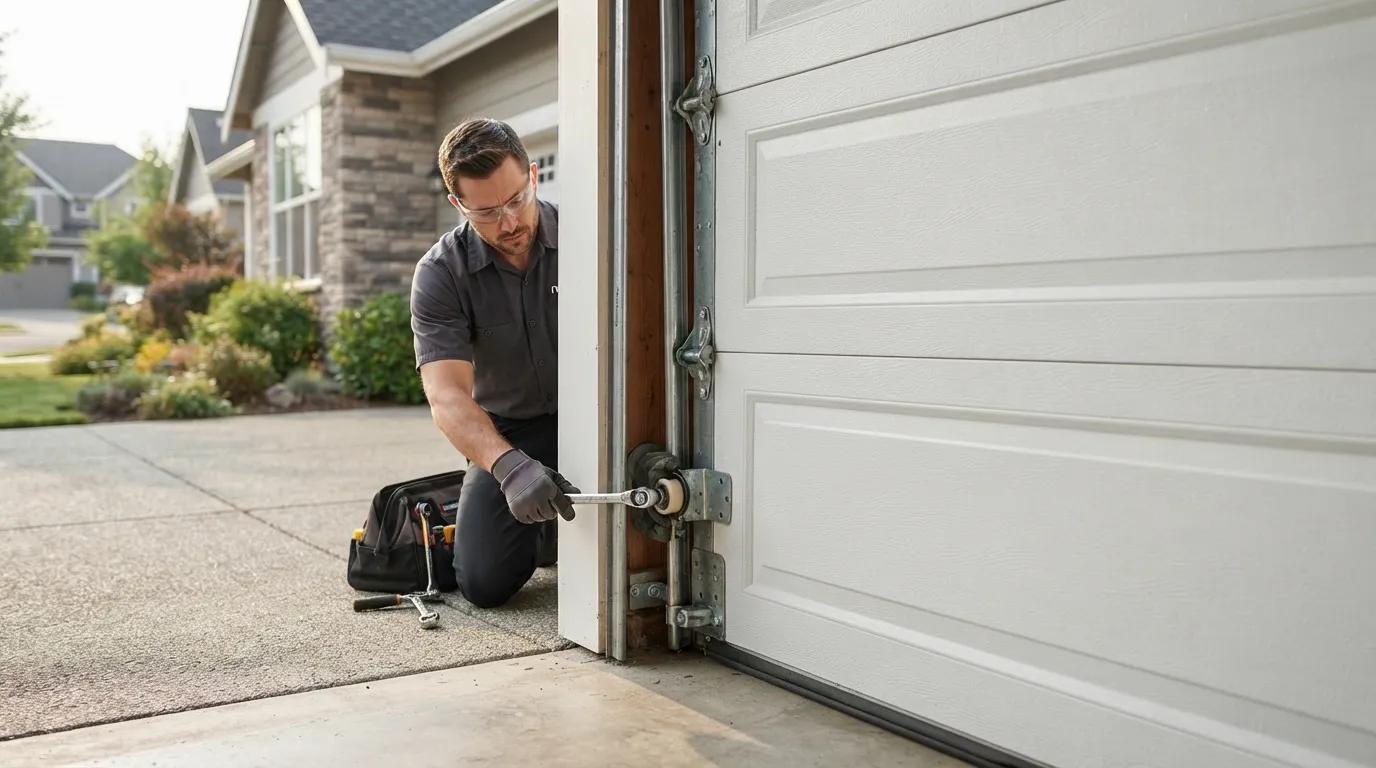
A maintenance visit on a St. Louis Park door starts with the track and hinges, not the opener, because on a house this age the track is more likely to be the thing that's shifted. From there we work through the rest of the hardware in order.

  1. Check track and hinges first

    We start with the track and hinges rather than the opener, because on a house this age the track is more likely to be the thing that's shifted. We check roller wear and tighten hardware that's worked loose over years of thermal cycling.

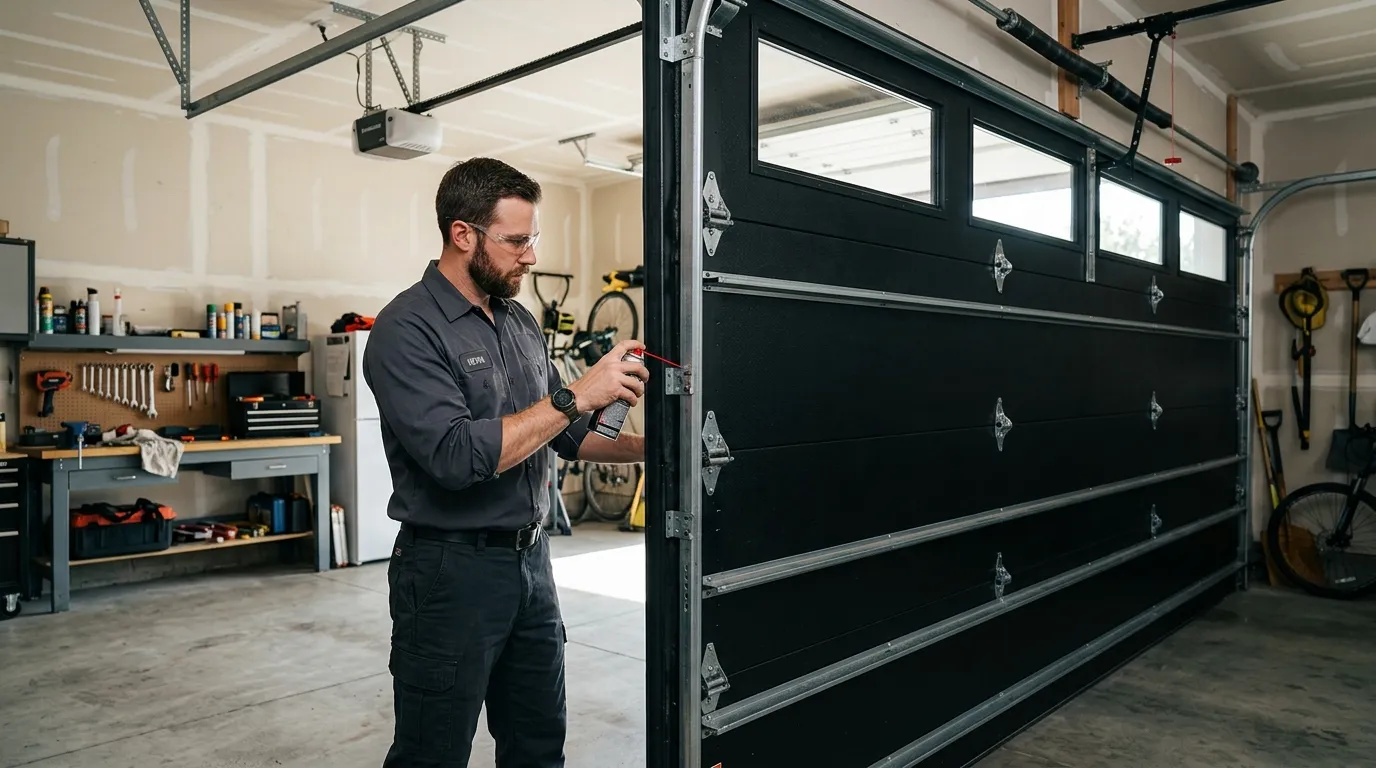
  2. Lubricate dry points

    We lubricate points that dry out fast in a cold, low-humidity winter, since that dryness is what turns a quiet door noisy well before anything actually breaks.

  3. Check spring tension

    Spring tension gets checked next. Torsion springs lose a measurable amount of lift capacity every year they're in service, and a door 40 or 50 years into its hardware life is often running on a spring well past its rated cycle count, even if it hasn't broken yet.

  4. Tell you when adjustment stops helping

    If the springs, cables, or track are original to a 1960s install, maintenance can extend their life but it can't reset the clock. At some point the parts are worn enough that adjustment stops being worth doing, and we'll tell you when we've reached that point rather than keep tightening the same bolt every visit.

Local causes

Why This Fails Locally

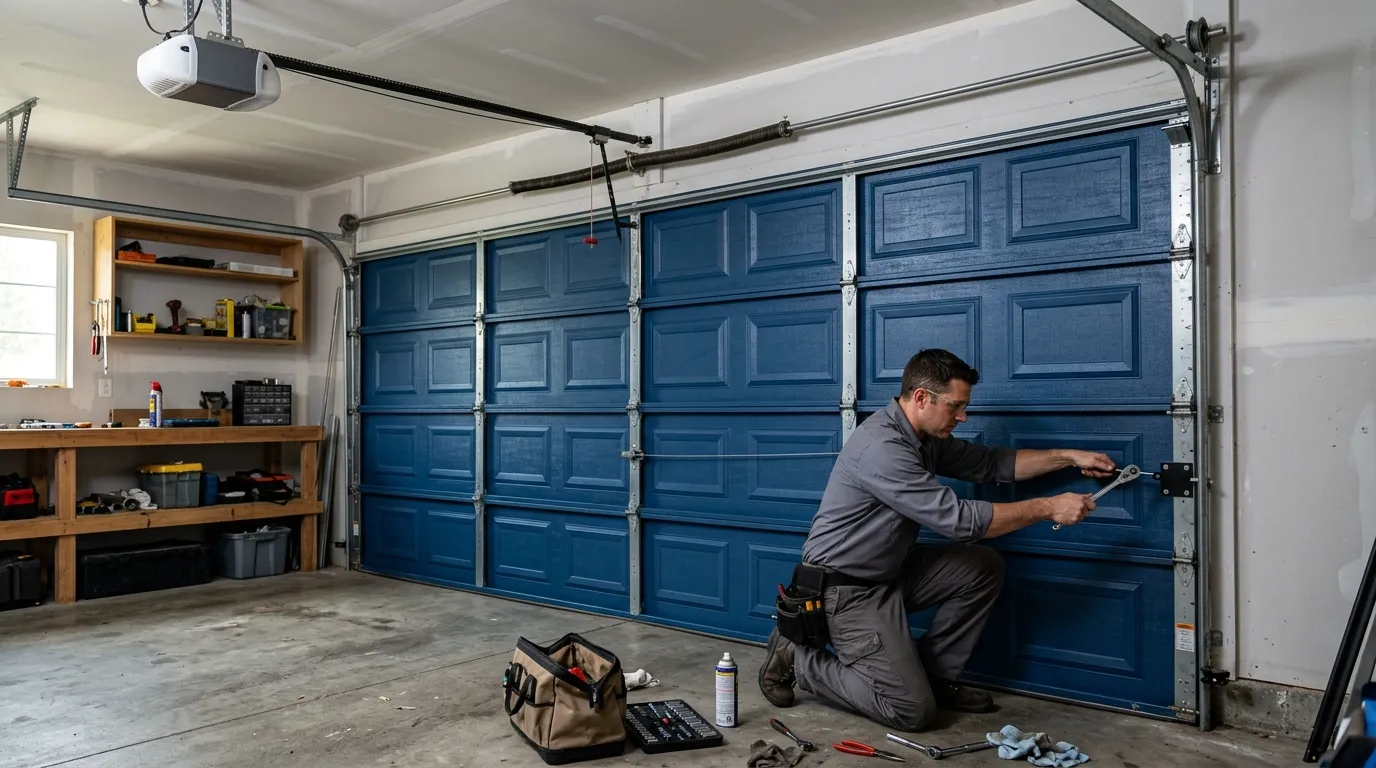
Minnesota's climate band is classified as cold, with severe winter conditions, and that cold is harder on garage door hardware than most owners assume. Metal contracts in deep cold, which changes how a torsion spring sits on its shaft and how a track holds its shim. A door that runs quiet in August can start binding in January purely from temperature, with no other change to the hardware.

On a house built in the mid-1960s, that seasonal stress has been repeating for close to sixty winters. Steel fatigues. Lubricant that worked fine ten years ago dries out faster now. None of this is a St. Louis Park-specific defect - it's what cold-climate age does to any door - but it lands harder here because so much of the local housing stock is concentrated in that same build era rather than spread across newer construction.

The fix isn't exotic. It's checking the same points every season instead of waiting for a failure, and doing it before the first hard freeze rather than after.

Why This Fails Locally
What It Costs

Pricing

What It Costs

We don't have a published price to quote here, and we're not going to guess one. What we can tell you is what drives the cost on a visit like this: whether the hardware needs adjustment only, or whether a part - a roller, a hinge, a cable - is worn enough to need replacing during the same trip.

St. Louis Park's median household income sits at $100,250, notably above the wider service area's $96,224, and it's a market where owners tend to maintain rather than defer, which in our experience keeps small issues small. A door that's been checked yearly costs less to keep running than one that only gets attention after it stops moving.

Watch-outs

What Can Go Wrong

Maintenance catches most problems early, but three failures on doors this age tend to show up regardless: a spring that lets go without warning, a cable that frays quietly, and rust at the mounting brackets that no amount of lubrication can fix.

Spring Lets Go Without Warning

The most common failure on doors this age is a torsion spring that lets go without warning - no gradual noise increase, just a loud bang and a door that won't lift. That's a two-person job with the right bar and clamps, not something to wrench on solo.

Frayed Cable at the Drum

Second most common is a cable that's frayed at the drum from years of the same wrap point taking the load. It looks fine until it isn't, which is why a visual check during maintenance matters more than it seems like it should.

Rust at Mounting Brackets

Less common but real on original 1960s track is rust at the mounting brackets from decades of condensation in an unheated garage. That's a structural issue, not a lubrication one, and no amount of maintenance fixes a bracket that's rusted through - that's a replacement conversation, not a repair one.

Questions

Common questions

How often should a garage door in St. Louis Park get maintenance?

Once a year is the general rule, ideally before winter sets in, since cold is what stresses aging hardware the most here. If your house dates to the 1960s, like much of the area's stock, a fall check catches problems before the first hard freeze locks them in place.

Is my door too old to bother maintaining?

Not usually. Original hardware from a mid-1960s build can still be serviced, but at some point adjustment stops helping and replacement makes more sense. We'll tell you honestly which situation you're in rather than keep billing for the same fix.

Do you have a location in St. Louis Park?

No - we run out of Minneapolis and travel to St. Louis Park, about 5 miles away, for maintenance and repair calls.

Ready when you are

Need a garage door sorted in Minneapolis?

Minneapolis Garage Door Pros repairs and installs garage doors, springs and openers in Minneapolis, MN and the surrounding area.

CallGet a quote