Minneapolis, MN

Garage Door Repair for Minneapolis Homes

Broken spring or opener acting up in Minneapolis's cold? We work on the torsion hardware and steel doors common in this area's 1960s-70s housing stock.

Garage Door Repair for Minneapolis Homes in Minneapolis
Serving Minneapolis, MNBackground-checked techsHonest, upfront pricingFast local response
1952–2003
Typical build years of local homes
1975
Median year homes were built
Hard winters
Climate that shapes door wear
1 visit
Most repairs finished same visit

DIY or pro

Doing It Yourself

A lot of homeowners in this area start with YouTube for a loose bolt or a sticking sensor, and that's fine. Here's where a driveway fix is reasonable, and where the tension involved makes it a call instead of a project.

Safe DIY tasks

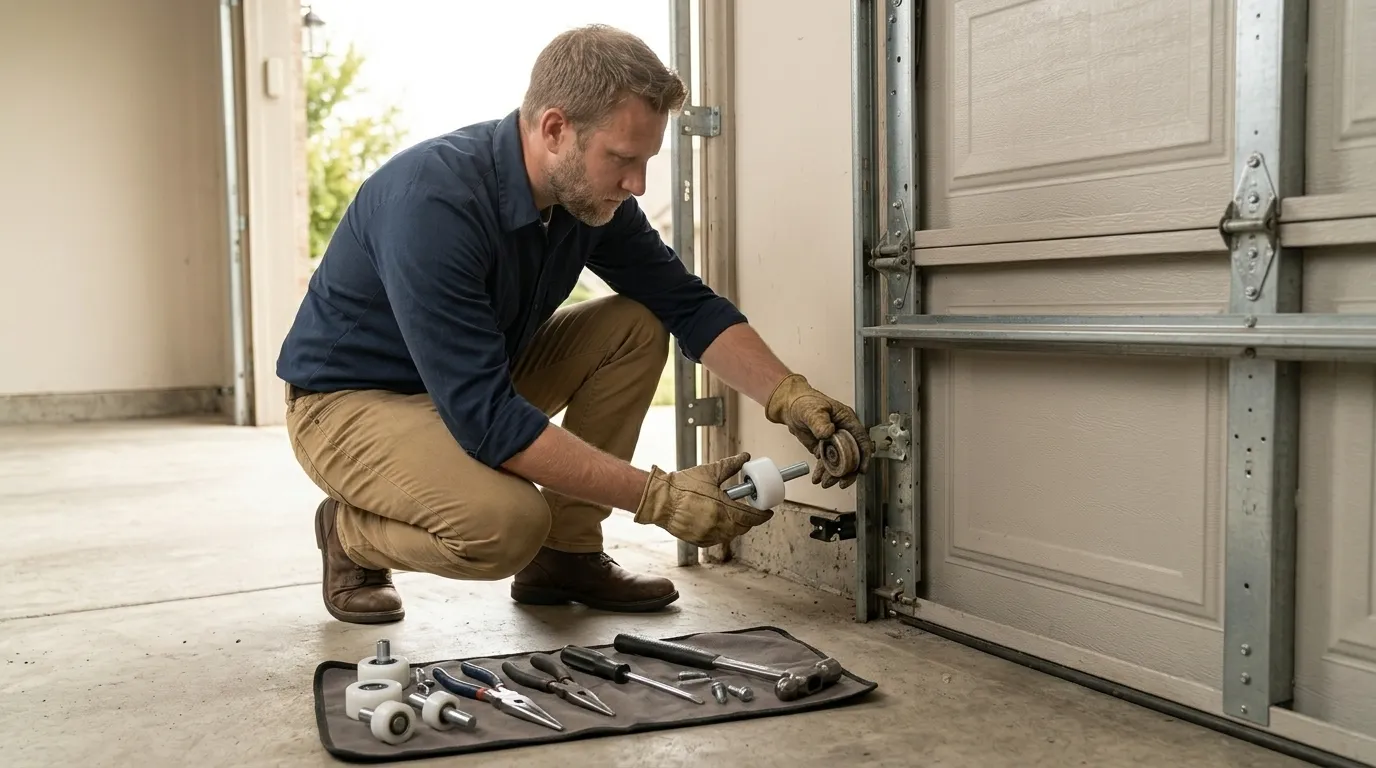
Tightening hinges, lubricating rollers before winter, replacing weatherstripping, and checking that photo-eye sensors are aligned are all reasonable weekend jobs. These don't put you near stored spring tension and are the fixes we'd expect any homeowner to handle.

Torsion springs are not DIY

A torsion spring on a double door built to 1960s-70s standards is wound under enough tension to break a wrist or worse if the winding bars slip. A lot of that original hardware was never built with the safety cables newer doors carry, so a broken or sagging spring is a call, not a project.

Skip anything under load

Springs, cables, and any component where the door is under load should stay off the DIY list, regardless of how confident a video makes it look. If a shop tells you a spring swap is a simple weekend fix, get a second opinion - it isn't, and these parts don't forgive mistakes.

Symptoms

The Symptom

The call we get most in this area starts one of two ways: the door won't budge and there's a loud bang from the garage, or the opener runs but the door barely lifts off the floor before stopping. Here's what each pattern usually means and why cold makes both worse.

Loud bang, door won't move

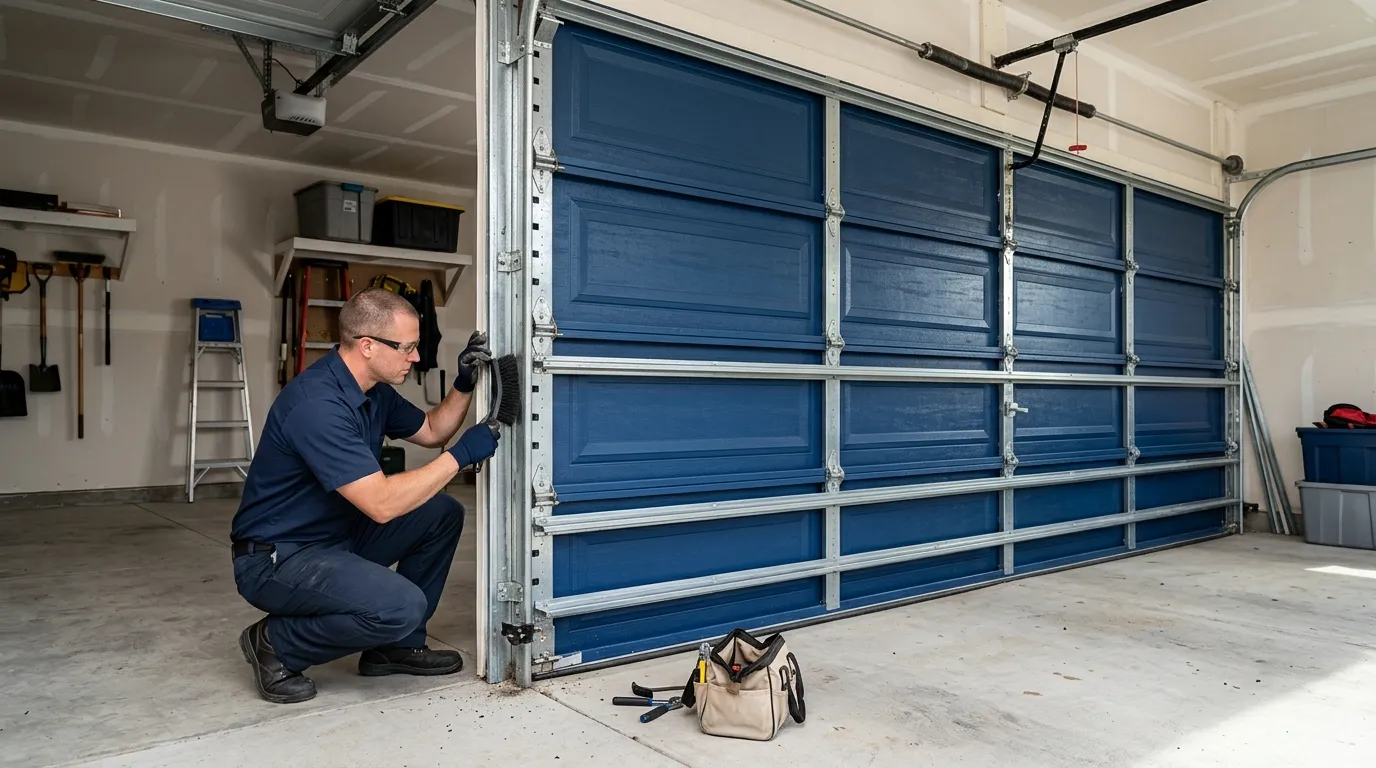
A sudden pop or bang followed by a door that won't budge is almost always a broken torsion spring - one or both have given out, and the opener isn't built to lift a door's full weight on its own. Don't force it with the opener; that risks stripping the gears or bending the track.

Opener runs, door barely lifts

When the opener engages but the door barely clears the floor before stalling, the spring is usually still intact but has lost tension. That loss happens gradually and gets noticeably worse as temperatures drop through the winter.

Why cold makes it worse

Steel contracts, lubricant thickens, and a spring already near the end of its cycle count is far more likely to snap on a sub-zero morning than in July. That's why both of these symptoms cluster in winter calls across this area.

Job timing

Time on the Job

Repair time depends on what actually failed and how old the hardware is. Here's the honest range, from a same-visit spring swap on common housing stock to the cases where a bent track or discontinued parts mean we can't finish in one trip.

  1. Same-visit spring swap

    A straightforward torsion spring replacement on a single door is usually finished the same visit. We carry the spring sizes that match what's common on the housing stock in this area, most of it built between 1952 and 2003 with a lot dating to the 1960s and 70s.

  2. Diagnose the opener

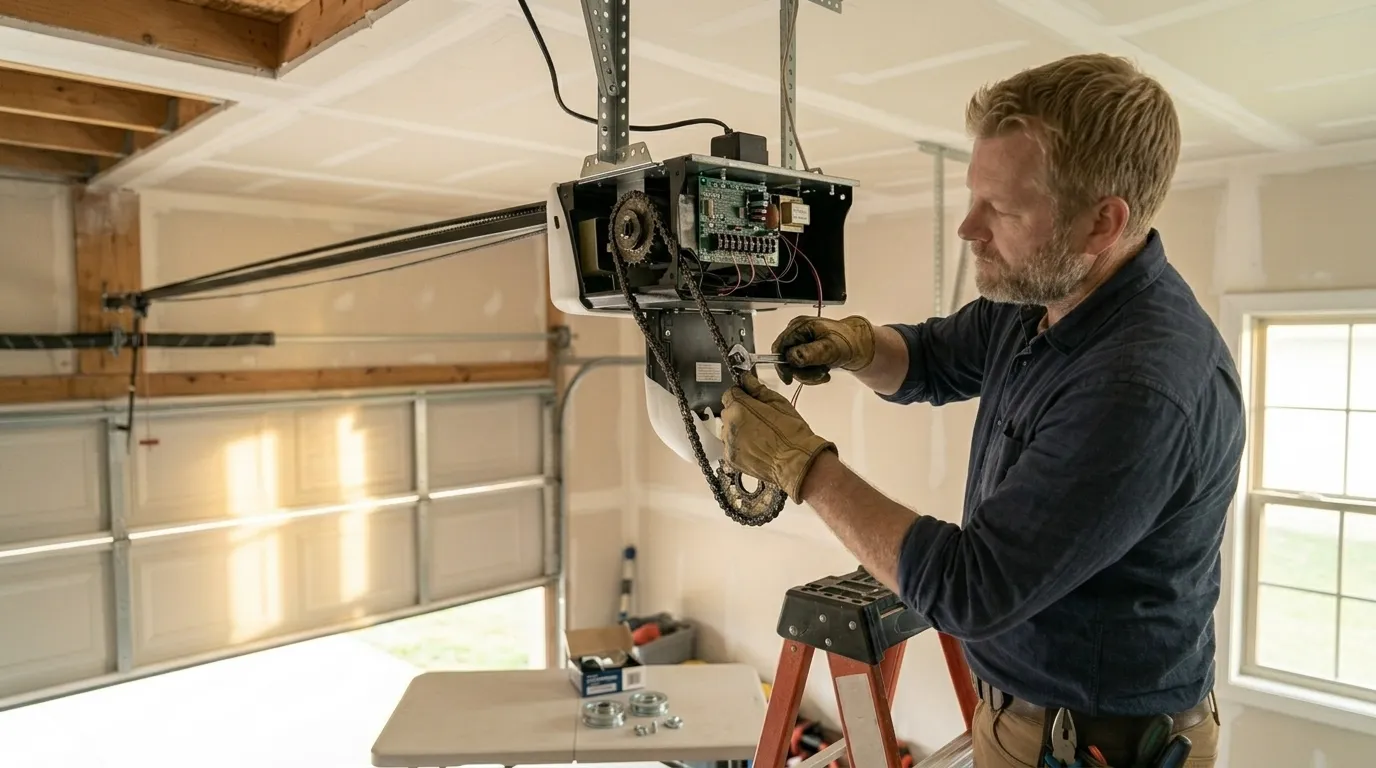
    Opener issues take longer to diagnose than to fix once we know what's wrong - a bad capacitor, a worn drive gear, or a logic board that's failed from age are the usual culprits, and pinning down which one is the real time cost.

  3. Flag a bent track early

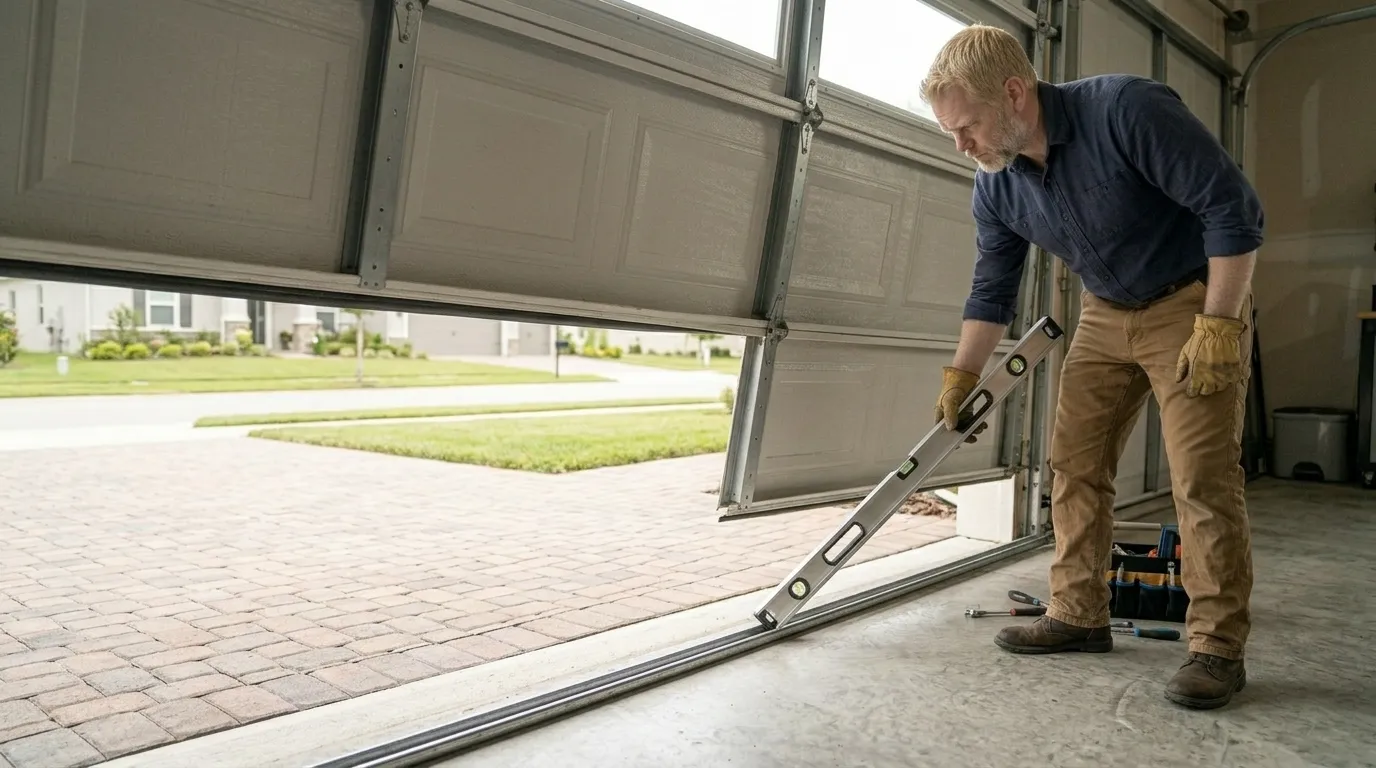
    Doors where the track has been bent from a forced opener attempt take longer, since a bent rail often needs to come off before anything else gets fixed. We check for this before quoting a same-day timeline.

  4. Order parts when hardware is obsolete

    When the original hardware is old enough that matching parts aren't a stock item, we say so upfront instead of promising a same-day fix. That happens more with older doors than newer ones, and we'd rather tell you before you wait around for a part that isn't coming.

Local causes

Why This Fails Locally

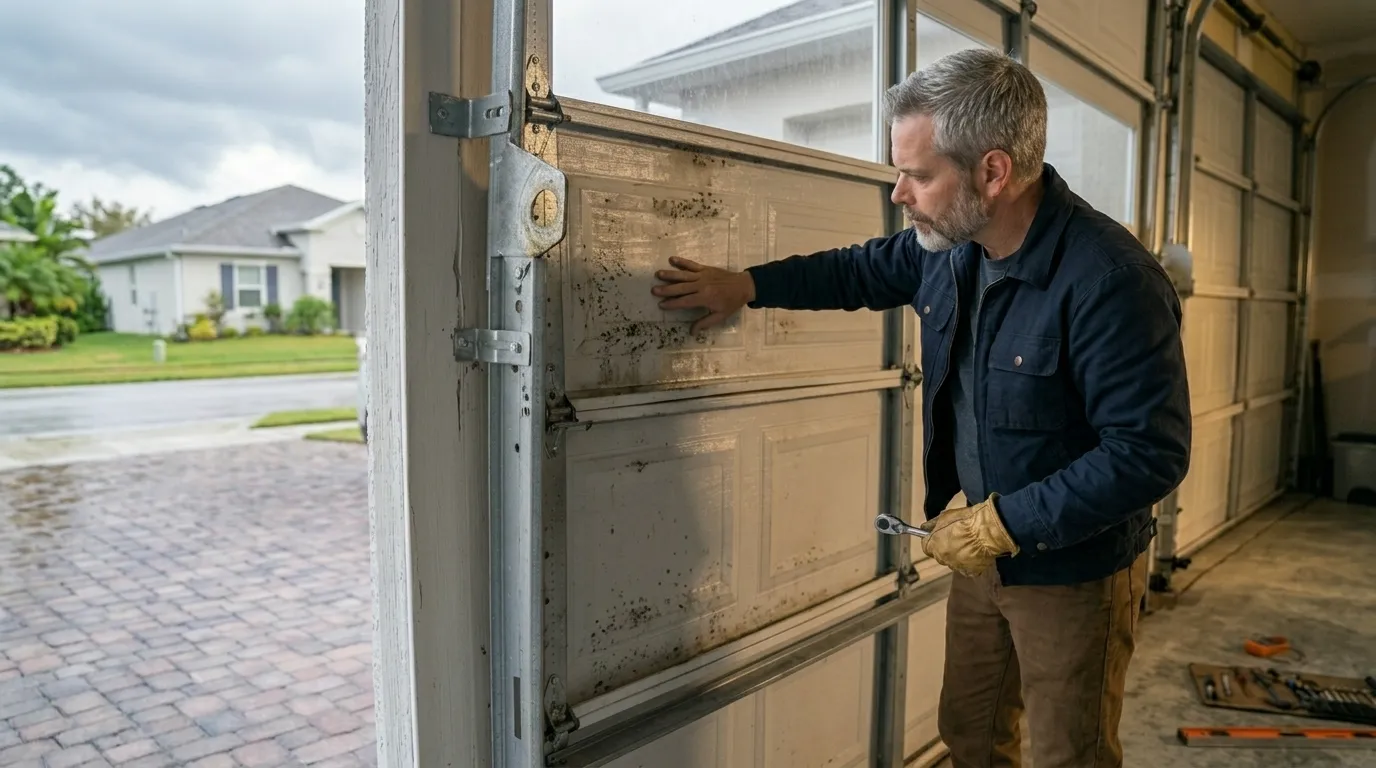
Two things line up here that don't line up everywhere. First, the age of the housing - a median build year of 1975 across this service area means a large share of garage doors and their original torsion hardware are well past the spring cycle count they were rated for, even where the door itself has been replaced once already. Second, the climate: this area sits in a severe cold band, and repeated deep freezes put more stress on steel springs and cables than a moderate climate does. A spring rated for a certain number of cycles wears out faster when it's cycling in weather that swings from summer heat to well below zero every year.

Put those together and you get a service area - from the close-in neighborhoods near downtown out to the surrounding cities within a few miles - where spring failure and opener strain are simply more common than in newer, milder markets. That's not a sales pitch, it's what the age and climate data for this area point to.

Why This Fails Locally

Questions

Common questions

Why did my garage door spring break in the middle of winter?

Cold steel is less forgiving than warm steel, and this area sits in a severe cold climate band. A spring that's near the end of its rated cycles is more likely to snap during a hard freeze than during a mild stretch, especially in the older torsion hardware still found on a lot of homes here built in the 1960s and 70s.

Is it safe to replace a torsion spring myself?

No. Torsion springs are wound under heavy tension and the winding bars can slip. This is the one garage door repair we'd tell almost any homeowner to leave alone, regardless of how many videos you've watched.

How fast can you get to a broken spring?

A single-door torsion spring swap is usually a same-visit repair once we're on site, since it's the most common call we get. Opener repairs or damaged track from a forced opener attempt can take longer if a part needs to be ordered.

My door is original to the house - can it even be repaired?

Often yes, since a lot of the housing in this area dates to the 1960s and 70s and still runs original torsion hardware. Where it can't - track too bent, hardware no longer made - replacement is the honest answer, and we'll tell you that instead of forcing a fix that won't hold.

Ready when you are

Need a garage door sorted in Minneapolis?

Minneapolis Garage Door Pros repairs and installs garage doors, springs and openers in Minneapolis, MN and the surrounding area.

CallGet a quote