
Blog
Why Doors Go Off Track in Minneapolis Homes
Minneapolis homes built between 1952 and 2003 carry track and hardware setups suited to a cold climate. Here's what actually knocks a door off track here.
How Local Conditions Play In
Minneapolis sits in a severe cold climate band, and that matters more for tracks than most homeowners think. Steel track contracts in deep cold, and the brackets holding it to the jamb are usually the same age as the house - most of this housing stock went up between 1952 and 2003, with the bulk from the 1960s and 70s. Fifty-plus years of freeze-thaw cycling works the lag screws loose in the framing a fraction of a turn at a time. You don't see it happen. You just notice one day that the door rides crooked on one side.
Snow and ice buildup at the bottom of the track is the other piece. When melt refreezes overnight against a track that's already slightly bowed from age, the rollers ride up over the ice and jump the rail on the next cycle. This isn't a defect in the door - it's what happens when 1970s-era hardware meets a Minnesota winter for the fortieth or fiftieth time. Newer track systems flex less, but a lot of the doors on these blocks are original or close to it, and the brackets were never rated for this many hard freezes.
We're not going to tell you a track failure means the whole door is bad. Sometimes it's one bent section and a re-set. But in this climate, on housing stock this old, it happens often enough that we treat it as routine, not rare.
What Most People Get Wrong
The most common mistake is assuming a door off track means a broken spring. They're different problems. A spring failure means the door won't move, full stop, and usually it's loud - a bang, then dead weight. A door off track will move but drag, catch, or wobble, and it can still travel partway up before the roller pops the rail entirely. Forcing the opener through it - hitting the button again and again - is how a bent track becomes a torn panel.
The second mistake is treating a single misaligned bracket as cosmetic. In homes from the 1975 median build year around here, the track brackets were fastened into framing that's now decades older and drier than when it was installed. One loose bracket puts uneven load on the next one down the line. Left alone through a winter, that turns a $150 bracket fix into a full track replacement, because the metal itself gets bent from repeated roller strikes.
We'll be honest about a limitation here: we can't tell you over the phone whether it's a bracket or a bent rail. Those look and sound similar from the garage but need different work, and the wrong guess wastes a truck trip. That's a call we make in person.
When to Call Someone
Call before you run the opener again if the door is visibly leaning to one side, if you can see a roller sitting outside the track rather than inside it, or if the door stopped mid-travel and won't respond to the wall button or remote. Running the motor against a jammed track burns out the opener's drive gear and can pull the track bracket clean out of the jamb - a bigger repair than the original problem.
If it's just a scrape or a slight shudder on the way up, that's often a lubrication or minor alignment issue, not an emergency. You can usually wait for a scheduled visit rather than treating it as urgent. The distinction matters because a jammed door with a live opener motor is a hazard - for cars parked underneath and for anyone standing near it when a cable finally lets go.
The Situation
Across this service area - households number in the hundreds of thousands, with roughly 168,625 of them owner-occupied houses rather than rentals - track failures cluster in the same housing bands: places built in the 1960s and 70s where original hardware never got upgraded. Median household income here runs a bit above $96,000, and that shows up in the calls we get: people who'd rather fix a track properly once than keep re-hanging a bent one every winter.
This isn't a problem unique to one block. It shows up from the housing near the University area out through the older single-family stretches on both sides of downtown. The fix is usually straightforward once we're looking at it in person - new bracket, re-set track, sometimes a roller swap. What it isn't is a do-it-yourself weekend job, given how much force a wound spring puts on misaligned track.
Questions
Common questions
Why did my garage door suddenly jump the track in cold weather?
Steel track contracts in deep cold, and older brackets - common in houses built through the 1960s and 70s around here - can shift just enough for a roller to ride up and off the rail. Ice buildup at the bottom of the track makes it worse. It's a climate and age combination, not a sign the door is failing outright.
Can I push the door back onto the track myself?
We'd rather you didn't. A door on a wound spring carries real tension, and forcing a roller back into a bent rail can snap a cable or bend the track further. It's a short job for someone with the right clamps and bars, but it isn't safe to eyeball.
Is an off-track door always a full replacement?
No. Often it's a bracket re-set or a bent section swapped out. Full track replacement usually only comes up when the metal has been struck repeatedly by a jumping roller over more than one winter without being addressed.
How do I know if it's the track or the spring?
If the door won't move at all and the opener strains or the door feels dead-weight heavy, that's usually spring. If it moves but drags, wobbles, or catches partway, that's more likely track or roller. We confirm in person since the symptoms can overlap.
Recommendation
You Might Also Like
More garage door guides for Minneapolis homeowners.
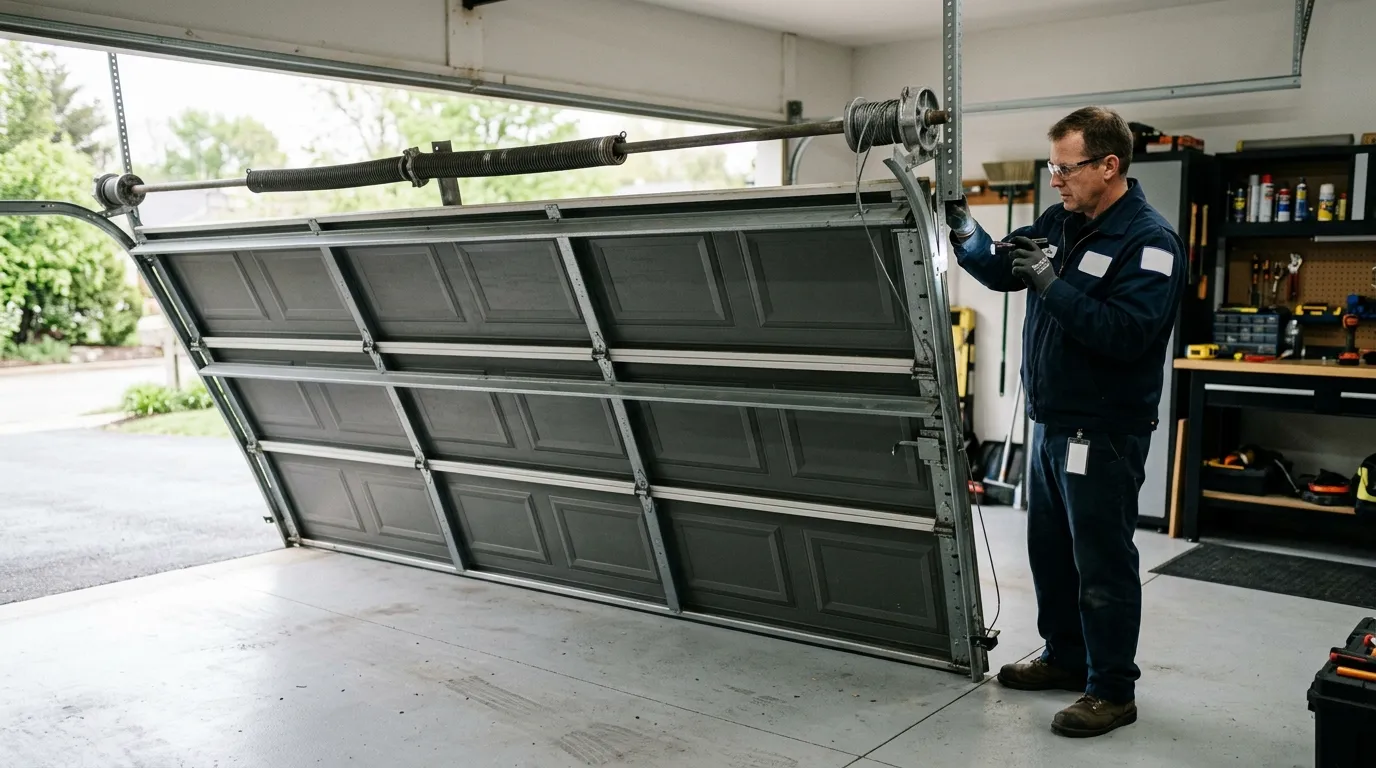
Wind and the Wide Garage Door: A Minneapolis Problem
Minneapolis homes built 1952-2003 carry wide double doors on hardware never rated for today's wind load.
Read guide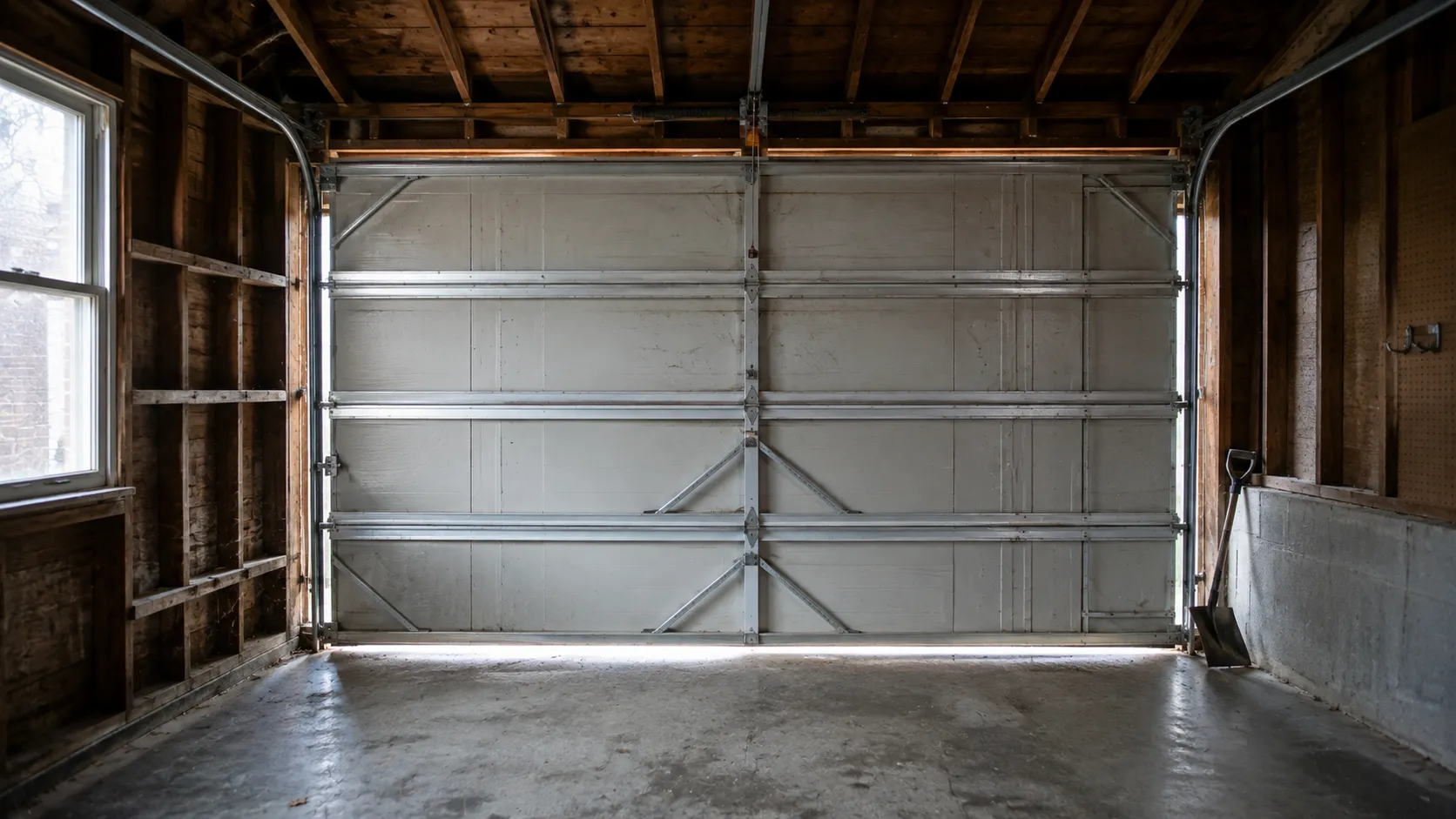
What an Uninsulated Door Costs You in a Minneapolis Winter
Minneapolis homes built 1952-2003 often carry uninsulated garage doors that fought cold weather rules never applied.
Read guide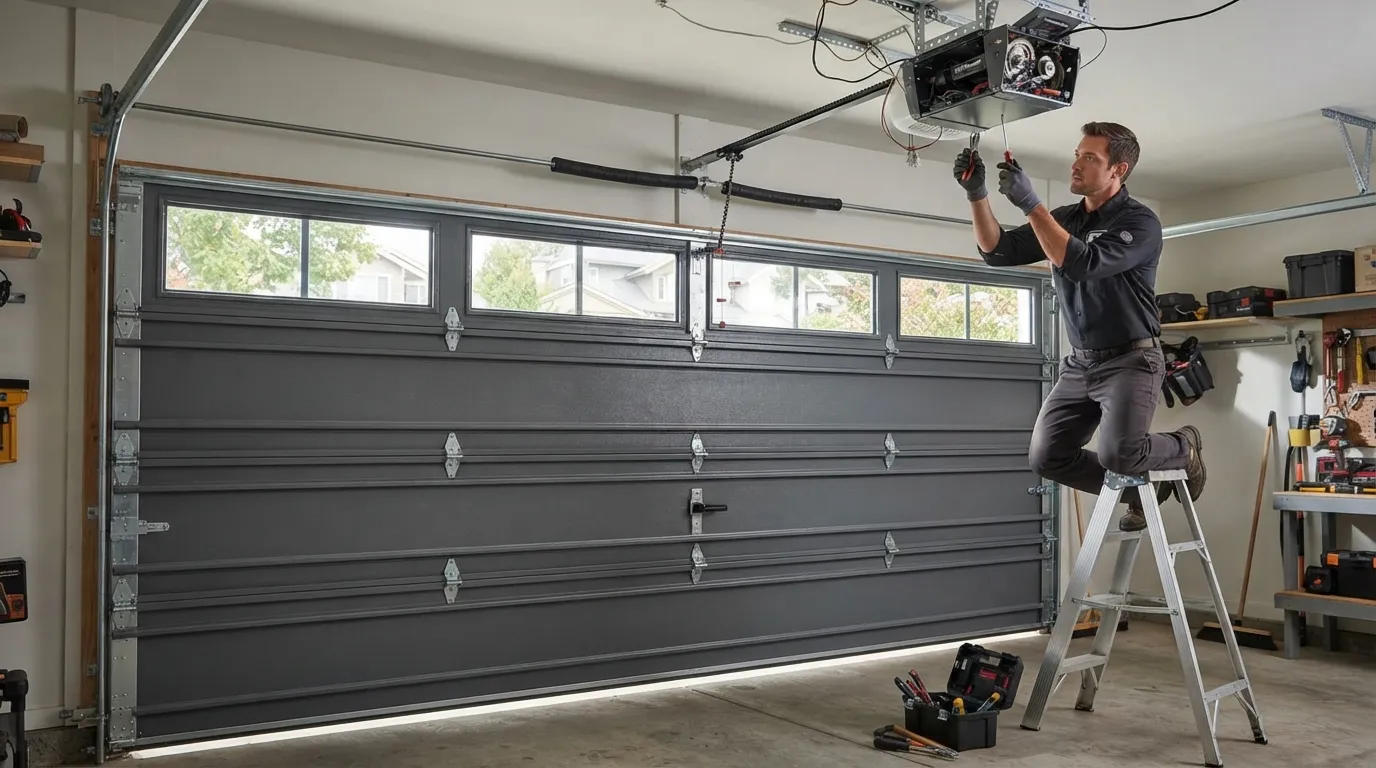
What a Power Cut Does to a Minneapolis Garage Door Opener
Minneapolis homes built 1952-2003 face cold-climate opener strain and outages.
Read guideReady when you are
Need a garage door sorted in Minneapolis?
Minneapolis Garage Door Pros repairs and installs garage doors, springs and openers in Minneapolis, MN and the surrounding area.