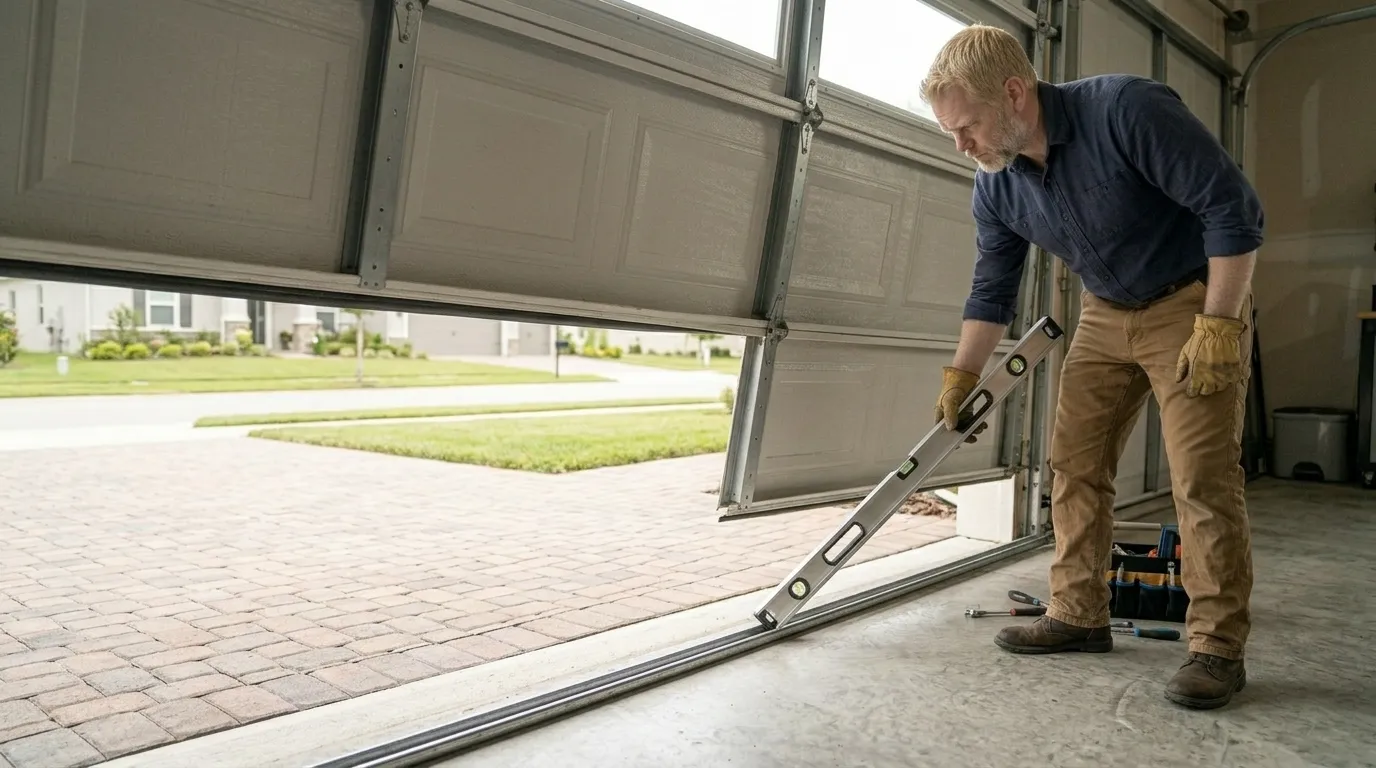
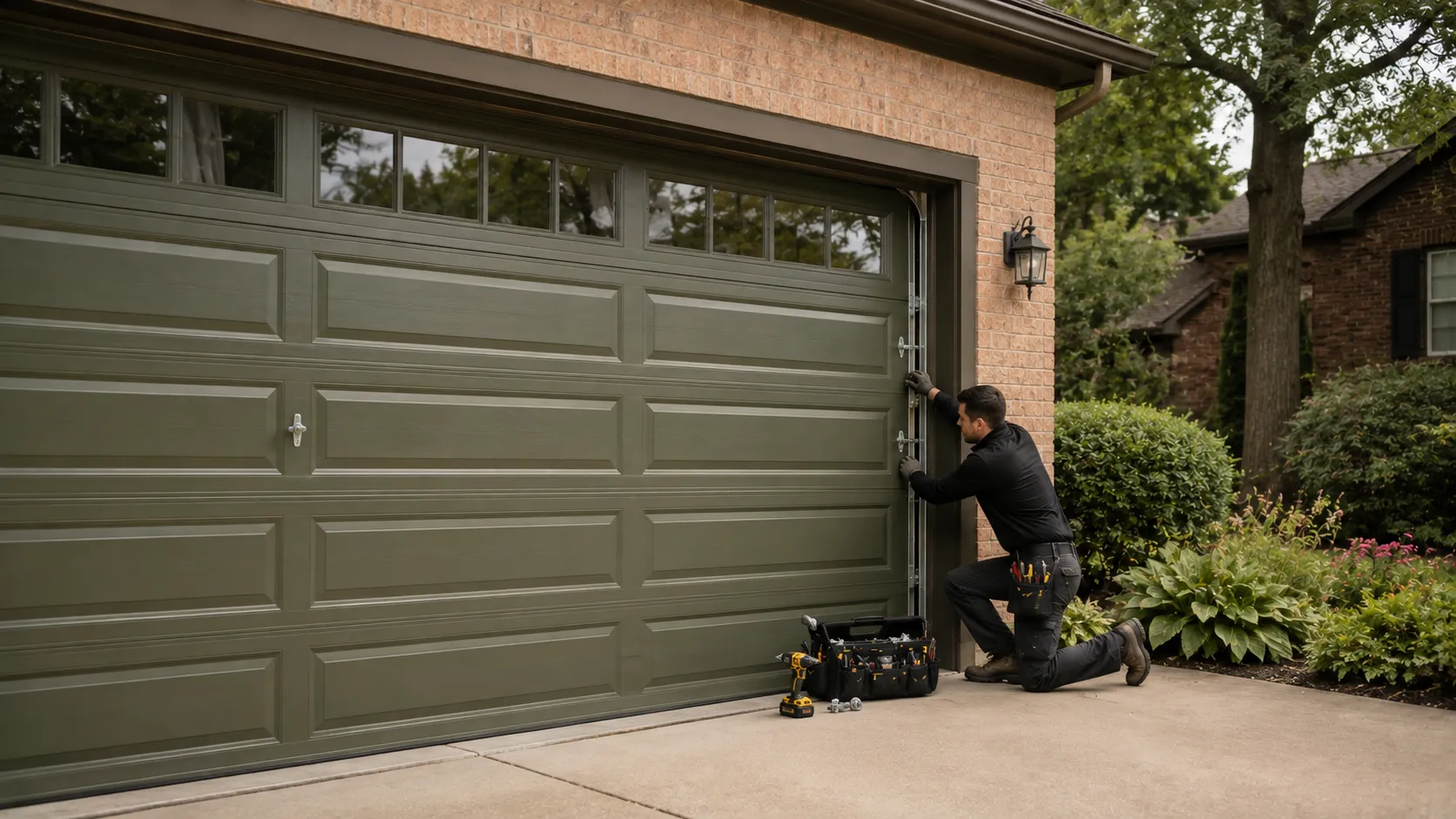
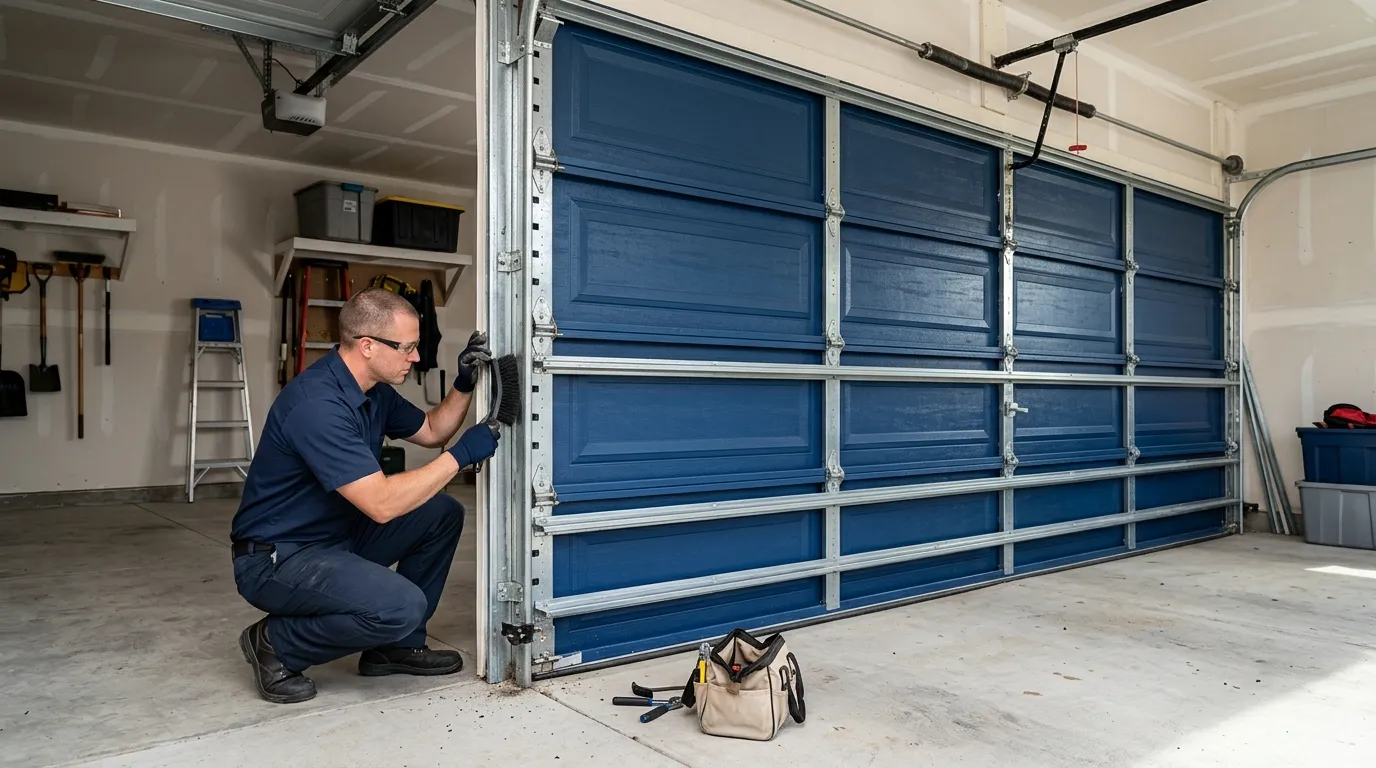
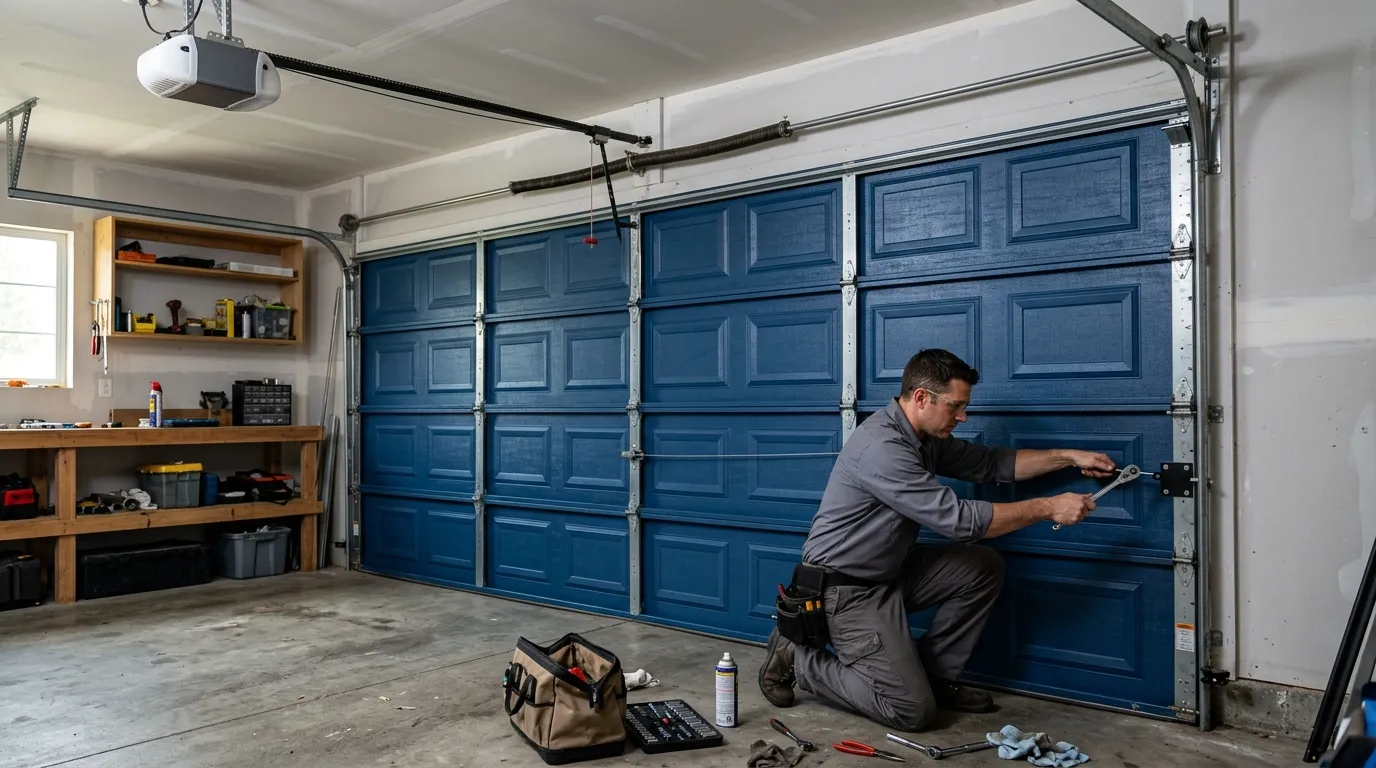
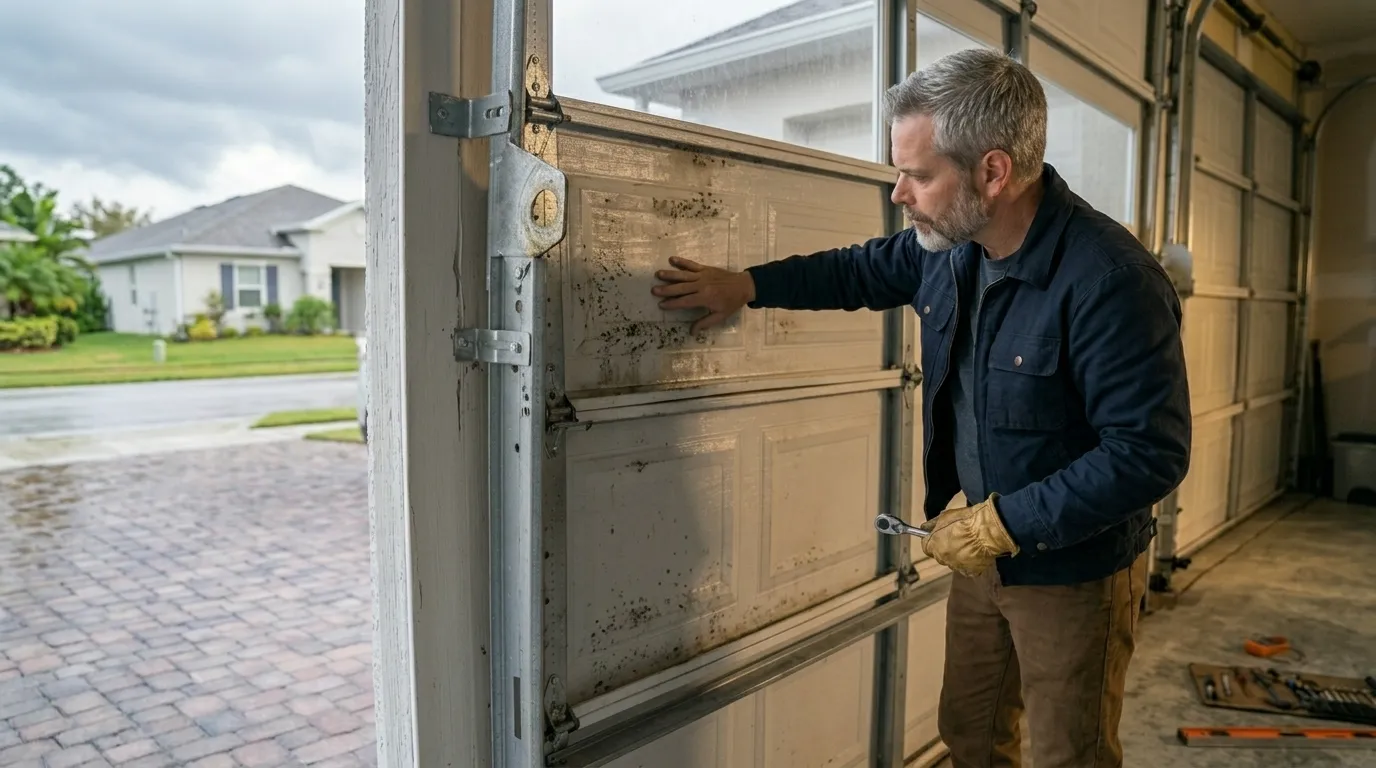
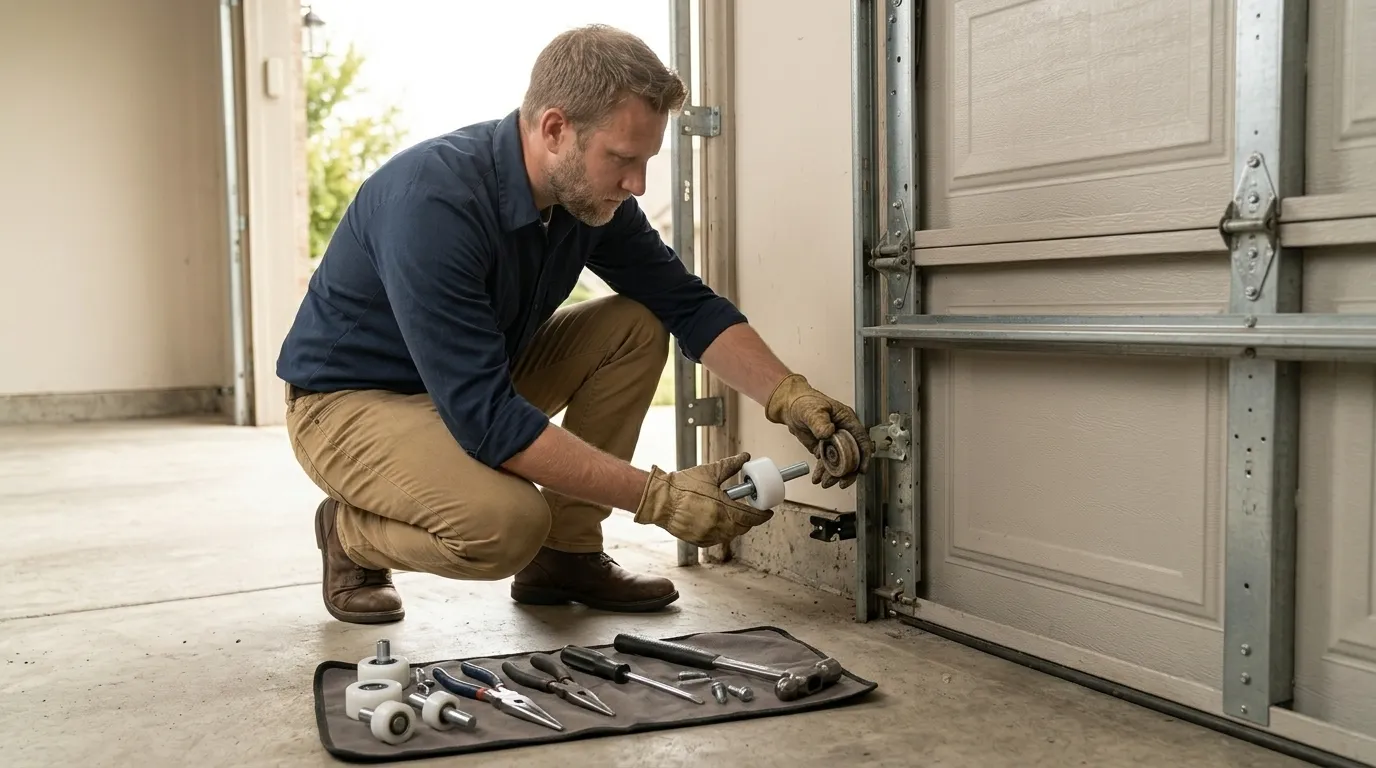
This isn't a generic garage door problem - it's a Minneapolis housing problem. Homes across the service area were built mostly between 1952 and 2003, with the median build year landing around 1975, and across the 54 named areas we cover the bulk of the stock dates to the 1960s and 70s. That means a lot of original steel track, original roller brackets, and jamb hardware that's now fifty-plus years old and was never designed to be a permanent part.
Minneapolis also sits in a cold-severe climate band, and that matters more for tracks than people expect. Frost heave moves slabs and jambs a fraction of an inch every winter, and a bracket that's slightly out of plumb puts uneven load on the rollers every single cycle. Add grease that thickens in cold garages and steel that contracts in a hard freeze, and a track that was marginal in October is the one that lets a roller pop free in January.
Across the roughly 415,224 households in the service area, 168,625 of them are owner-occupied houses - the kind with an attached garage and a door that's been opened twice a day for decades. That combination of old hardware and hard winters is why off-track calls cluster here in a way they wouldn't in a newer, milder market.