
1966 Build, Extension Springs
A door bought in 1966 was almost always a single steel skin on side-mounted extension springs, hung in a frame built to inch tolerances that don't match anything on a hardware store shelf today.
Golden Valley, Minneapolis
Golden Valley's houses cluster tight around 1966, with door openings and headroom sized for hardware nobody sells anymore. We install doors that actually fit the opening.
Symptoms
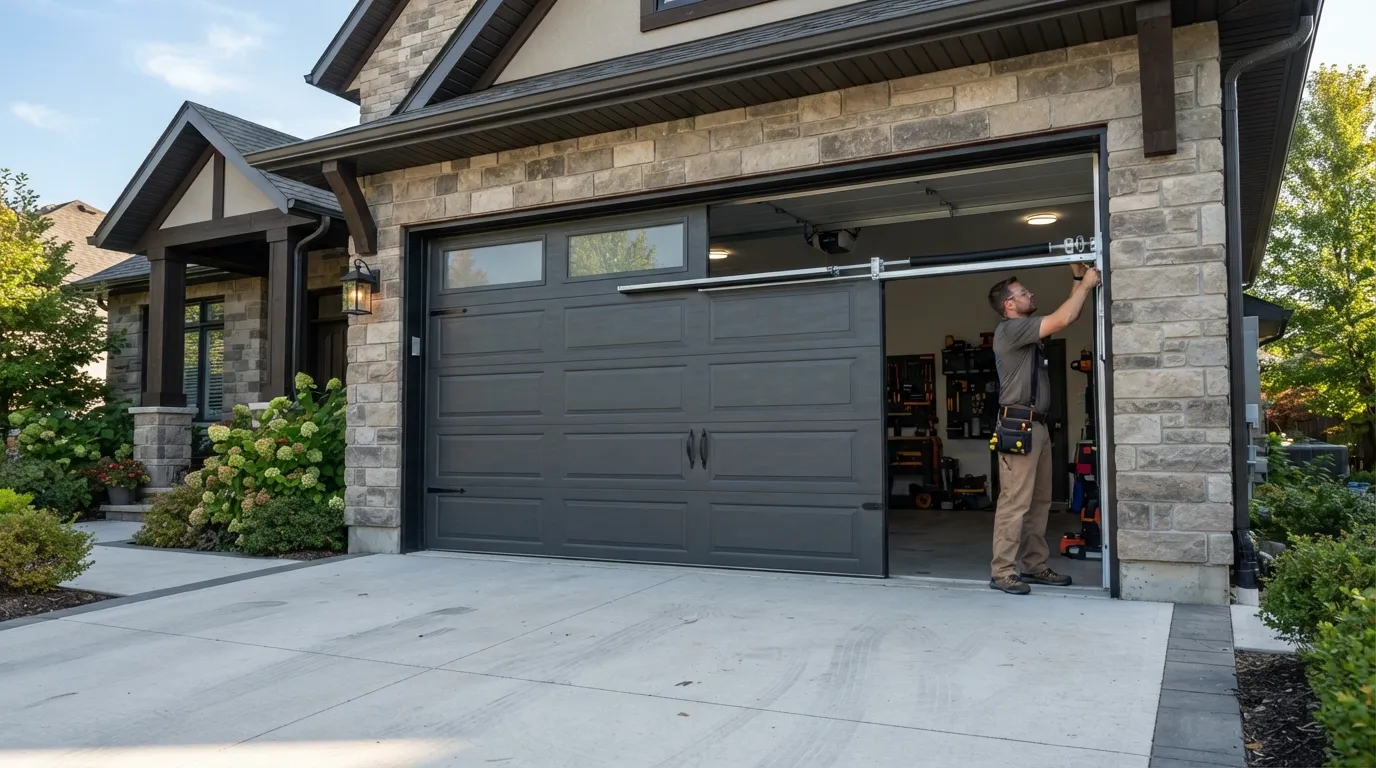
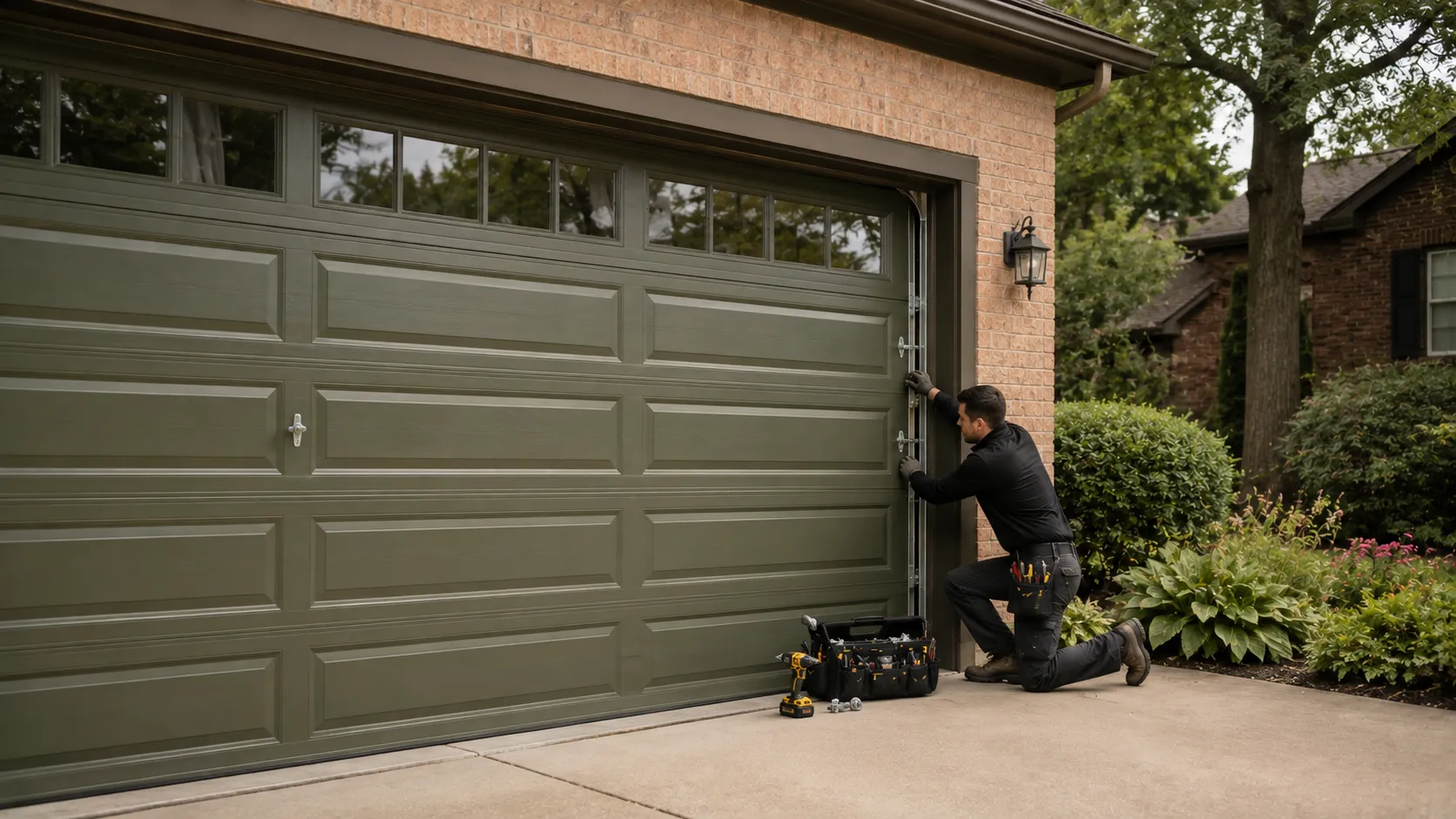
Most of the calls we get out of Golden Valley start the same way: a door that still runs, technically, but binds partway up or drops the last foot instead of settling. The median home here was built around 1966, and that year matters more than people think.
A door bought in 1966 was almost always a single steel skin on side-mounted extension springs, hung in a frame built to inch tolerances that don't match anything on a hardware store shelf today.
When that door finally needs to go, you're not swapping a panel - you're correcting for fifty-plus years of a house settling around an opening that was never perfectly square to begin with.
Add Minnesota's cold-climate swings and steel that thin has usually already warped a little at the bottom corners, which is often the first thing an owner notices as a sticking point rather than a full failure.
We see this pattern often enough in Golden Valley's stock of ranches and split-levels that we don't treat it as a surprise anymore - it's the baseline condition we plan the measurement around before we ever quote a new door.
Booking
We work out of Minneapolis and cover Golden Valley as part of the same service radius, about 5 miles out, so there's no separate branch or crew based in town - just a truck that comes over for the job. Booking starts with a look at what's actually there now: opening width, headroom above the track, and whether the framing has shifted enough over the decades that a standard door needs shimming to sit right. For a house built in the mid-1960s, that check matters more than it would on newer construction, because the numbers on the tape measure don't always match what a spec sheet assumes. We'll ask for the rough age of the house and whether the opener has been replaced separately from the door, since those two often age at different rates. Once we've seen the opening, we give a number for the door itself, not a placeholder estimate that changes once the crew shows up. If the opening is out of square by more than a small margin, we say so before the day of install, not during it.
Watch-outs
On a house from this era, the two failure points we run into most are the spring type and the track alignment.
Extension springs - the kind stretched along the horizontal track rather than wound above the door - were standard when these homes went up, and they age differently than torsion springs. They stretch, lose tension unevenly side to side, and can let a door drop crooked instead of straight down.
Many of these openings were framed with less clearance above the door than current torsion hardware wants, so a straight swap to modern springs sometimes means adjusting the track mount, not just bolting on a new door.
Minnesota's cold winters add a second layer - steel contracts, lubricant thickens, and a door that was merely tired in September can seize solid in January.
None of this is unique to any one house, but it's common enough across Golden Valley's 1960s-70s building stock that we check for it by default rather than waiting for it to show up as a service call.
The repair
A straightforward door swap on a house this age follows a set sequence, with one honest limit on what a new door alone can fix.
A straightforward door swap on a house this age usually means removing the old panel set, checking the track for rust or bent rail sections, and confirming the header framing can take the new hardware without modification.
If the springs are the older extension type and the owner wants torsion hardware instead - the more common ask now - that adds bracket work at the header, which takes longer than a like-for-like swap but tends to hold up better through winter cycling.
We size the new door to the actual opening we measure on site, not to a catalog default, since openings from this construction era vary more than people expect house to house.
One honest limit here: if the framing has shifted enough that the opening is meaningfully out of square, squaring it properly is carpentry work, not garage door work, and we'll say so rather than force a door into a bad frame and call it done.

On the truck
The truck carries standard door sizes and torsion hardware rated for the cold-climate cycling this region sees, which covers the large majority of Golden Valley jobs without a special order. What it doesn't carry is every panel color and every wide double-door width in stock - those sometimes need to be ordered ahead, and we'll tell you at quote time if your job falls into that category rather than let you find out on install day. Springs, rollers, and standard cable get replaced from stock on almost every call. Golden Valley's household income runs higher than the wider service area's, and we mention that only because it shapes what people ask for - insulated doors and quieter opener setups come up more here than bare economy models, and we stock toward that. We're not guessing at what a Golden Valley household wants; we're stocking based on what actually gets ordered on these calls.
Questions
On houses built around the same era as most of Golden Valley's stock, that's usually an aging extension spring losing tension unevenly on one side, or a track that's shifted slightly out of parallel over the decades. Both get worse gradually, so intermittent binding is often the early sign, not a one-time glitch.
Depends on the symptom. A door that runs rough but the panel itself is straight and undamaged might just need the opener or spring hardware addressed. A door with warped panels or a frame that's out of square usually needs full replacement - we check both before quoting either.
Usually yes for width, but headroom above the track can be tighter than current torsion spring hardware expects on houses from this build era. We measure the actual opening on site rather than assume it matches a modern spec sheet.
No. We work out of Minneapolis and cover Golden Valley as part of that service area, about 5 miles from where the trucks are based. There's no separate local office, just a crew that comes out for the job.
Explore more
Ready when you are
Minneapolis Garage Door Pros repairs and installs garage doors, springs and openers in Minneapolis, MN and the surrounding area.