Falcon Heights, Minneapolis

Opener Repair for Falcon Heights' 1960-Era Garages

Falcon Heights homes date to about 1960, which means openers were almost always added after the fact. We diagnose and repair those retrofits, traveling the 5 miles from Minneapolis.

Opener Repair for Falcon Heights' 1960-Era Garages in Minneapolis
Serving Minneapolis, MNBackground-checked techsHonest, upfront pricingFast local response

Local causes

Why This Fails Locally

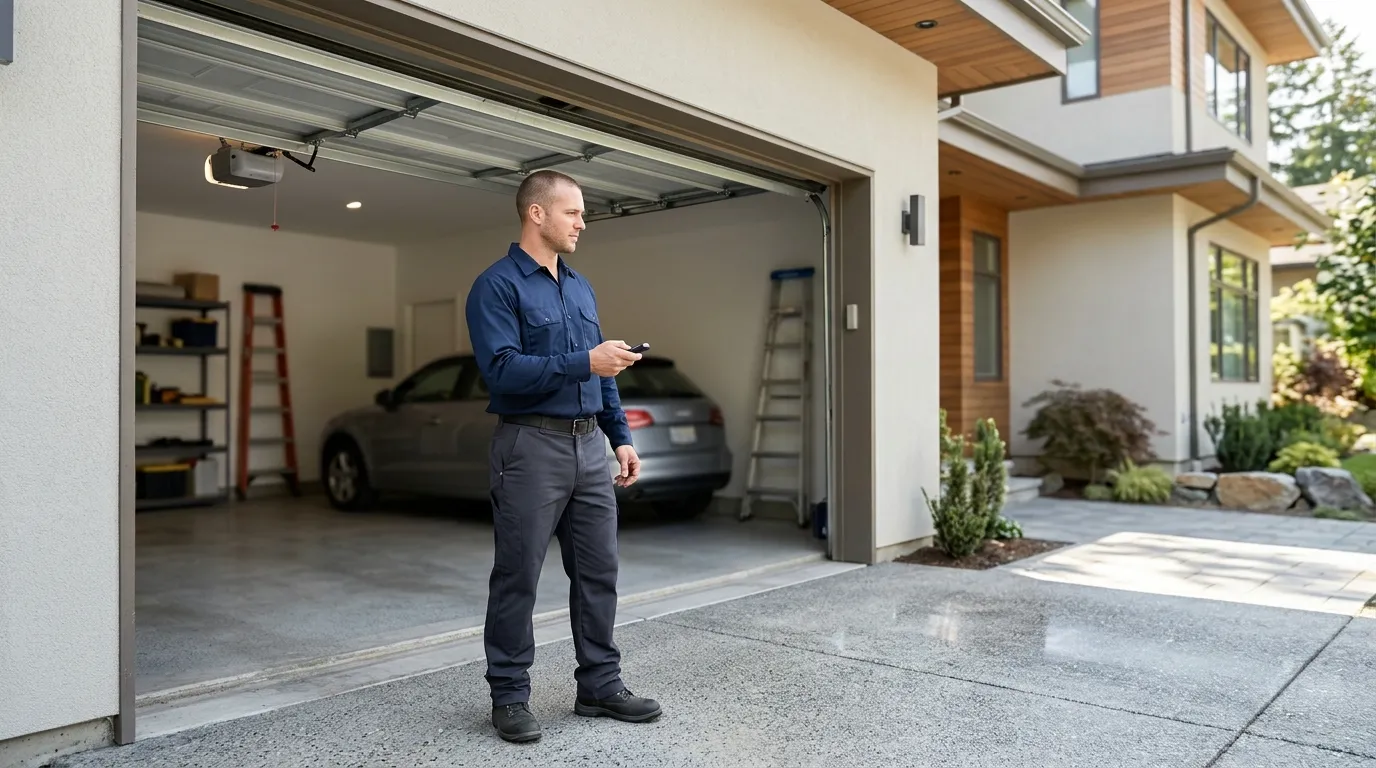
The fault we see most in Falcon Heights isn't a burned-out motor. It's a mounting bracket or a header plate that was never built for the opener sitting on it. In a town where the typical house went up around 1960, the garage itself came first and the electric opener came second, bolted onto framing that was sized for a hand-lifted door, not a quarter-horsepower motor pulling on a rail. That mismatch shows up as a door that opens crooked, an opener that strains and clicks off mid-travel, or a bracket that's slowly pulling loose from the header. We're not guessing at this - Falcon Heights sits about 5 miles from our shop, and the housing stock across this whole service area runs 1952 to 2003 with a median right around 1975, so a 1960 build here is on the older edge of what we work on every week. That age matters more for openers than for the doors themselves, because the retrofit is where the trouble starts. A door built for manual lift, fitted decades later with a chain-drive unit and a mounting plate that was never engineered for the load, is a different repair than a newer door with a factory opener bracket. We treat it that way from the first look, not after we've already misdiagnosed it as a bad motor.

Why This Fails Locally

The repair

What the Repair Takes

On a house from this era, the job usually starts at the header, not the opener head, then works through the opener's own failure points before we settle on repair versus replacement.

  1. Check the header bracket

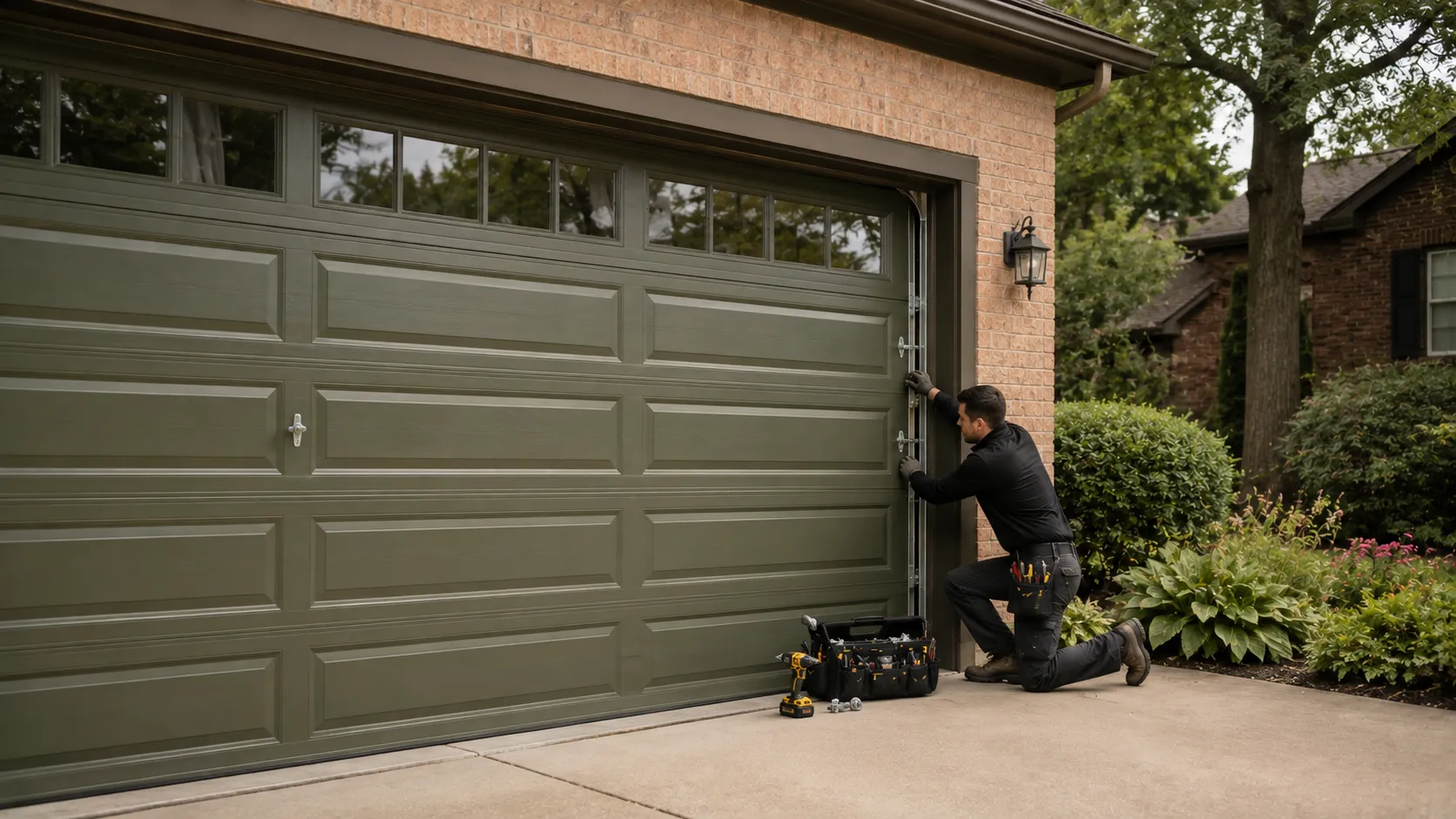
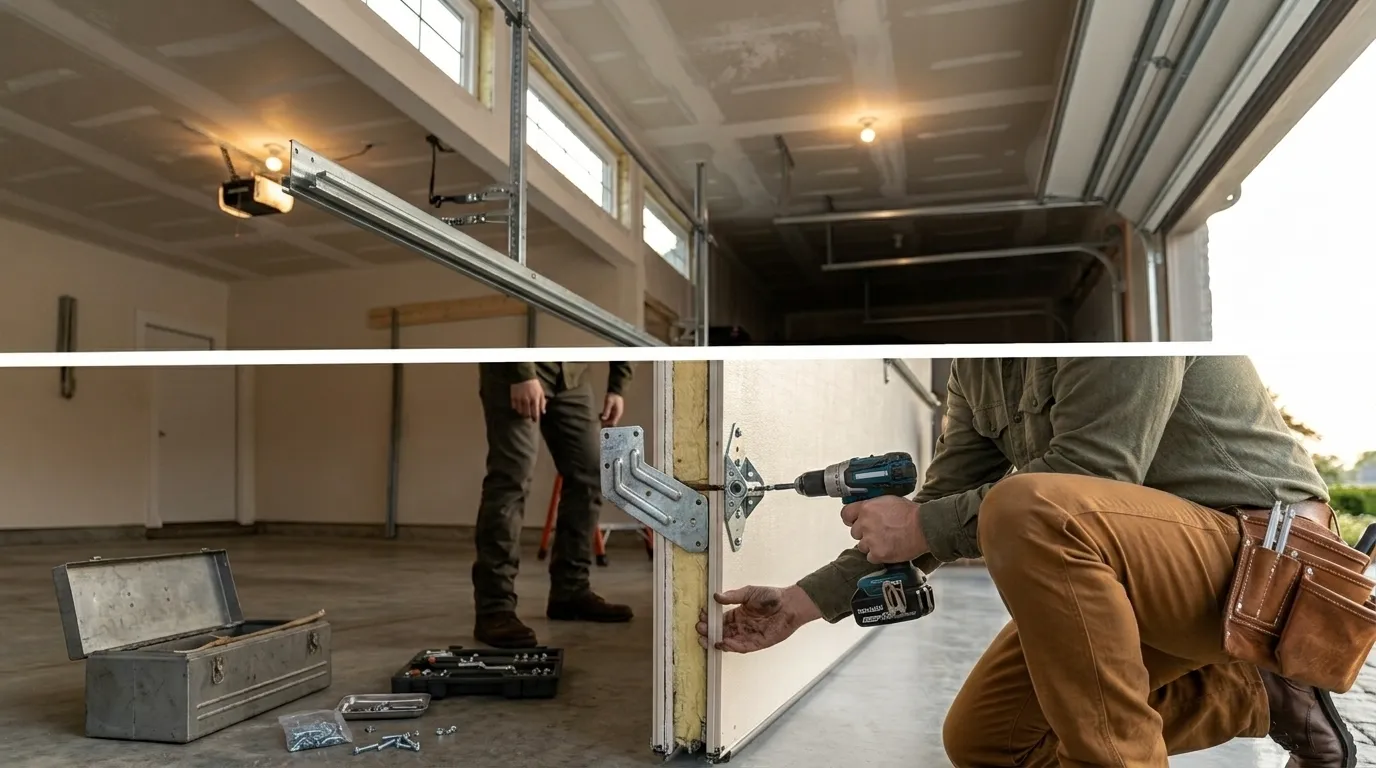
    If the bracket was added after construction, we check whether it's tied into solid framing or just screwed into trim - a common shortcut on retrofits from this period. That gets addressed before we touch the opener itself.

  2. Diagnose the opener's anatomy

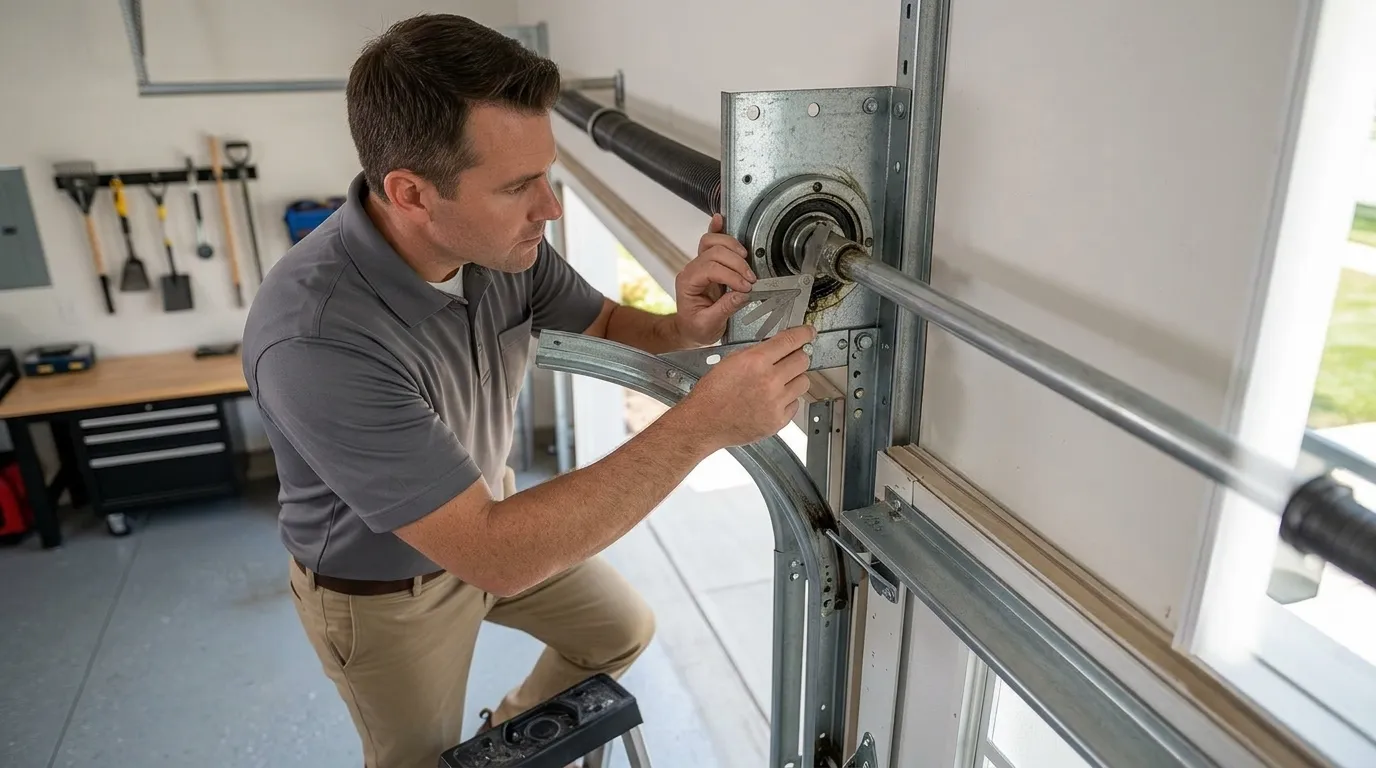
    From there it's the usual opener anatomy: limit switches that drift out of adjustment, a logic board that's taken one too many power surges, or a drive gear stripped from years of the opener fighting a door that's slightly out of balance.

  3. Account for cold-weather effects

    Minnesota's climate band is classified cold and severe, and cold makes plastic drive gears brittle and slows the response time on photo-eye safety sensors - problems that show up worse in an unheated garage than a conditioned one.

  4. Test the safety reversal system

    We test the safety reversal system every time, not as an upsell but because it's the one thing on an older opener that's genuinely dangerous if it's failed.

  5. Weigh repair against replacement

    Some older chain-drive units use gear kits and circuit boards that aren't stocked new anymore, so on a unit old enough, full replacement can be faster and cheaper than chasing a discontinued part. We'll tell you which one you're looking at before we start, not after.

DIY or pro

Doing It Yourself

Some opener upkeep is genuinely a weekend job; other parts hold real stored force or control a safety-critical setting. Here's the honest split for a retrofit opener in Falcon Heights.

Reasonable weekend jobs

Realigning photo-eye sensors that have drifted, replacing remote batteries, cleaning and lubricating the chain or belt, and checking that wall switch wiring hasn't worked loose are all reasonable jobs with a screwdriver and a level.

Leave the header bracket alone

Anything involving the header bracket on an older retrofit installation isn't DIY territory, because that bracket is holding up a motor pulling against spring tension - and a bracket that lets go doesn't fail gently.

Force settings are dangerous to guess

Set the down-force too high on an opener compensating for a door that's out of balance, and you've built a door that will close on whatever's underneath it without stopping. That's a logic board setting best left to a technician.

Retrofit safety wiring needs a check

If your opener predates the photo-eye safety requirement and someone's added sensors after the fact, that wiring is worth having checked by someone who does this daily, not guessed at. We'd rather talk you through a $12 sensor cleaning over the phone than have you open a logic board you don't need to touch.

Watch-outs

What Can Go Wrong

The costliest opener mistakes in Falcon Heights usually start with hardware nobody checked first. Here's what we watch for before quoting a repair, and the one parts limitation worth knowing in advance.

New opener on old hardware

The most expensive mistake we see in Falcon Heights isn't a broken opener - it's a new opener installed on old, unchecked hardware. Mount a modern belt-drive unit to a header bracket already stressed from sixty-plus years of settling, and the bracket eventually goes, sometimes taking the rail and door track with it.

Diagnosing the opener when the door is the problem

A door that's out of balance - springs sagging, rollers seized - makes any opener work harder than it should, and no amount of opener repair fixes a spring problem. We check both before we quote either.

Parts lead time

Because parts sourcing on some older units runs into lead-time issues, a repair that looks like a same-day fix can occasionally turn into a return trip once the part's in hand. We tell you upfront when that's the case rather than let you assume.

Questions

Common questions

Is my opener too old to repair?

Not necessarily on age alone, but if it's a chain-drive unit from before photo-eye sensors were standard and the logic board has failed, replacement parts can be hard to find new. We check what's actually available before recommending full replacement over repair.

Why does my opener struggle more in winter?

Cold makes plastic drive gears brittle and slows photo-eye sensor response, both more noticeable in an unheated garage during a Minnesota winter. If your opener only acts up below freezing, that's usually the gear or sensor, not the motor itself.

Do you have a location in Falcon Heights?

No - we run this job from our Minneapolis shop, about 5 miles out. There's no separate branch or dedicated crew based in Falcon Heights, just a truck making the trip for the appointment.

Can I just replace the opener myself?

You can, but on a house from this era the header bracket the opener mounts to was often added after the garage was built, not engineered for it. We'd rather check that bracket first than have a new motor pulling on an old, undersized mount.

Ready when you are

Need a garage door sorted in Minneapolis?

Minneapolis Garage Door Pros repairs and installs garage doors, springs and openers in Minneapolis, MN and the surrounding area.

CallGet a quote