Falcon Heights, Minneapolis

New Garage Door Installation for Falcon Heights' 1960s Housing Stock

Falcon Heights homes mostly date to 1960, five miles from Minneapolis. See what a new garage door install really takes on this era of framing and hardware.

New Garage Door Installation for Falcon Heights' 1960s Housing Stock in Minneapolis
Serving Minneapolis, MNBackground-checked techsHonest, upfront pricingFast local response

Local causes

Why This Fails Locally

Falcon Heights runs about 2,041 households, which is small enough that install jobs here come one house at a time rather than in matching runs the way they might in a bigger suburb. That size matters because it means less uniformity, not more - a 1960 rambler two doors down from a 1975 split-level can have two completely different opening widths and framing setups.

Most houses in this town went up around 1960, a decade earlier than the wider service area's 1952-2003 range settles toward its 1975 median. That earlier build date usually means narrower door openings sized for the single-car garages common in that era, non-standard jamb widths, and framing that was never built to carry a heavier insulated section. A door that installs clean in a newer house down the road can hit blocking or a short header here.

The region also sits in a severe cold climate band. On a 1960-era opening that was framed for a light, uninsulated wood door, swapping in a modern steel sandwich door changes the load on that old header more than most homeowners expect. We check that before we quote, not after.

Why This Fails Locally

The repair

What the Repair Takes

A new install on a house from this era follows a set sequence, from measuring the actual opening to reinforcing old framing, before we ever quote a flat number.

  1. Measure the rough opening

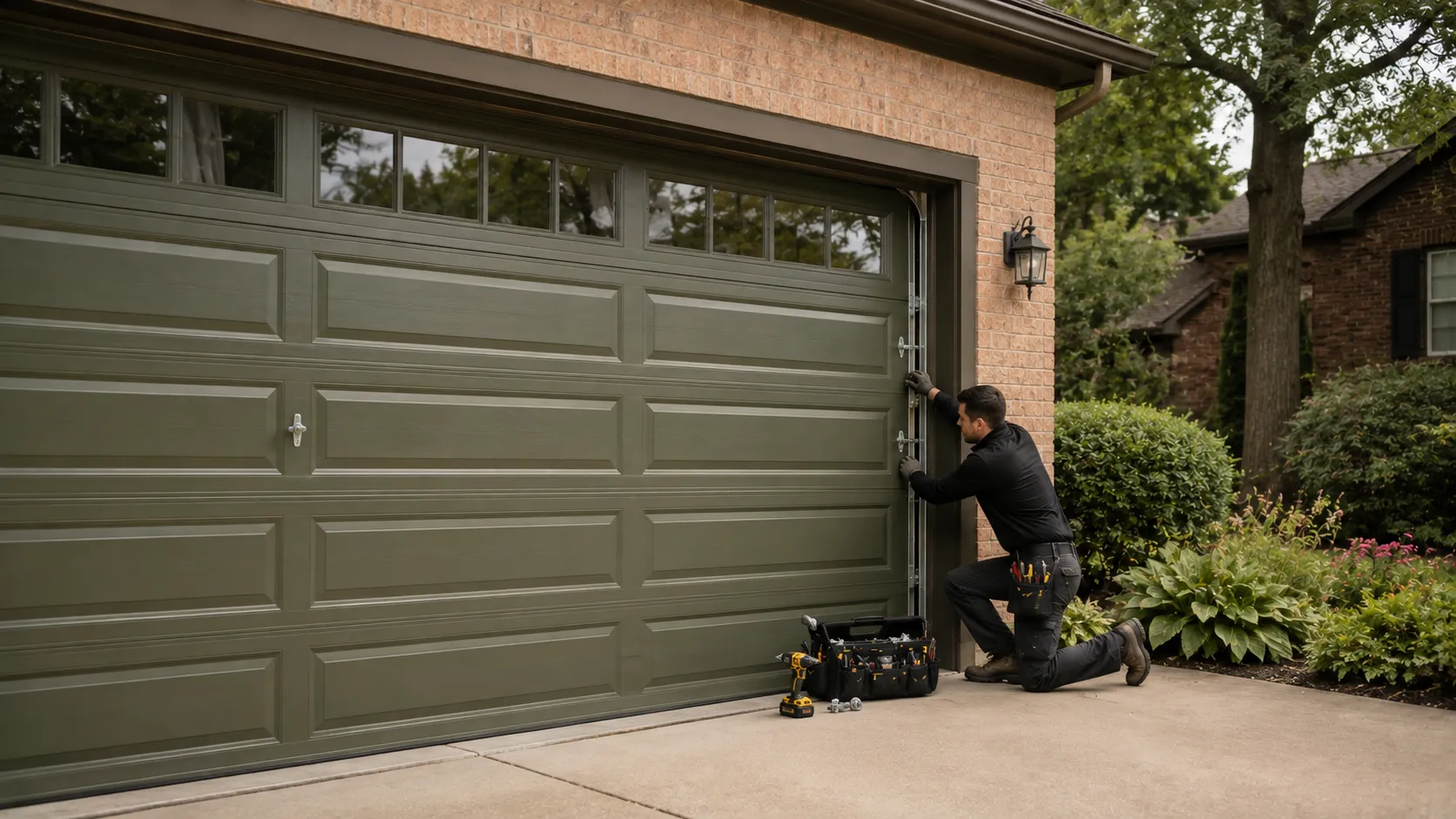
    We measure the rough opening against the actual door size, not the other way around. On 1960s construction, openings often run narrower than today's stock 8- or 9-foot widths, so the choice becomes a custom-width door or reworking the jamb, which changes the price of the job.

  2. Check headroom clearance

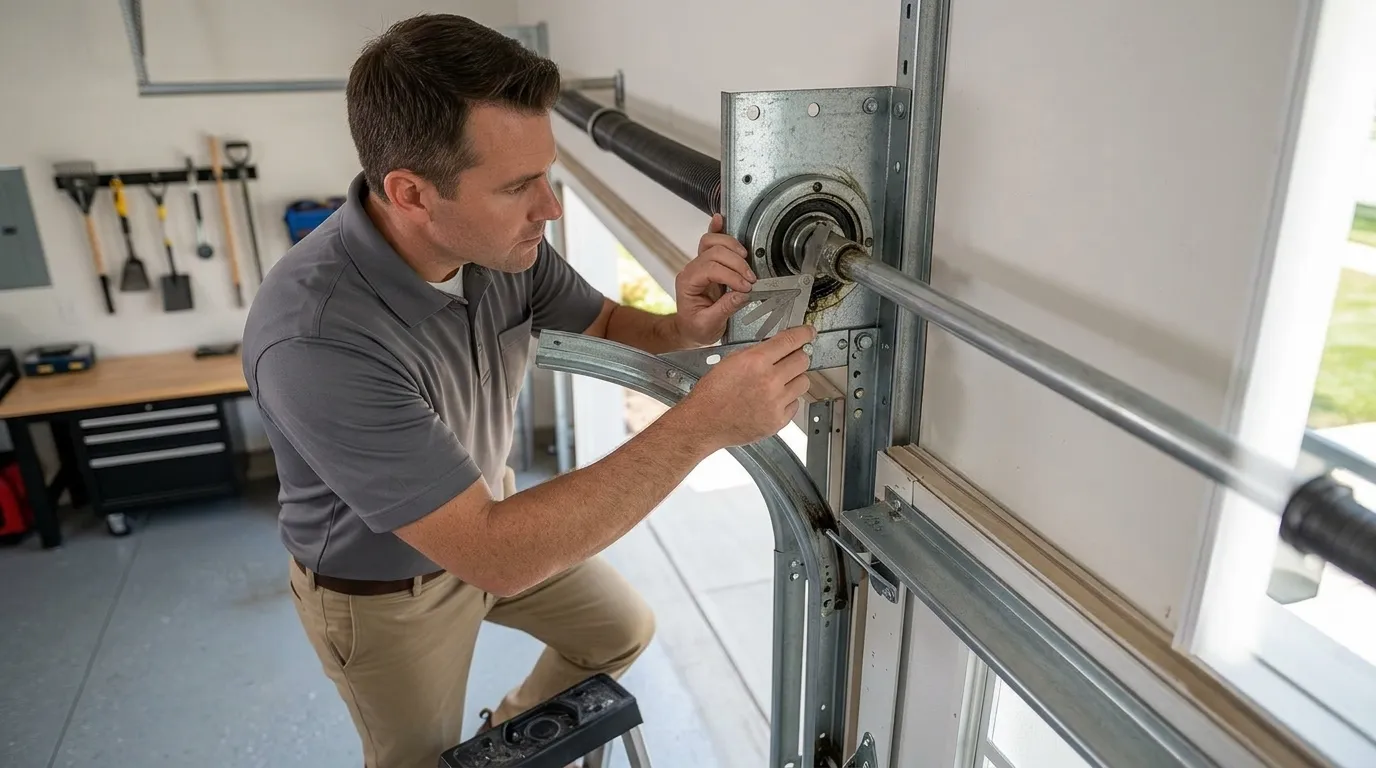
    Older garages built for a lighter door sometimes don't have the clearance a standard torsion spring setup needs. That can mean a low-headroom conversion kit rather than a straight swap.

  3. Talk through insulation value

    Given the severe cold here, we talk through insulation value up front, since a single-layer steel door costs less at install but loses more heat through a garage that backs onto living space - common in houses from this build period.

  4. Reinforce the opener mount

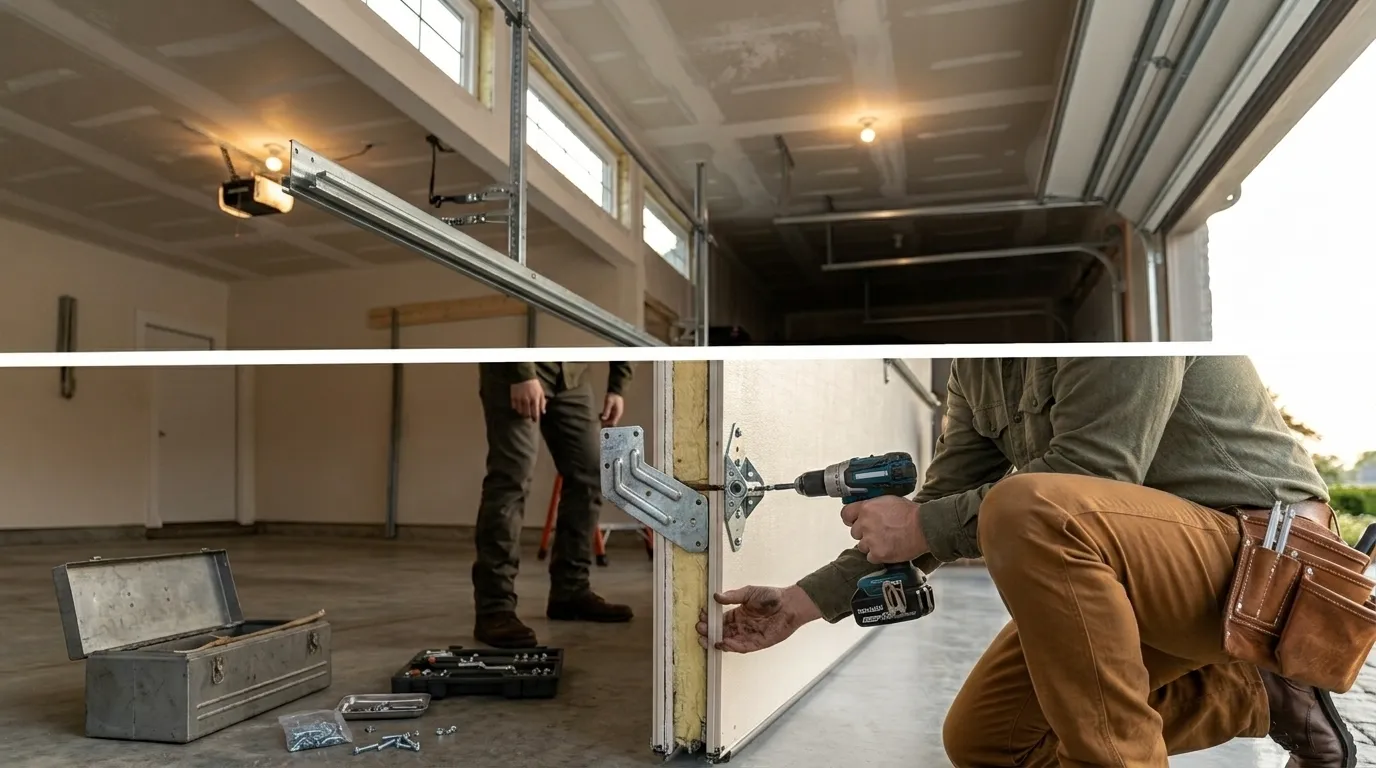
    Mounting the opener bracket into old framing sometimes needs a reinforcement plate if the original header was sized light. None of this is unusual work, but it's slower than a new-construction install, and we price it that way rather than quoting flat before we've measured.

DIY or pro

Doing It Yourself

A new install involves more stored force and structural risk than routine maintenance does, especially on openings framed for a lighter, older door. Here's what's safe to handle yourself and where the honest limits are.

Weight most people underestimate

A garage door section weighs more than most people guess, and a wound torsion spring holds enough stored force to break a bone or worse if it lets go nearby. That risk is higher here because many openings in this town were framed for a lighter original door than what's going in now.

Simple maintenance is fine solo

We won't talk anyone out of doing simple maintenance themselves - lubricating rollers, tightening loose hardware, clearing a track. A full new install is different: it means setting spring tension to the door's exact weight and confirming the header can carry the new load.

No same-day custom orders

Our honest limitation is that we don't do same-day custom-width orders. If your opening needs a non-standard size, that door has to be ordered, and we'll tell you the lead time before you commit rather than after.

Watch-outs

What Can Go Wrong

Older openings surprise a straight install more often than newer ones do. Here's what we catch before it becomes a change order, plus the one honest call we'll make instead of pushing a bigger job.

Openings out of square

The most common surprise on a house from this era is an opening that's slightly out of square from decades of settling - not enough to notice by eye, but enough that a new door won't seal evenly at the bottom without shimming the track. We catch that at measurement, not at delivery.

Jamb condition

On a house built around 1960, the wood framing the opening has usually never been touched, and it isn't always sound enough to hold new mounting hardware without reinforcement. That's an added step, and added cost, that a phone-based quote won't catch.

Insulation gets skipped too often

In a climate this cold, skipping the insulation conversation to save money up front tends to come back as a complaint about a cold garage wall the first winter. We'd rather flag that trade-off now than after installation.

When rebuilding beats installing

Not every project on an older opening is worth a straight install. If the framing needs real rebuilding, replacing the door is sometimes the smaller of two jobs, and we'll say so instead of pushing a bigger bill.

Questions

Common questions

Will a standard-size door fit my garage if my house was built around 1960?

Not always. A lot of openings from that era run narrower than today's common 8- or 9-foot widths, so we measure the actual rough opening before quoting. If it's non-standard, you're looking at a custom-width door, which costs more and takes longer to arrive than stock sizes.

Do I need an insulated door in Falcon Heights?

This region sits in a severe cold climate band, and if your garage backs onto living space, an insulated section makes a real difference in comfort and heating cost. It's not required, but we walk through the trade-off before you order rather than after installation.

How far out does Minneapolis Garage Door Pros travel for this?

Falcon Heights is about five miles from our base in Minneapolis, and we cover it as part of our regular service area alongside the other nearby suburbs we work in.

Can I install a new garage door myself?

We don't recommend a full install as a DIY project. A door section is heavy, spring tension is dangerous if set wrong, and older framing sometimes needs reinforcement before it can carry a modern door's weight. Basic maintenance is fine to do yourself; a new install isn't.

Ready when you are

Need a garage door sorted in Minneapolis?

Minneapolis Garage Door Pros repairs and installs garage doors, springs and openers in Minneapolis, MN and the surrounding area.

CallGet a quote