
Beyond the standard sizes
A lot of St. Paul openings run narrower or shorter than what a big-box supplier defaults to, so we bring adjustable jamb kits and a range of track radius options rather than assuming a stock fit.
St Paul, Minneapolis
St. Paul homes mostly date to 1952, with openings and framing that don't match today's standard door sizes. We install from Minneapolis, 8 miles out, built for that mismatch.
Booking
We run this job out of Minneapolis, about 8 miles from St. Paul, so booking means picking a day that works with the drive, not a same-day walk-in from a local branch. Here's what we need before that day gets set.
When you call, the first thing we ask isn't the door style you want - it's the year the house was built and whether the opening has ever been modified. In a city where the typical home went up around 1952, that answer changes what we load on the truck before we ever see the driveway.
We'll ask for rough opening measurements or a photo of the header if you have one, because a lot of these garages were framed for doors that aren't made anymore. That one phone call saves a wasted trip and a return visit for a size nobody stocked.
Booking means picking a day that works with the drive from Minneapolis, not a same-day walk-in from a local branch.
We don't keep an on-site crew in St. Paul, so scheduling runs a little tighter than a same-town outfit. Plan on booking a few days out rather than expecting an emergency slot, since installs are planned work, not a same-day repair.
On the truck
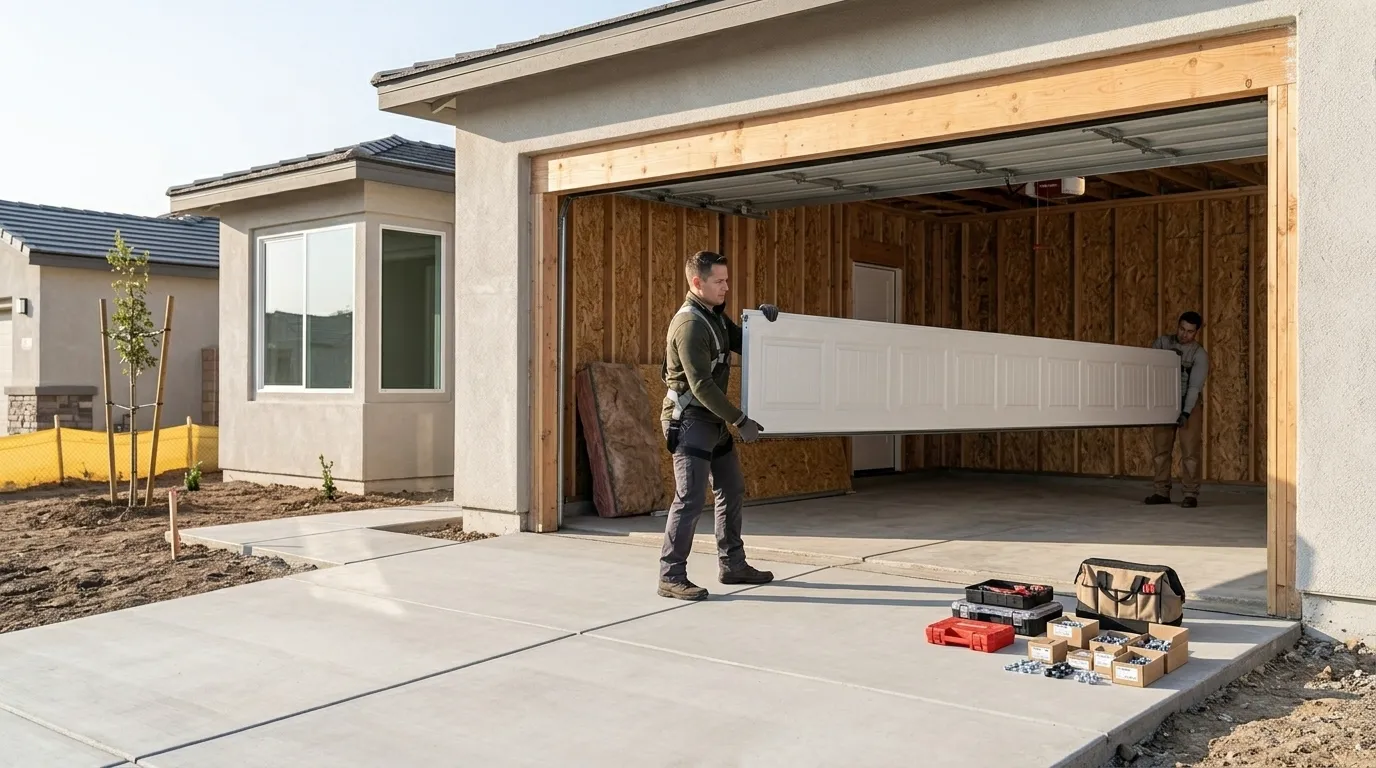
For a city where most garages were built between the early 1950s and the 1970s, we carry more than the standard 16x7 and 8x7 panel doors.
A lot of St. Paul openings run narrower or shorter than what a big-box supplier defaults to, so we bring adjustable jamb kits and a range of track radius options rather than assuming a stock fit.
Insulated steel panels come standard on the truck given the cold-climate demands here - a single-layer door doesn't hold up through a Minnesota winter the way a homeowner expects.
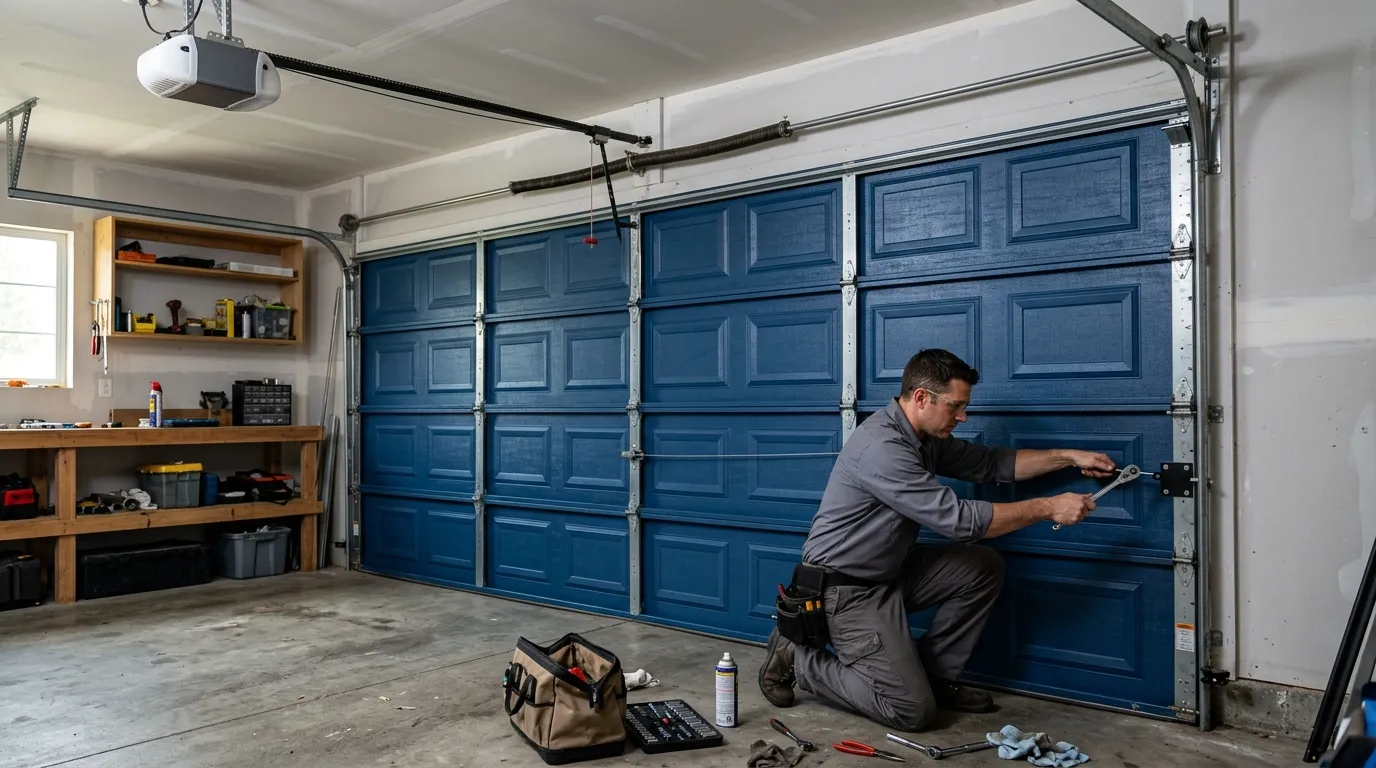
We carry both torsion and extension spring setups, because houses from this era were built with either depending on who framed the garage that year, and we're not guessing which one your opening needs until we're standing in front of it.
What we don't carry is custom millwork doors built to order on the spot - if you want a non-standard wood door, that's a special order with its own lead time, and we'll tell you that up front rather than promise a truck-stock swap that isn't realistic.
Local causes
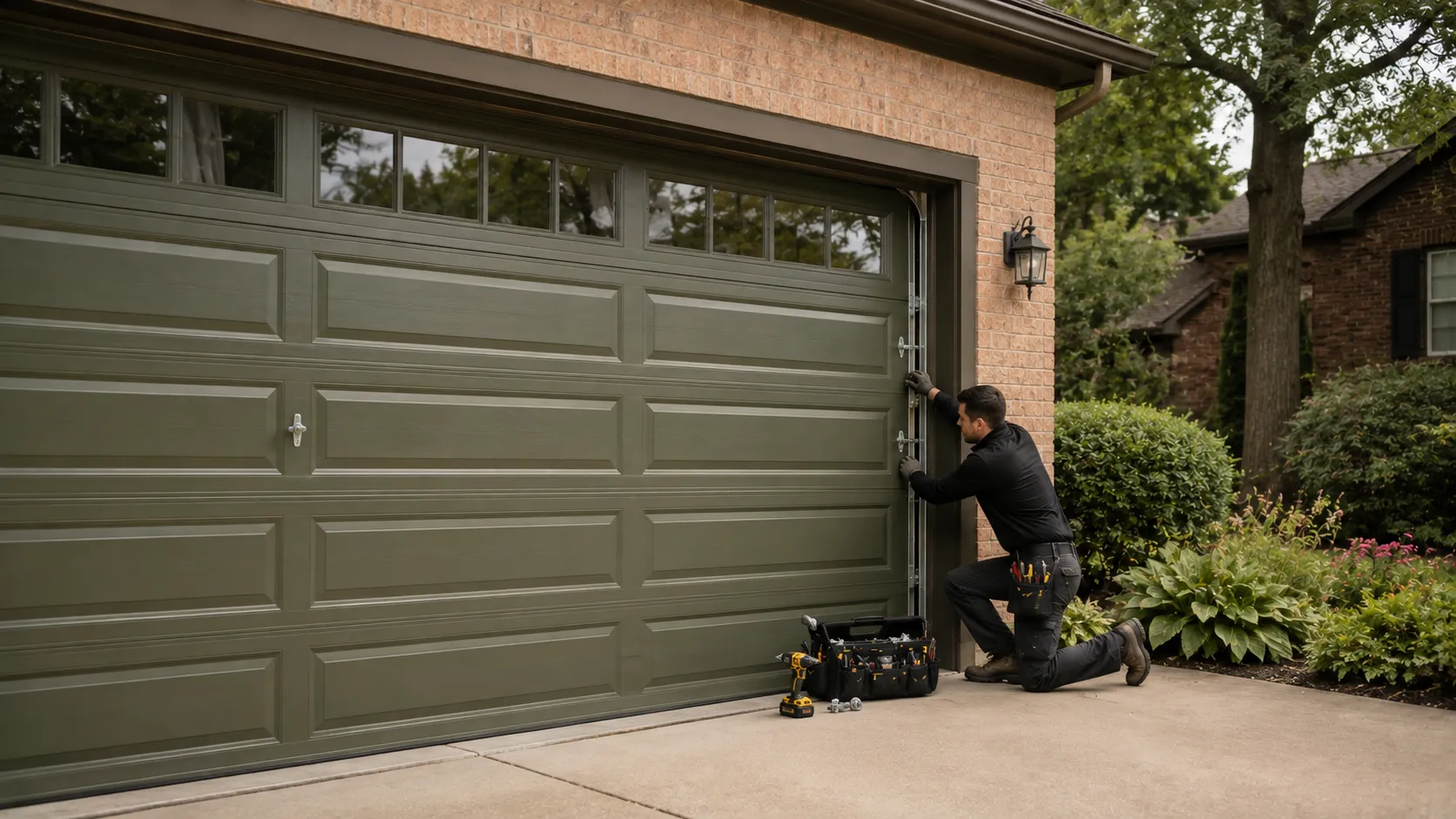
The failure we see most in St. Paul isn't a broken spring - it's a door that was installed to fit an opening that's since shifted, because a house built around 1952 has had seven decades to settle. Framing that was square when the garage went up is rarely square now, and a new door hung without shimming to the actual current opening binds on one side within a season. National installers who show up with one standard-size door and a level get this wrong constantly, because they're solving for a 1995 subdivision opening, not a mid-century one. The other piece is insulation: this is a cold-climate build region, and a door installed without checking for a tight seal against an older, sometimes uneven jamb leaves a gap that a newer development wouldn't have. We square the opening before we hang anything, which takes longer than a straight swap but is the only way a door here doesn't start sticking by the first hard freeze.
Symptoms
The tell in a St. Paul garage is usually daylight - a strip of it along one side of the door when it's closed, or a door that closes square in summer and catches in winter.
A strip of daylight along one side of the door when it's closed, or a door that closes square in summer and catches in winter, isn't a bad door - it's an opening that's moved since the structure went up, common in housing from this era.
A door that visibly bows or racks partway through the cycle usually means the track was set for an opening that no longer matches its original dimensions.
If you're only now noticing the gap, rot at the bottom panel, or a door heavier to lift than it used to be, that's worth a look before you spend more on repairs than a new install would cost.
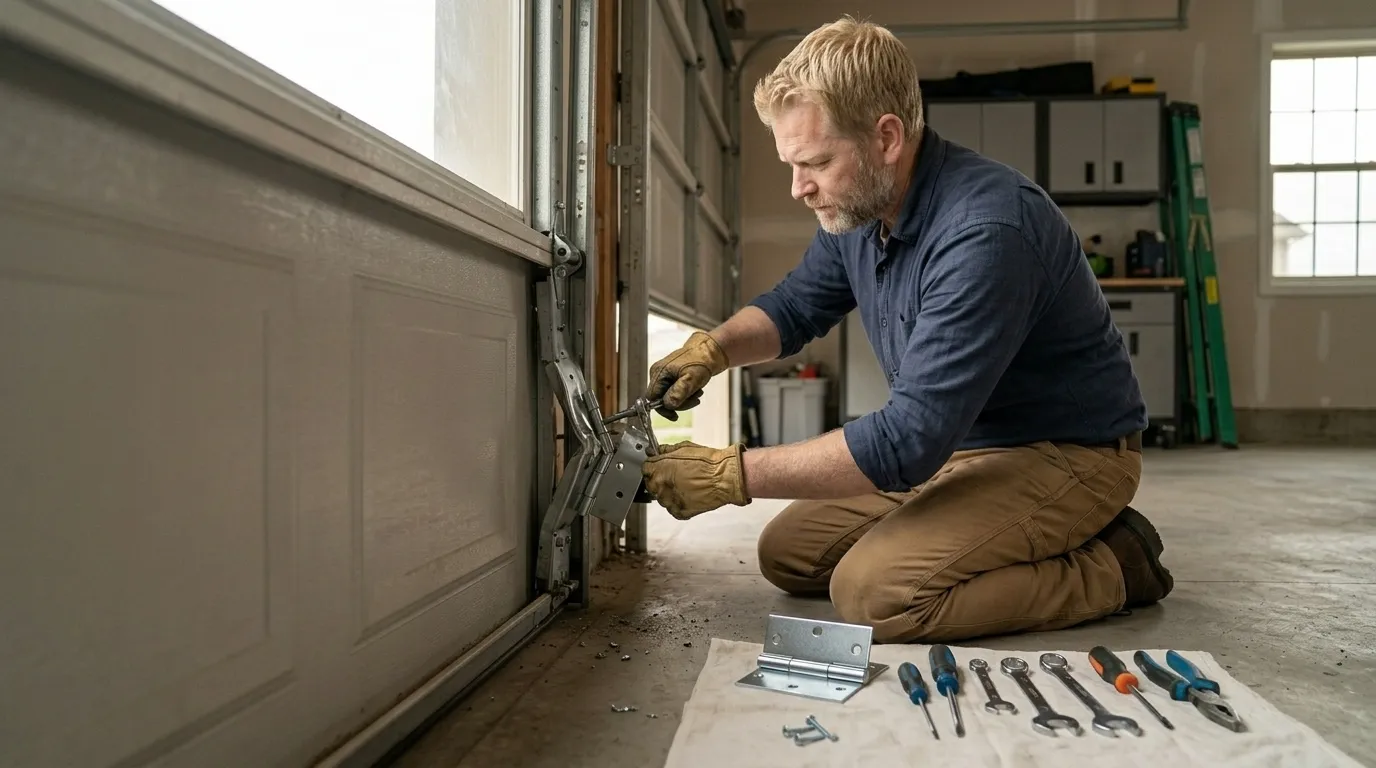
We won't recommend replacement for a door that just needs new rollers or a spring - but once the framing itself is out of square, patching the door again doesn't fix what's actually wrong.
Questions
Most St. Paul garages date to the early 1950s, and framing that old has usually shifted out of square over time. A repaired door can still bind if the opening itself was never re-squared, which is a framing issue a spring or roller swap won't touch.
No - we run installs out of Minneapolis, about 8 miles away. That means scheduling a job a few days out rather than a same-day slot, but it doesn't change the install itself once we're on site.
Not always. Openings framed in the early 1950s through the '70s often run narrower or shorter than today's standard sizes, so we measure the rough opening before quoting rather than assuming a stock door will fit.
Given the cold winters this area sees, yes - an insulated steel panel holds up better against the seasonal temperature swing than a single-layer door, especially once the seal against an older jamb is factored in.
Explore more

Ready when you are
Minneapolis Garage Door Pros repairs and installs garage doors, springs and openers in Minneapolis, MN and the surrounding area.