
Rarely just the rollers
In a neighborhood like Columbia Heights, where most garages went up around 1962, the job is rarely "replace four rollers and done." The narrow track from that era is often bent or rusted at the bottom foot of travel.
Columbia Heights, Minneapolis
Columbia Heights homes went up around 1962, mostly on steel rollers and narrow track. Here's what wears out first and what a roller job actually takes.
Pricing
Roller jobs vary by how many rollers are shot, whether the track needs straightening or swapping, and whether the door is a standard single or a double - and in Columbia Heights, it's rarely "replace four rollers and done."
In a neighborhood like Columbia Heights, where most garages went up around 1962, the job is rarely "replace four rollers and done." The narrow track from that era is often bent or rusted at the bottom foot of travel.
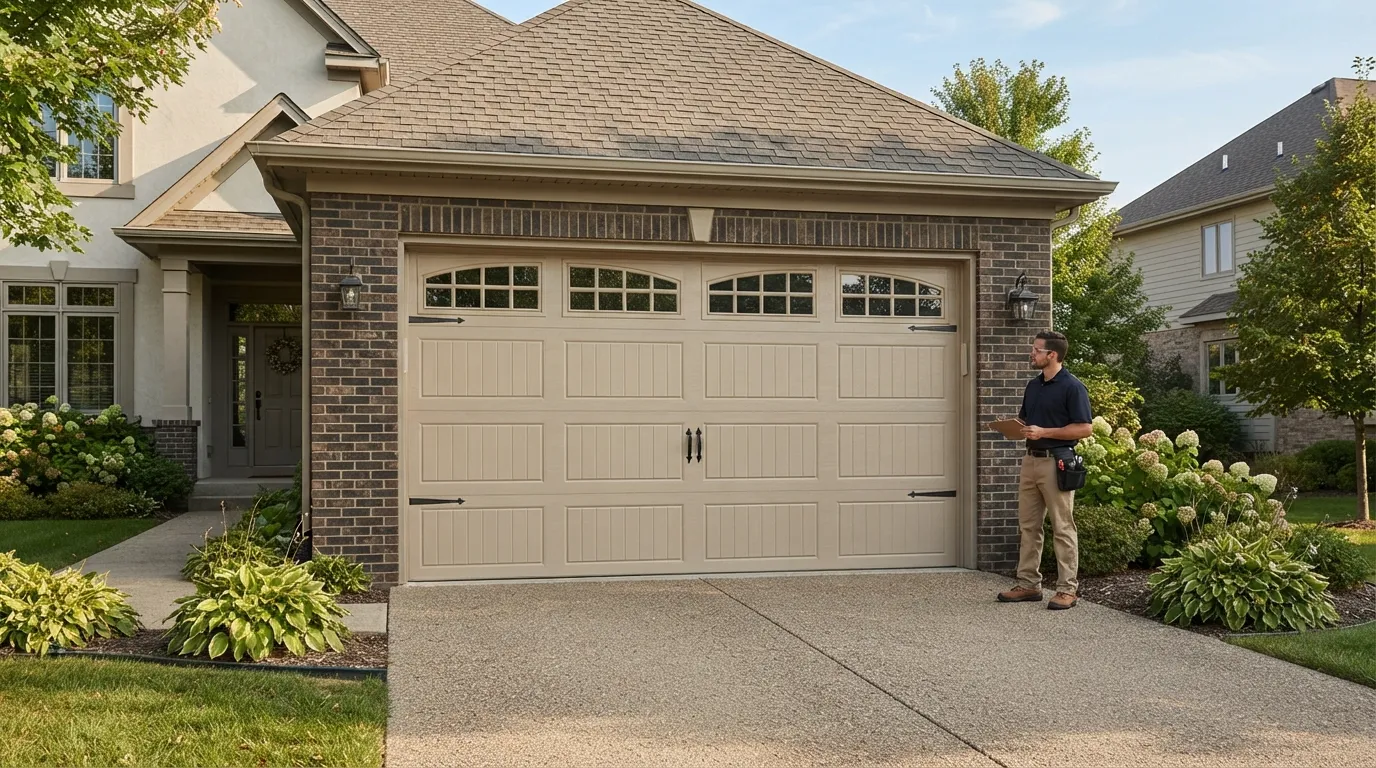
Once you're in there, it's cheaper to true up the track in the same visit than to send a second truck out later. Ask for a firm number before the truck rolls, and ask whether it includes the track work, not just the rollers.
One honest limitation: if the track itself is badly pitted or the door has sagged out of square, roller replacement alone won't fix the slam and shudder you're hearing. At that point you're looking at a track and hardware job, and I'll tell you that straight rather than sell you rollers that won't solve it.
Symptoms
The complaint sounds the same every time: a scraping or grinding noise low on the track, worse in the first few feet of travel, and a door that shudders instead of gliding.
A scraping or grinding noise low on the track, worse in the first few feet of travel, and a door that shudders instead of gliding is the complaint we hear every time.
Sometimes it's a rhythmic thump - one roller, once per rotation, catching on a flat spot worn into the wheel. Sometimes the door hangs up entirely a foot off the floor and needs a shove.
That pattern points straight at steel rollers with worn bearings, which shows up hardest in houses built around 1962. Builders of that era used steel wheels on plain bushings, not the sealed nylon rollers that came later, and sixty-plus years of uneven wear doesn't forgive that the way nylon does.
Local causes
Columbia Heights' housing stock centers on 1962, squarely inside the 1952-2003 range that defines this whole part of the Minneapolis area, and the older end of that range means original hardware is still common on unmodified garages. Steel rollers on narrow track were standard-issue for that build year, and they were never meant to run maintenance-free for six decades.
Cold makes it worse. This region sits in a severe cold climate band, and steel contracts in winter just enough to tighten tolerances that were already worn loose. A roller that rattles in October can bind and refuse to move by January, because the bearing surface has less give when the metal is cold. Nylon rollers handle that temperature swing better - they're quieter and they don't seize the same way - which is why most replacement jobs in this area move to nylon rather than replacing steel with steel.
With 8,797 households in Columbia Heights and a median income of $74,688 - noticeably below the wider service area's $96,224 - a lot of owners here are weighing a roller fix against a full door replacement on a tighter budget, and roller replacement is usually the right call before the hardware forces a bigger job.
The repair
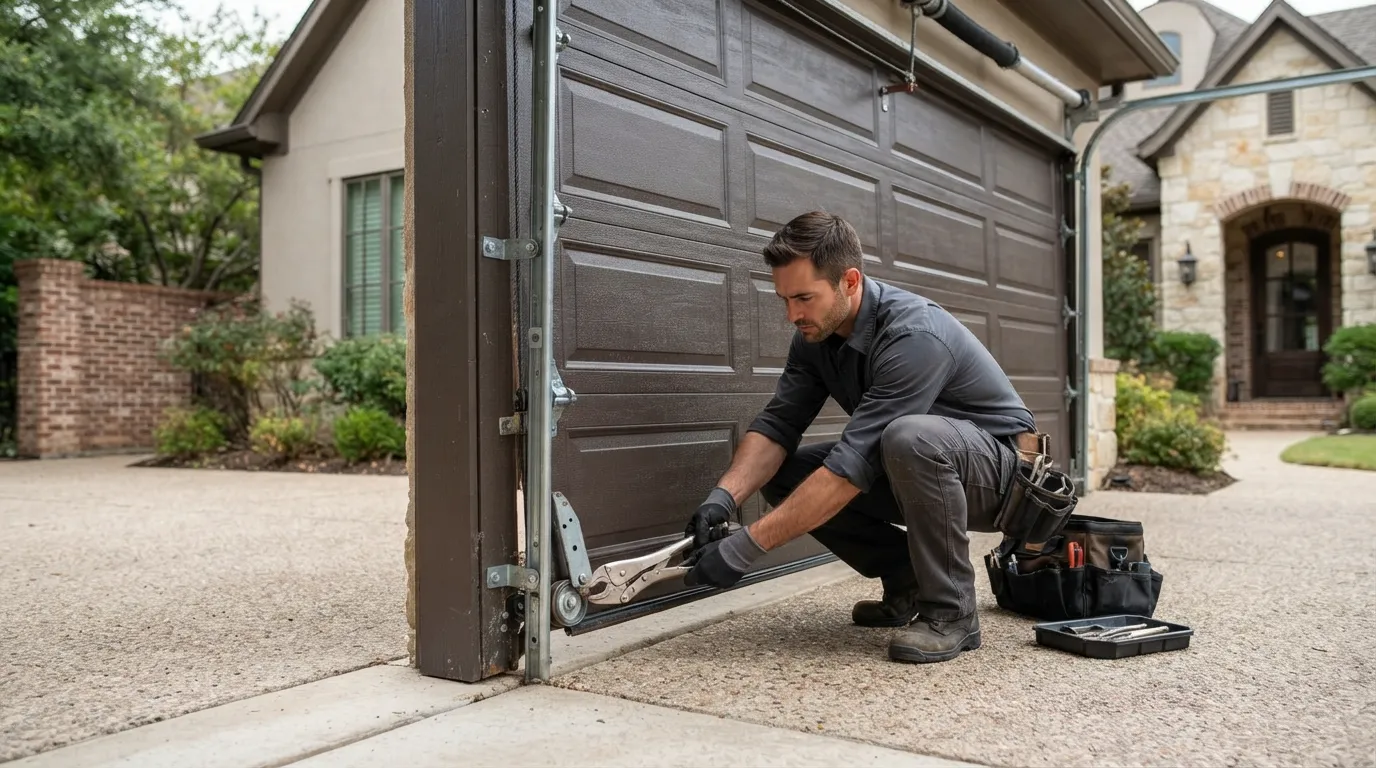
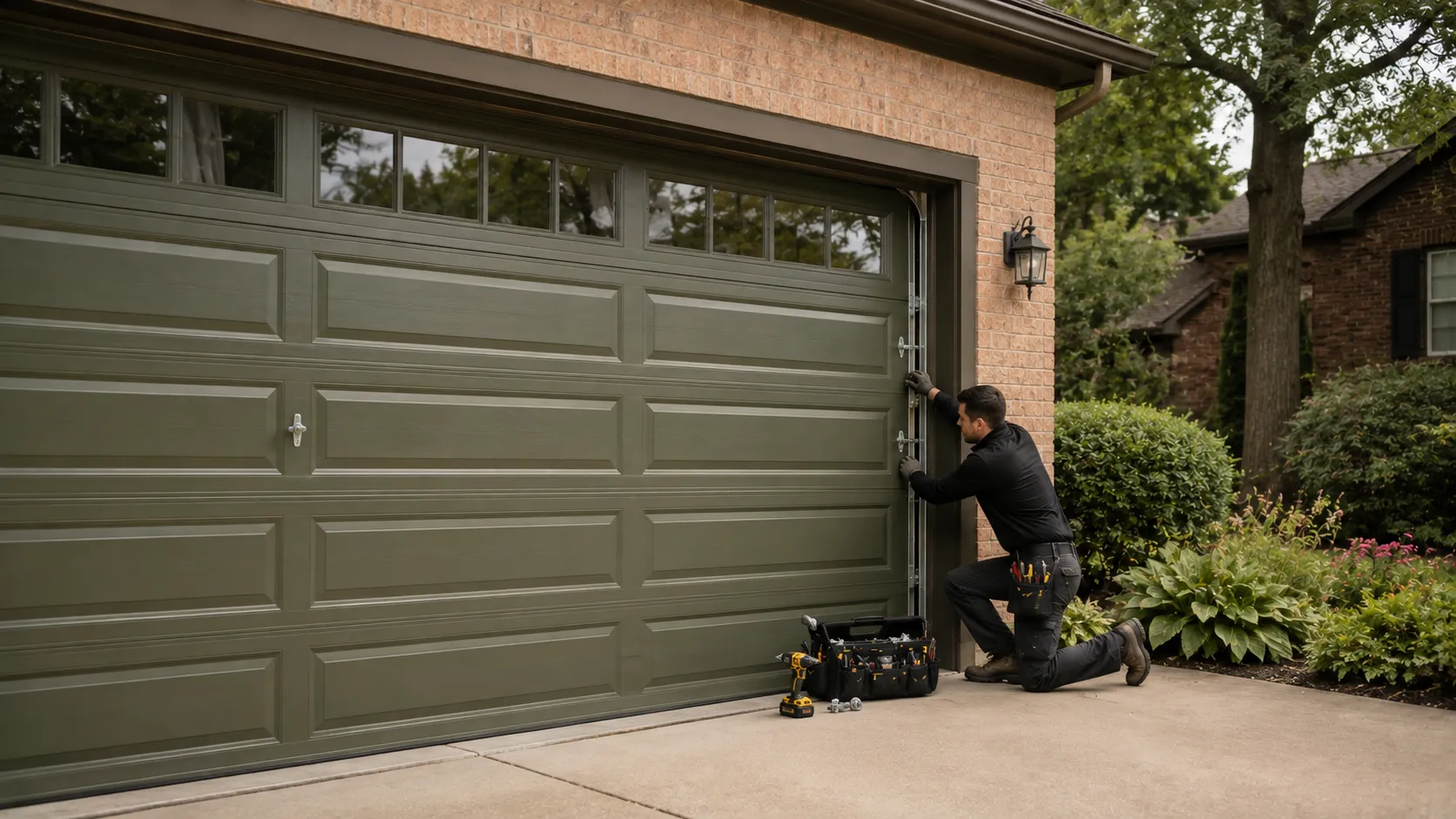
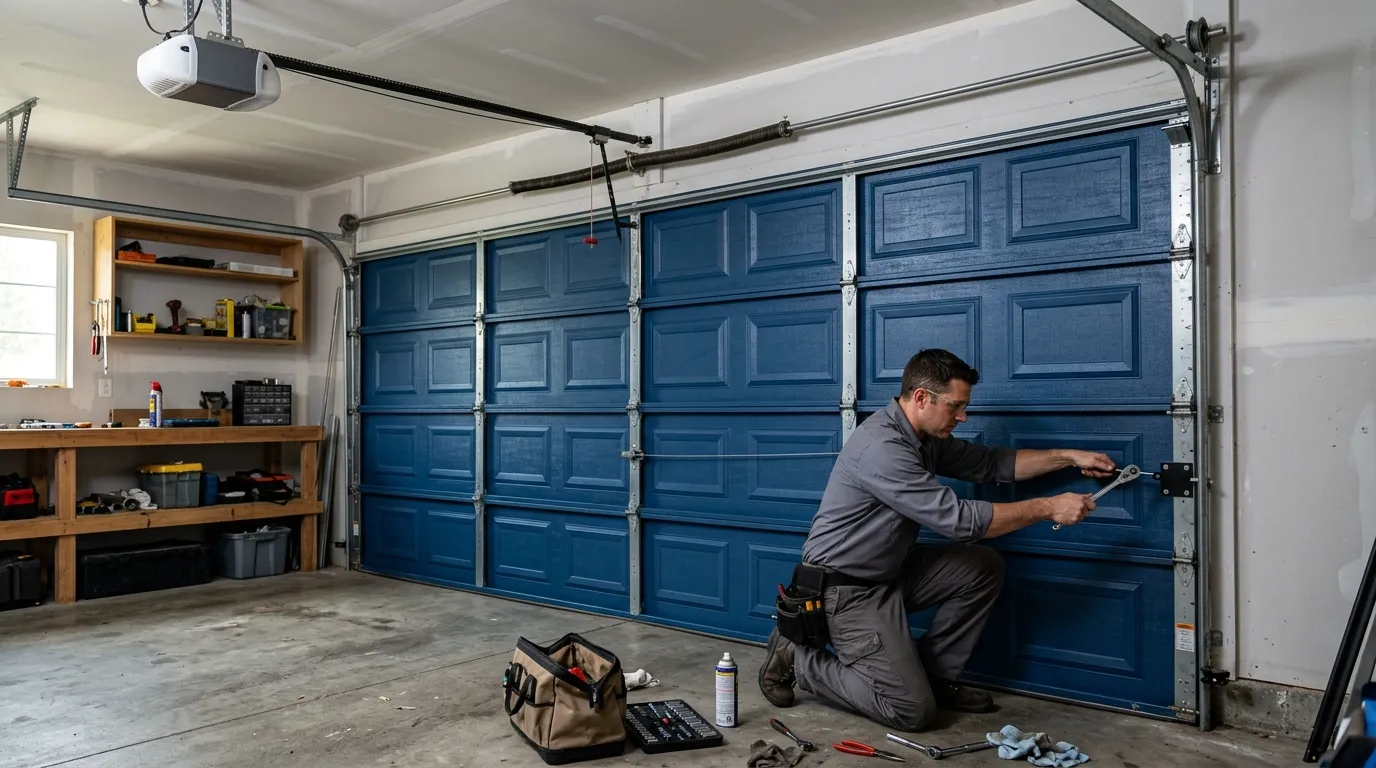
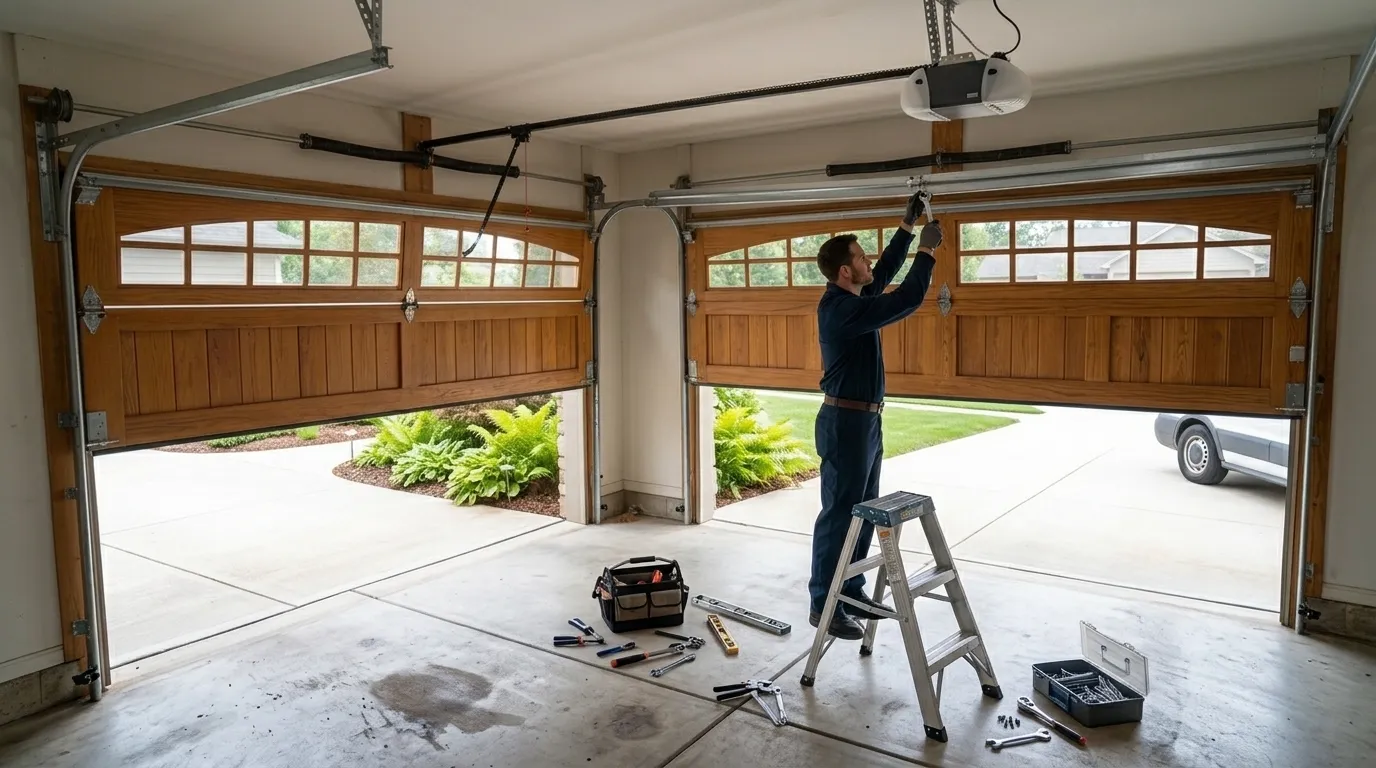
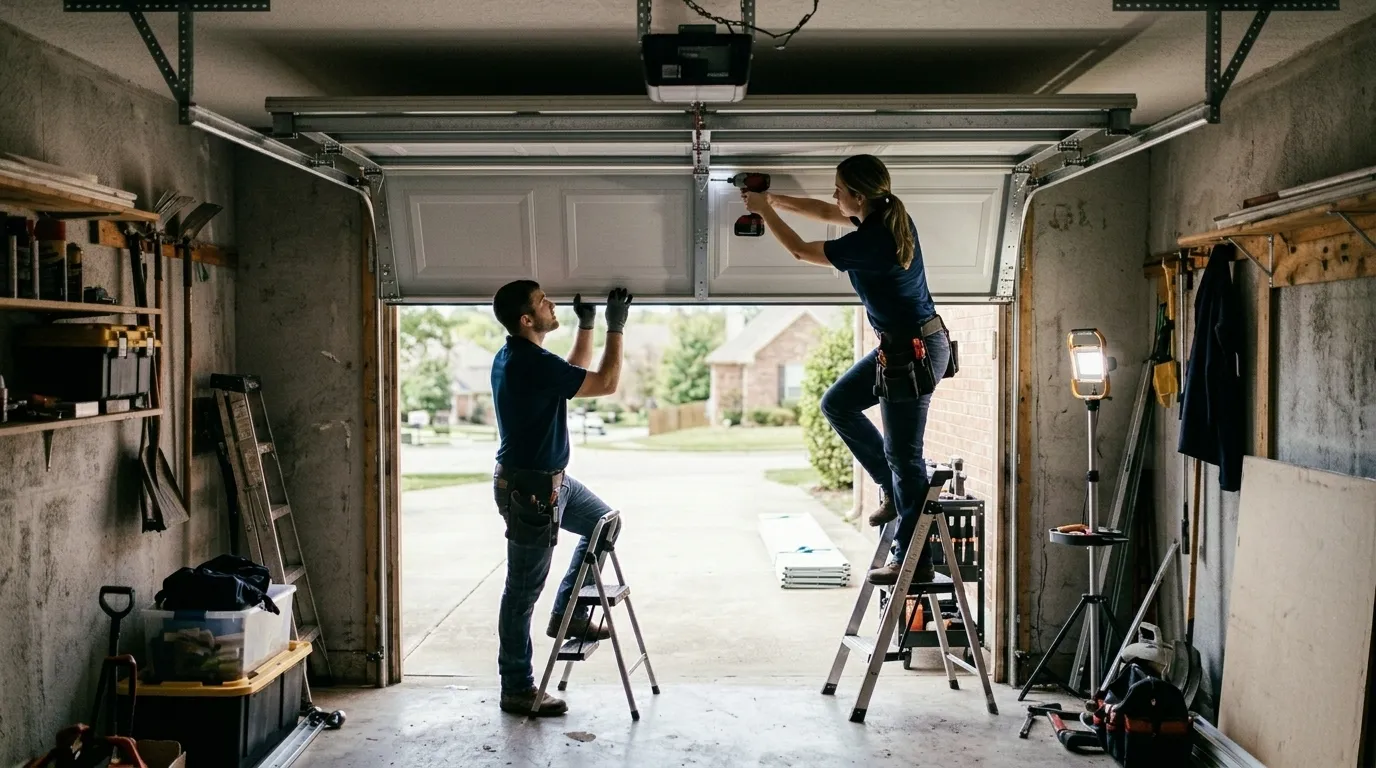
On a typical steel-roller door, the job follows the same sequence every time - disconnect, support, swap, and check the track before closing it out.
The job starts with disconnecting the opener and supporting the door before anything comes out of the track.
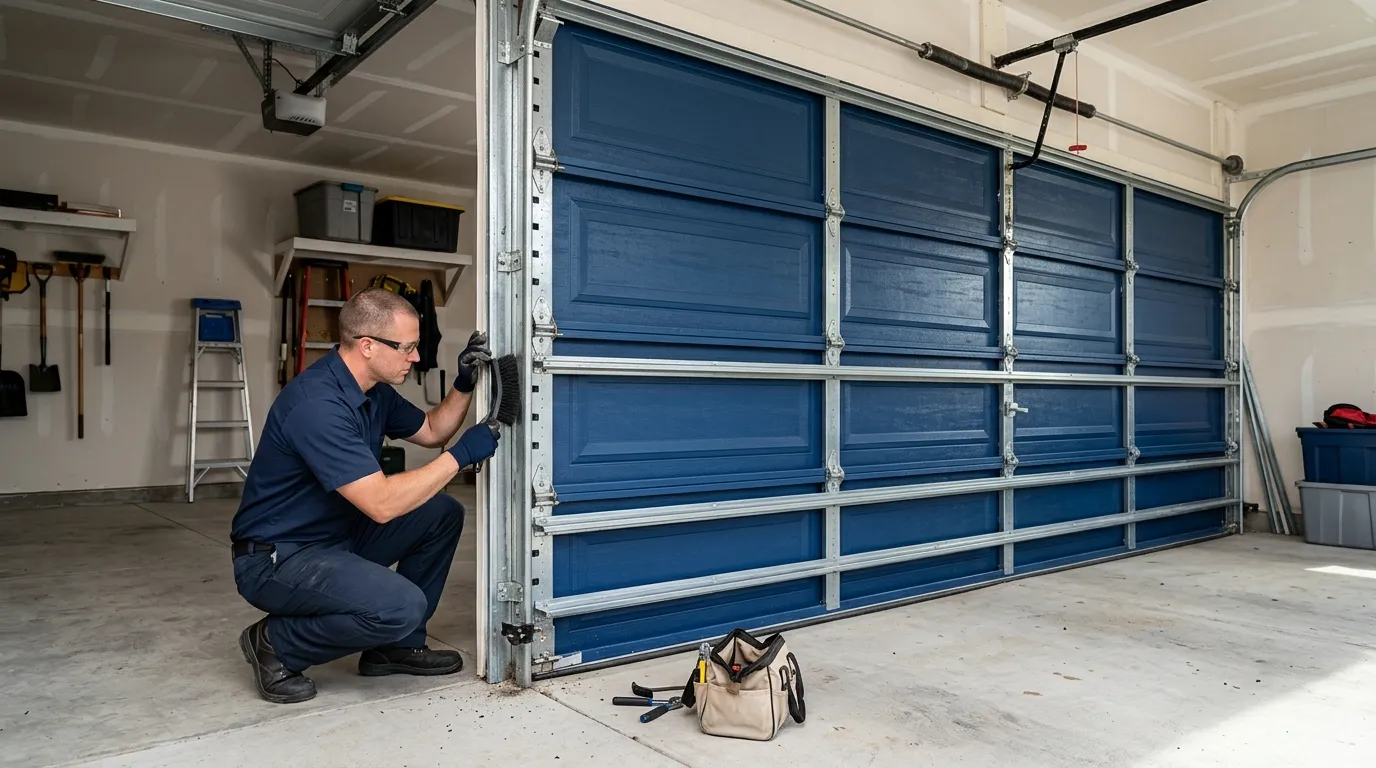
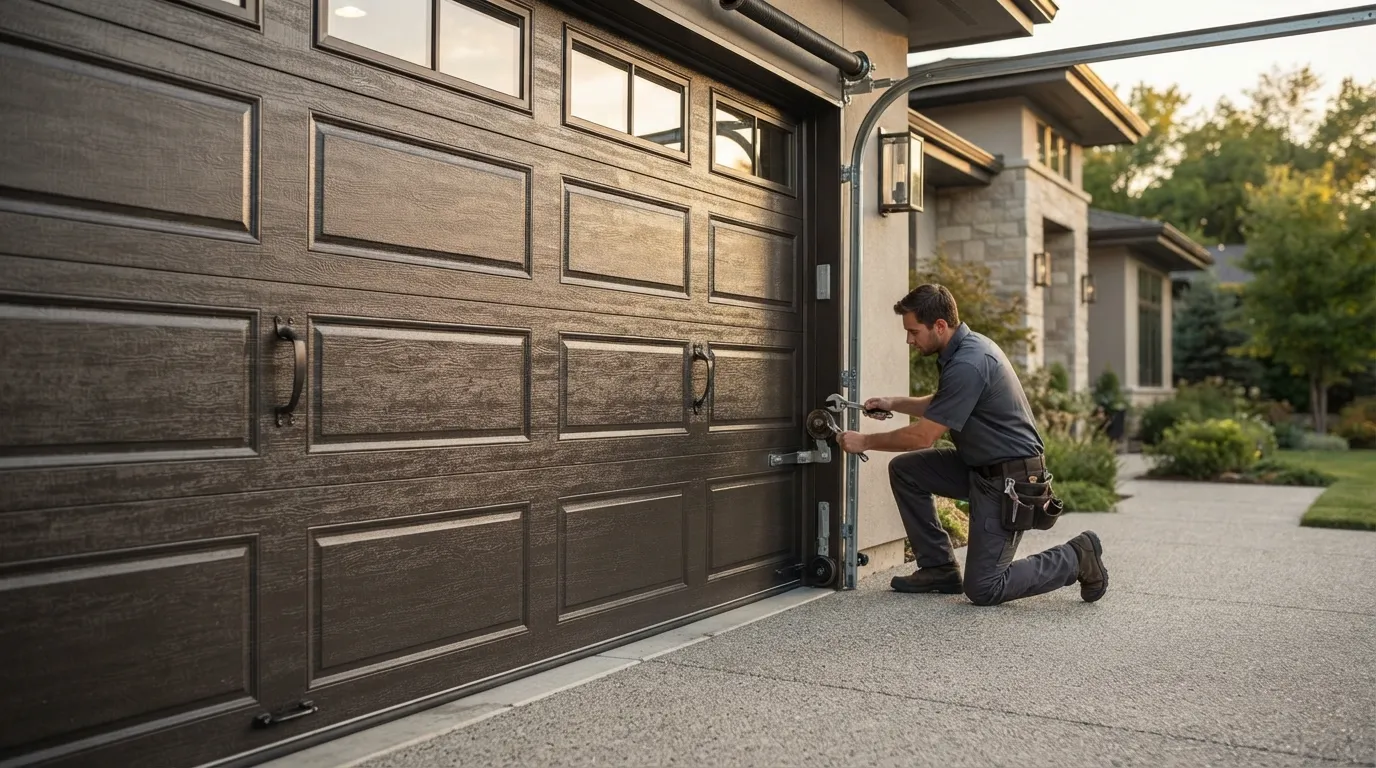
We pull the old rollers out of the track one stile at a time and set new ones in - usually nylon with sealed bearings so you're not back here in five years.
If the track shows the pitting common on doors this old, that gets straightened or replaced in the same visit rather than left to chew up the new rollers.
A double door with two full sets of rollers takes longer than a single, and a door that's been limping on a bad roller for months sometimes has a bent track or worn hinge that needs attention too.
On the truck
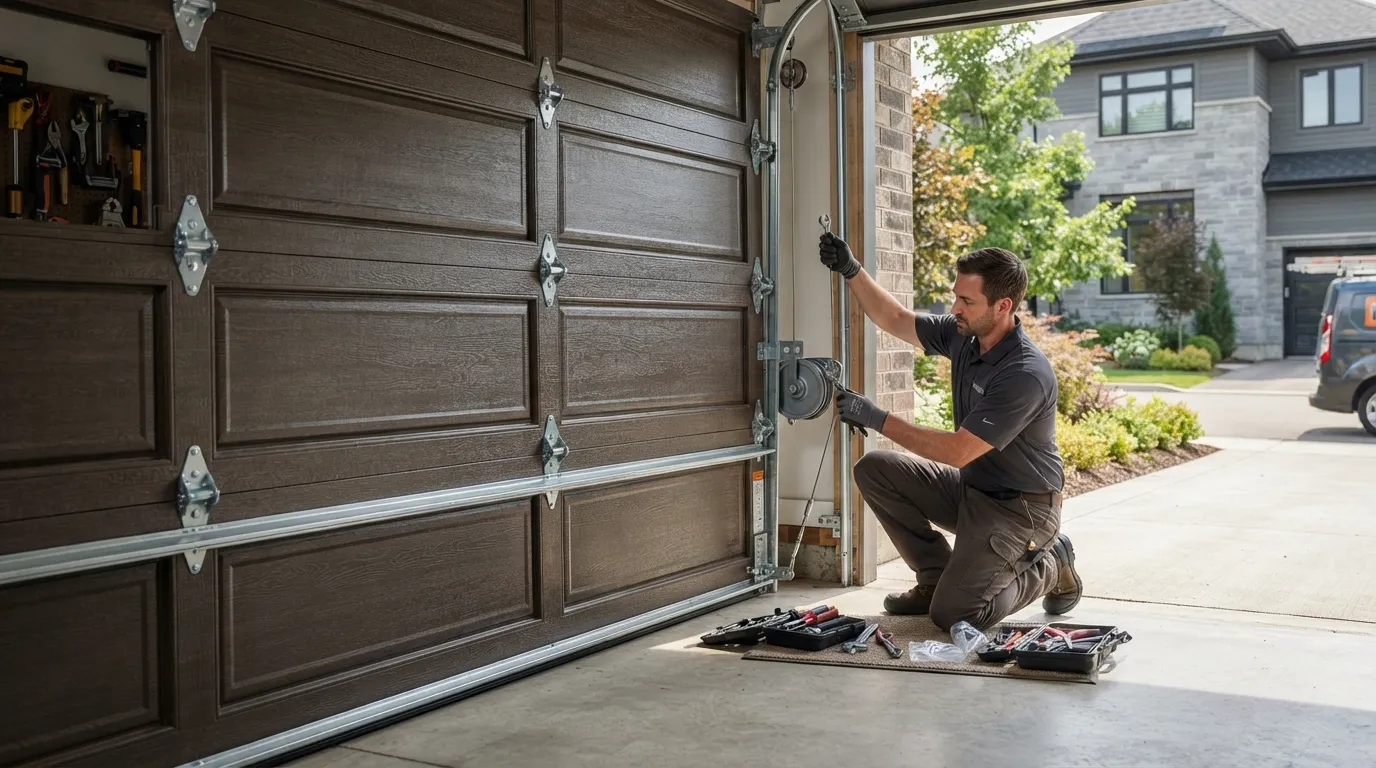
For a roller call in Columbia Heights, the truck carries nylon rollers in the common stem lengths, steel track sections for straightening or replacement, and the hinges and stile hardware that usually need a look when a door's original rollers have finally worn out. Given how much of the housing here dates to the early 1960s, steel-roller replacements are a routine call, not a special order - the parts for that era are stocked, not back-ordered.
What's not always on the truck: opener parts or spring sets for a job that turns out to be bigger than rollers. If a door needs that on the same visit, it may mean a second trip. I'd rather tell you that up front than pretend every truck carries everything for every house.
Questions
Steel contracts slightly as temperatures drop, which tightens the fit between an already-worn roller and the track. In a severe cold climate like this one, that's often enough to turn a quiet rattle into a grind or a full seize-up. Nylon rollers don't react to cold the same way, which is one reason they're the common replacement here.
It's common. A lot of Columbia Heights garages date to around 1962, and if no one has upgraded the hardware, steel rollers on narrow track are still likely what's running the door. That doesn't mean every door needs work now, but it does mean the wear pattern is predictable once it starts.
Sometimes, if the track is straight and clean. But on doors this age, the track has often taken enough wear that new rollers will just chew it up again within a year or two. I'll look at the track before quoting rollers alone, because doing it once beats doing it twice.
Explore more
Ready when you are
Minneapolis Garage Door Pros repairs and installs garage doors, springs and openers in Minneapolis, MN and the surrounding area.