Columbia Heights, Minneapolis

Garage Door Service for Columbia Heights' 1960s Housing Stock

Columbia Heights homes went up around 1962 with narrow steel doors and light-duty torsion springs. We drive the 6 miles from Minneapolis to fix what that era actually needs.

Garage Door Service for Columbia Heights' 1960s Housing Stock in Minneapolis
Serving Minneapolis, MNBackground-checked techsHonest, upfront pricingFast local response

Pricing

What It Costs

We don't quote a number without seeing the door, but the price on a Columbia Heights job follows a pattern: most houses here were built around 1962, with a single non-insulated steel door on a short track that's smaller and lighter than newer construction.

Smaller, older door size

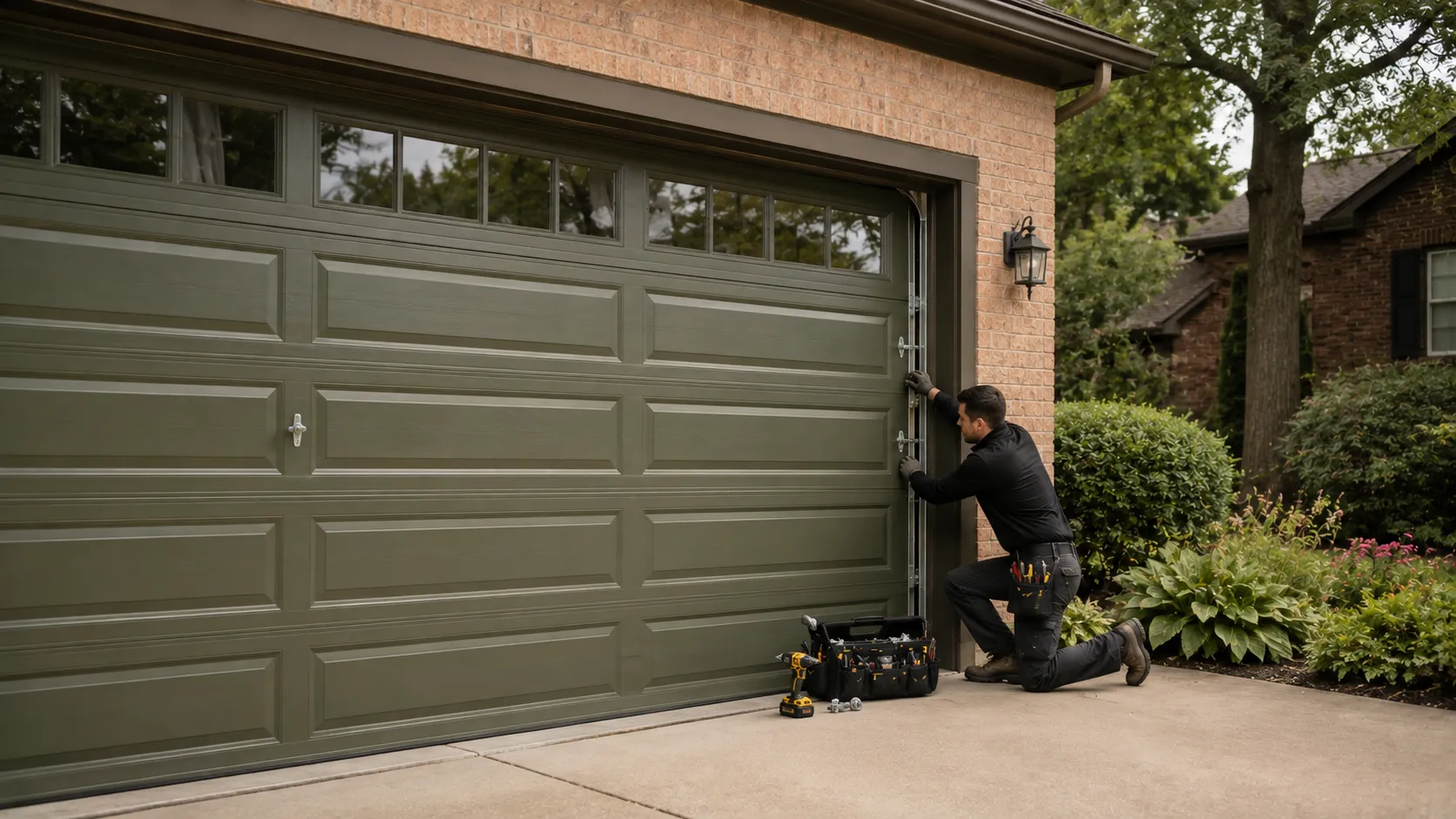
Most houses here were built around 1962, which means a single non-insulated steel door on a short track, usually 7 feet tall and either 9 or 16 feet wide depending on whether the garage holds one car or two. That's smaller and lighter than newer construction, so it takes less material and labor to replace.

Faster spring swap

A torsion spring swap on this era of door is typically a shorter job than on a heavier, taller door, and parts availability is usually straightforward because the panel sizes are common across the neighborhood.

What actually drives cost up

Cost jumps when the original track or drum hardware has been bent by decades of use, or when someone's added an opener that's fighting the door's original spring weight. We look at the whole system before we say a number out loud, not just the part that's obviously broken.

Symptoms

The Symptom

The call we get most from this part of the service area is a door that's noticeably heavier to lift by hand than it used to be, or one that shudders and jerks partway up before the opener stalls out - almost always the torsion spring losing tension after decades of cold-weather cycling.

Heavier, jerking door

A door that's noticeably heavier to lift by hand than it used to be, or one that shudders and jerks partway up before the opener stalls out, points on a 1962 house almost always to the torsion spring losing tension after decades of cold-weather cycling.

Grinding or fraying cable

You'll also hear it: a grinding or popping sound near the top of the track as the cable starts to fray on hardware that was never designed to be replaced piece by piece.

Drifting to one side

Some owners notice the door drifting to one side as it closes, which points to uneven spring wear on a two-spring setup that's aged unevenly. If it sticks at the same spot every time, that's a hardware problem, not an opener problem, no matter what the remote seems to suggest.

Local causes

Why This Fails Locally

Minneapolis and its close suburbs sit in a cold-climate zone with real winter severity, and a door built in the early 1960s wasn't engineered with that kind of season count in mind the way current doors are. Steel contracts in the cold, and on a 60-year cycle of freeze and thaw the torsion spring's coil tension shifts more than most owners realize until the day it doesn't hold anymore. Columbia Heights sits about 6 miles from our Minneapolis base, close enough that we see a lot of these same-era homes across this side of the metro, and the pattern repeats: original springs, original drums, and tracks that were never resized when a heavier opener got bolted on later. Across the wider service area the housing stock runs from 1952 to 2003 with a median around 1975, but Columbia Heights leans older than that median, which means more of the doors we see here are original or close to it, not a later remodel-era replacement.

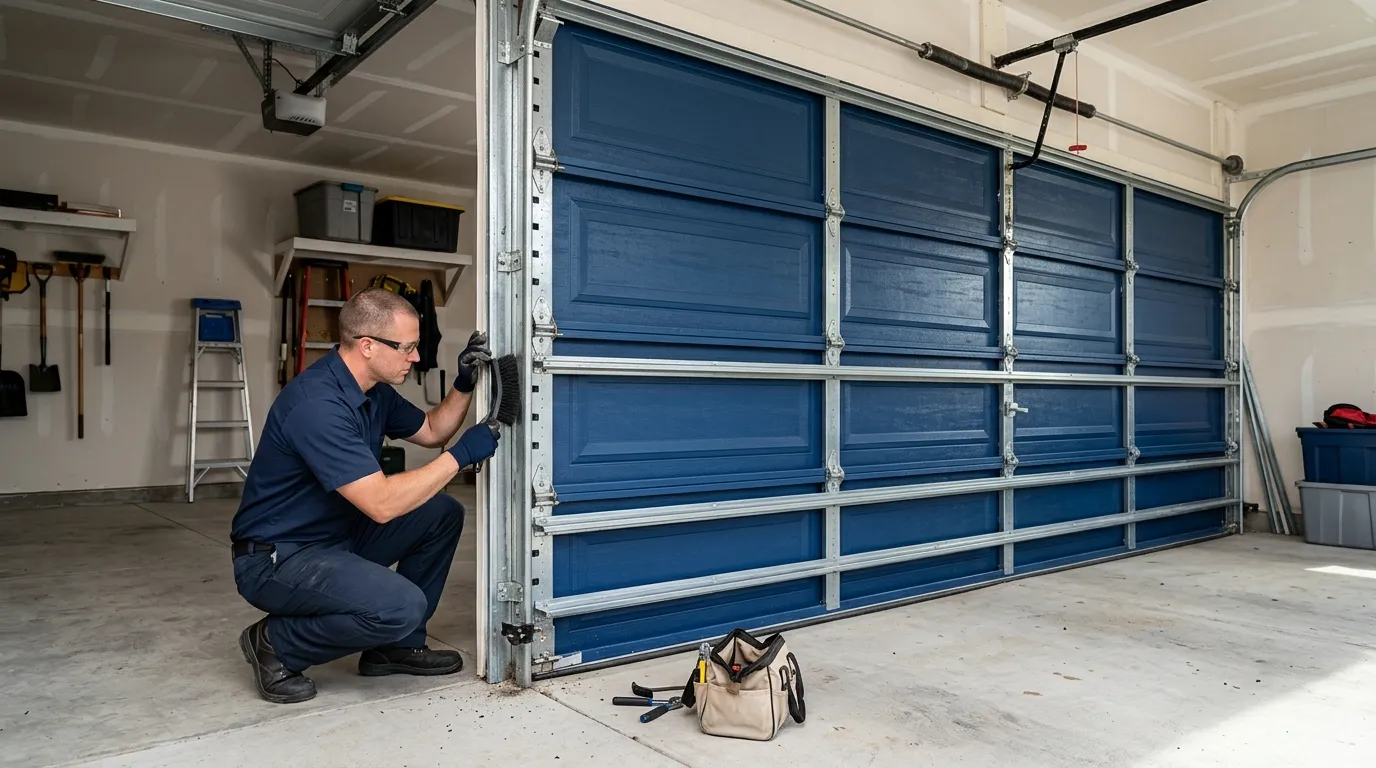
Why This Fails Locally

The repair

What the Repair Takes

On a door from this era, the job follows a set order - spring off, hardware checked, alignment confirmed - before anything gets tensioned back up. Here's how a typical Columbia Heights service call runs.

  1. Pull the spring, check drums and cable

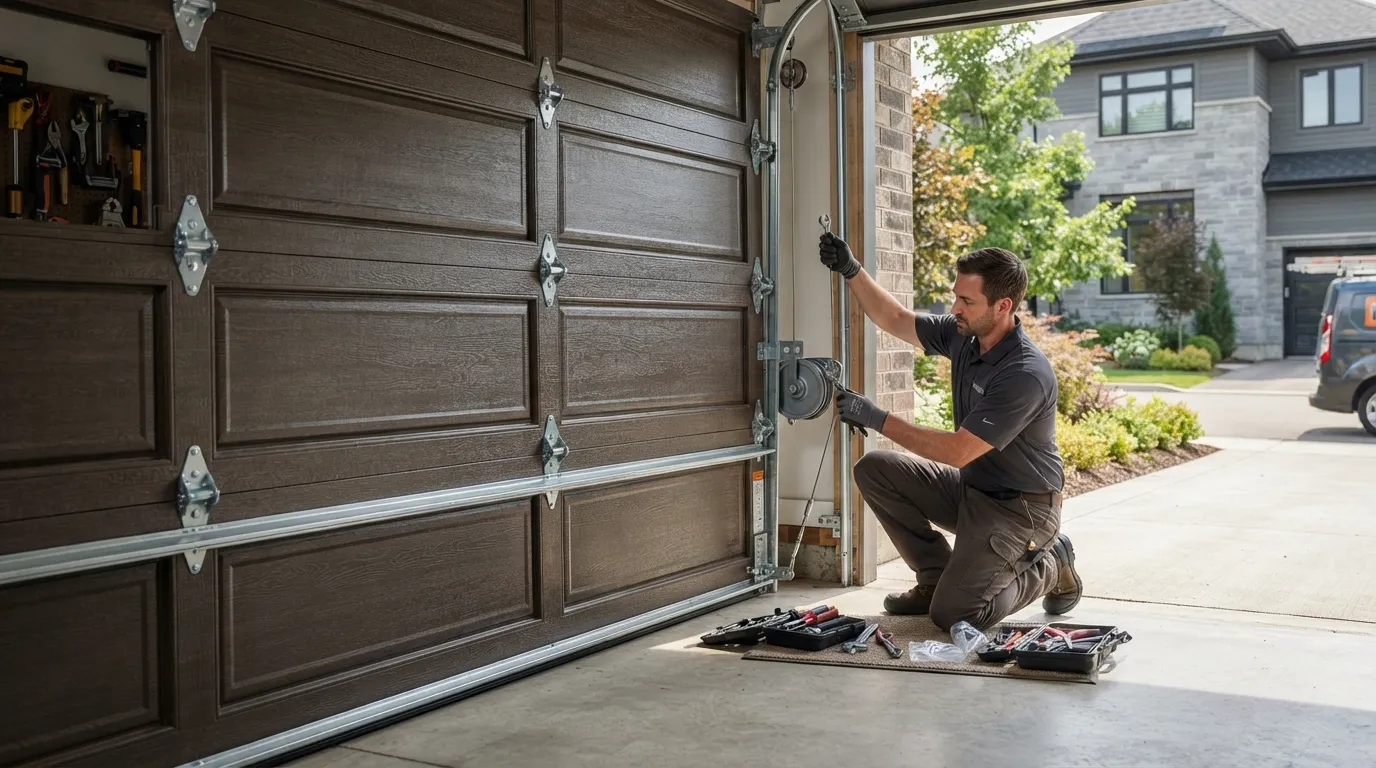
    The job usually starts with pulling the old spring off the header bracket and checking the drums and cable for wear before anything gets tensioned back up. Because these doors are lighter and narrower than modern insulated units, the spring size is usually a standard stock item, not something we have to special-order.

  2. Confirm track alignment

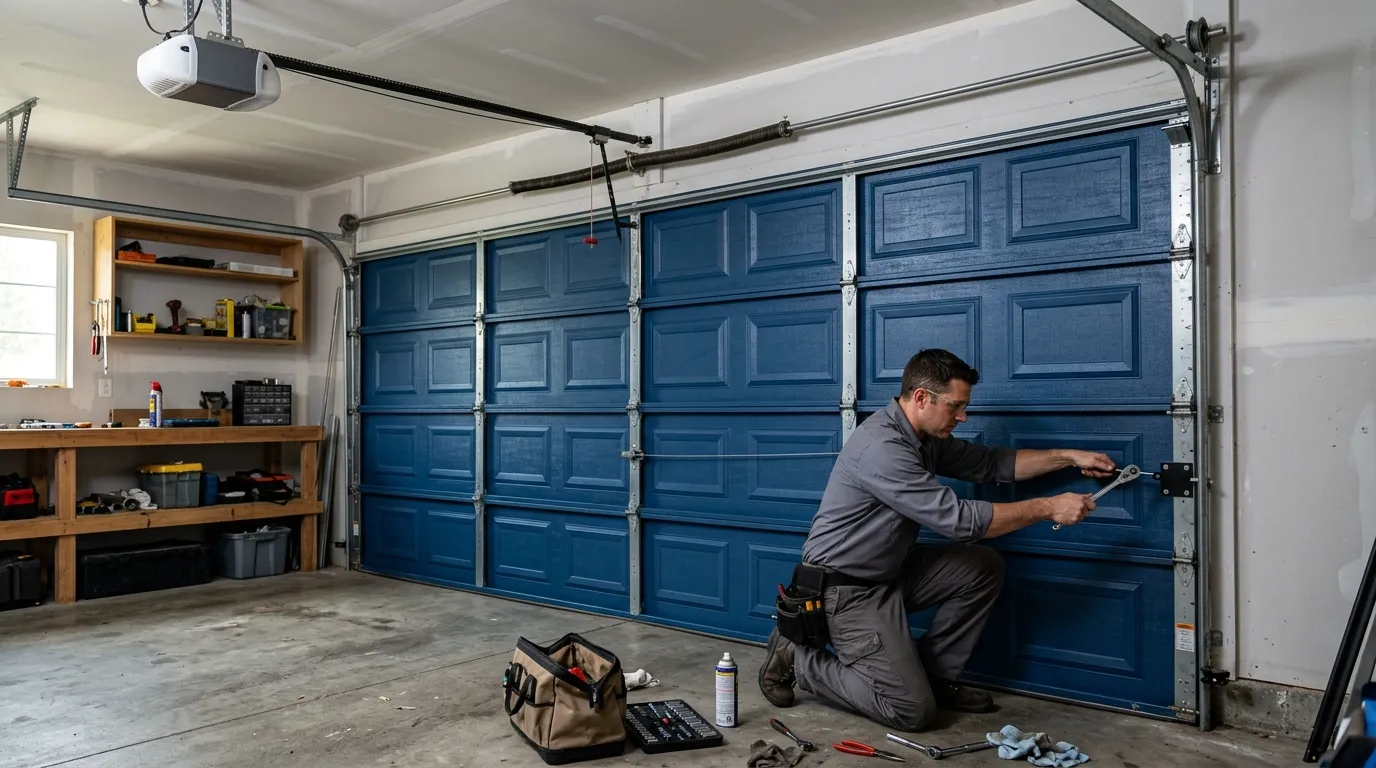
    Where we spend the extra time is on the track alignment, since 60 years of settling can leave the jambs slightly out of square, and a spring wound to the wrong tension for a shifted track will fail again within a year.

  3. Flag mismatched openers

    If the opener was added later and doesn't match the door's actual weight, we'll flag that rather than just replacing the part that broke, because forcing a mismatched opener to keep working is how you end up back on the phone in six months. A full spring and hardware job typically runs under two hours once we're on site.

What Is on the Truck

On the truck

What Is on the Truck

For this part of the service area we carry the spring sizes and drum hardware that match single and standard-width steel doors from the 1960s and 70s build era, since that's what most of Columbia Heights is running. We also stock the fasteners and roller types that tend to have seized or corroded on hardware this old, because a repair that reuses a stripped bracket doesn't hold. What we don't carry on every run is a full replacement door panel in every size, since a lot of these original doors were made to dimensions that current manufacturers don't produce off the shelf anymore. If your door needs a full panel replacement rather than a hardware fix, that's sometimes a next-day part, and we'll tell you that up front instead of promising same-visit completion we can't back up. Check our Minneapolis-area service page for what we cover beyond spring and hardware repair, and see who else nearby we reach from the same base at /near/columbia-heights/.

Questions

Common questions

Why does my Columbia Heights garage door feel heavier than it used to?

Most houses here date to around 1962, and the torsion spring on a door that age has usually lost tension after decades of seasonal cold. A spring that's weakened doesn't lift its share of the door's weight anymore, so your opener or your arms end up doing more work than the system was designed for.

Do you have a shop in Columbia Heights?

No, we run out of Minneapolis and drive the roughly 6 miles to reach this part of the service area. We don't claim a local branch here because we don't have one, but the drive is short and it's a route we cover regularly.

Can you match the original door size on an older house here?

Often yes, since a lot of Columbia Heights garages use common single or double-car widths from that era. Some original dimensions aren't produced off the shelf anymore, though, and a full panel replacement in an unusual size can mean a short parts wait rather than a same-day job.

Is a squeaking, sticking door a spring problem or a track problem?

If it sticks at the same point every time, that usually points to the track or a bent roller rather than the spring. A spring problem tends to show up as the door getting heavier overall or drifting unevenly as it closes, not sticking at one fixed spot.

Ready when you are

Need a garage door sorted in Minneapolis?

Minneapolis Garage Door Pros repairs and installs garage doors, springs and openers in Minneapolis, MN and the surrounding area.

CallGet a quote